
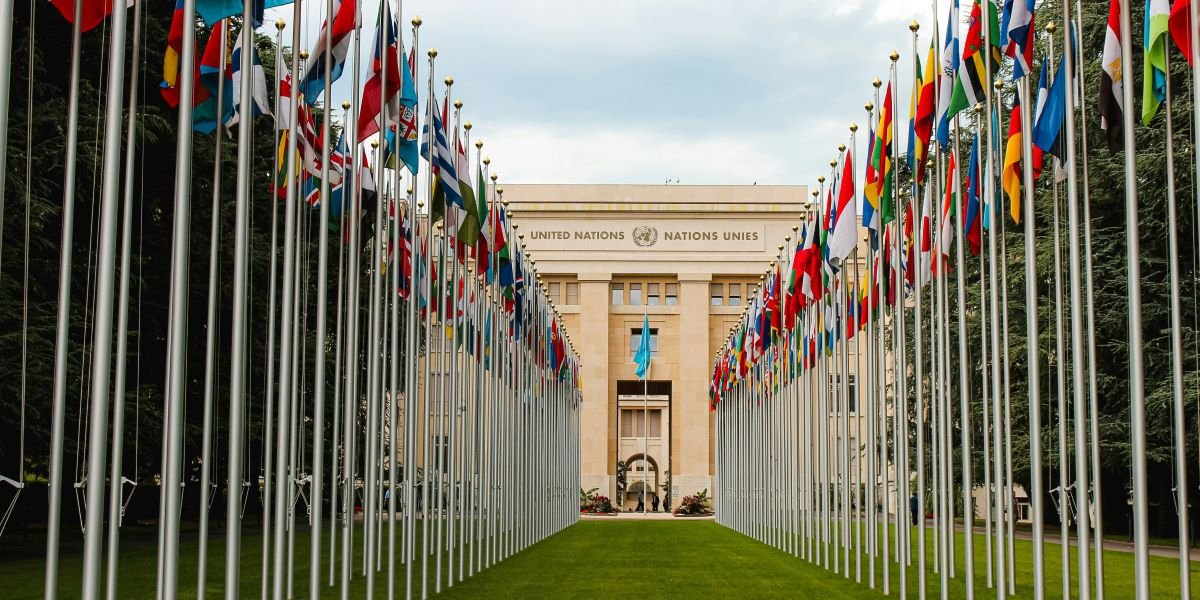
António Guterres opened the Geneva talks with a warning that the technology has entered a phase national institutions were not built to manage. He described artificial intelligence as “advancing at runaway speed”, telling delegates that a technology capable of reshaping economies, work, elections, and security is being deployed faster than anyone, including the people building it, can follow.
The scale of that acceleration anchored his argument. The internet took 15 years to reach a billion people, while AI reached that mark in two, Guterres told the gathering, framing the compressed timeline as the core reason regulation has fallen behind. He argued that the world’s institutions are unprepared for systems that increasingly make consequential choices with limited human or government oversight, and that innovation must continue only within a structure that protects people.
Key Takeaways
- Guterres opened the inaugural UN Global Dialogue on AI Governance in Geneva, describing artificial intelligence as advancing beyond the reach of current oversight.
- The two-day meeting is designed as a platform for cooperation rather than a treaty negotiation, bringing together governments, industry, and civil society.
- A new report from the Independent International Scientific Panel on Artificial Intelligence found the United States holds roughly 75 percent of the computing power among the world’s top 500 AI supercomputers.
- Guterres placed child safety at the center of his priorities, calling for products to be proven safe before deployment.
The UN Global Dialogue on AI Governance Sets a Cooperative Framework
The meeting in Geneva marked the first government-level global dialogue dedicated to artificial intelligence under the United Nations. Rather than producing binding law, the two-day dialogue is intended as a forum for discussing how to set rules that reduce potential harms while capturing the technology’s opportunities, not as a treaty negotiation.
Guterres presented the session as one part of a wider United Nations effort. A second dialogue is scheduled for May 2027 in New York, and the AI for Good Summit is set to convene in Geneva later in the same week. His central instruction to governments was direct. “Do not wait,” he told reporters, adding that the longer states delay, the less influence they and their citizens will hold over the outcome.
Concentration of Computing Power Raises Access Concerns
A recurring theme in Guterres’s remarks was the uneven distribution of the infrastructure behind advanced systems. A report from the Independent International Scientific Panel on Artificial Intelligence found the United States accounts for 75 percent of the computing power among the world’s top 500 AI supercomputers, with China at 15 percent. That concentration, Guterres argued, leaves most nations with little say in decisions that will shape their futures.
The imbalance extends to usage as well as capacity. While more than a billion people now use conversational AI each week, adoption in developing countries continues to lag. Guterres warned that when power imbalances become embedded in the technology itself, existing inequality risks being written into the systems that will govern daily life, education, and public services across much of the world.
Child Safety Emerges as a Central Priority
Guterres reserved some of his firmest language for the protection of minors. The United Nations proposal calls for companies to demonstrate their products are safe for children before deployment, to enforce zero tolerance for child sexual abuse material generated or facilitated by AI, and to consider age limits similar to those applied to other sensitive products.
He drew a comparison to established consumer safeguards, noting that societies do not allow medicine to reach a child until it is proven safe, yet artificial intelligence has already reached children through their learning, friendships, and private questions before its effects were examined. The practical challenges he acknowledged include verifying age without compromising privacy and auditing model behavior that shifts with each update.
The Scientific Panel Flags a Gap Between Capability and Understanding
The Geneva dialogue opened alongside the first assessment from the Independent International Scientific Panel on Artificial Intelligence, which the United Nations has framed as an advisory body modeled loosely on international climate assessments. The panel warned that AI could cause catastrophic harm, either on its own or through malicious users, while the technology is outpacing both scientific understanding and governments’ ability to adapt.
That gap sits at the heart of the governance problem. A United Nations report noted that dozens of governance instruments already exist but remain fragmented and ineffective, indicating the international community has begun building a regulatory framework without assembling it into a coherent system. Guterres tied the scientific uncertainty to the political stakes, arguing that the world cannot govern what it does not yet understand.
Guterres closed his appeal with a warning that the cost of delay is rising and that international cooperation on artificial intelligence is no longer optional but essential to keep humans in control of the technology’s direction.
FAQs
What did António Guterres say about artificial intelligence in Geneva? Guterres warned that artificial intelligence is developing faster than governments can regulate it. He called for globally harmonized rules to manage risks and urged nations not to delay coordinated action.
What is the UN Global Dialogue on AI Governance? It is the first government-level United Nations forum dedicated to artificial intelligence governance, held in Geneva on July 6 and 7, 2026. It is designed to encourage cooperation among governments, industry, and civil society rather than to produce a treaty.
Why is the United Nations concerned about AI concentration? A scientific panel found the United States holds about 75 percent of top supercomputing power, with China at 15 percent. Most countries have little capacity to build or govern their own systems.
What did Guterres propose for child safety? He urged companies to prove products are safe for children before deployment and to enforce zero tolerance for AI-generated child sexual abuse material. He also raised the possibility of age controls.
Will the Geneva dialogue create binding AI regulations? No. The two-day meeting is a platform for discussion and cooperation, not a treaty negotiation. A second dialogue is scheduled for May 2027 in New York.
What did the Independent International Scientific Panel report find? The panel found that AI is outpacing both scientific understanding and governments’ ability to adapt, and warned the technology could cause serious harm without shared safeguards.