

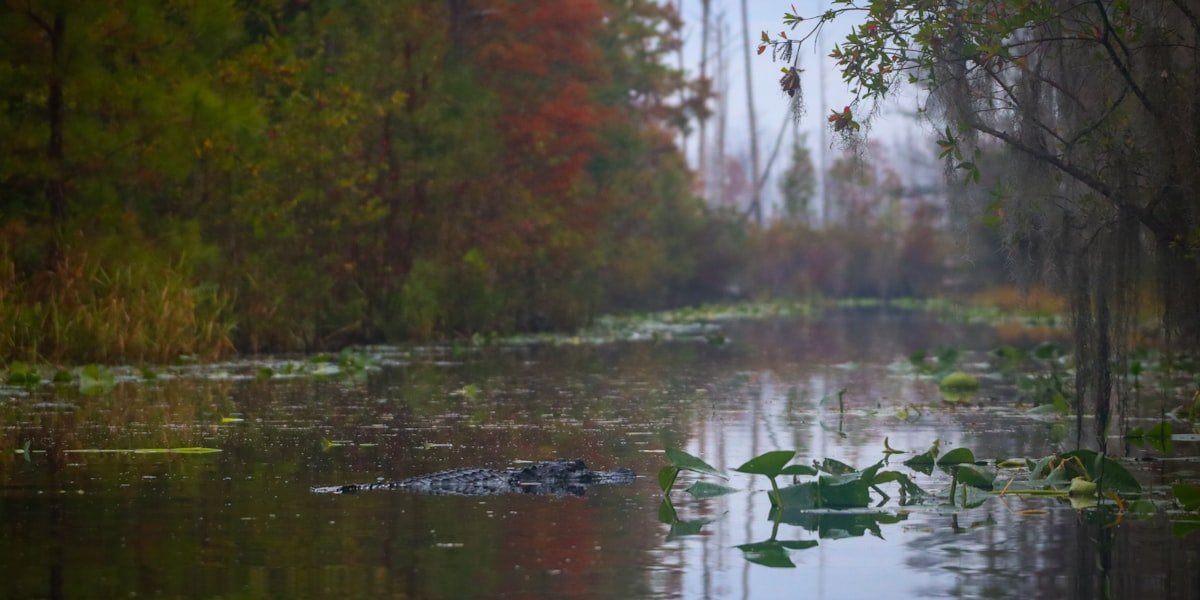
The Okefenokee National Wildlife Refuge in Georgia and Florida was designated a UNESCO World Heritage Site this week, joining 24 other newly inscribed locations globally. The freshwater peatland, home to alligators and diverse plant species, preserves some 5,000 years of environmental records in its layers of peat.
Key Takeaways
- The Okefenokee National Wildlife Refuge in Georgia and Florida was designated a UNESCO World Heritage Site this week, joining 24 other newly inscribed locations globally.
- UNESCO recognized the Okefenokee as one of the biggest and most intact North American Coastal Plain ecosystems, with peat layers preserving some 5,000 years of environmental records.
- The 25 newly named World Heritage Sites bring the global total to 1,273 sites across 173 states, including Mount Olympus in Greece and the D-Day beaches of Normandy, France.
- The Okefenokee is the first major peatland ecosystem in the southeastern United States to receive World Heritage designation, potentially setting a precedent for other wetland conservation efforts.
The designation signals international recognition of the Okefenokee Swamp’s irreplaceable ecological value as one of North America’s most intact coastal ecosystems, elevating its conservation profile alongside cultural landmarks like Mount Olympus and the D-Day beaches of Normandy. With this year’s additions, there are now 1,273 World Heritage Sites across 173 states.
What Sites Were Chosen This Week Alongside the Okefenokee?
The 25 newly named sites were selected from 33 nominations during the World Heritage Committee’s meeting in July 2026. A majority, 19 locations, were honored as cultural properties for their historical, religious, or artistic significance. Five were recognized under the natural property category, including the Okefenokee.
Mount Olympus in Greece was designated under the mixed property label for its biodiverse Mediterranean landscapes and cultural importance as the mythical home of the gods. The D-Day beaches of Normandy, France, where more than 150,000 Allied troops landed on June 6, 1944, also gained World Heritage status this week. The Normandy site retains remnants including artillery batteries and the American Cemetery at Colleville-sur-Mer.

Other inscribed locations span thousands of years: Sarnath in India, where the Buddha was believed to have delivered his first sermon in the sixth century B.C.E.; Asuka and Fujiwara, Japan’s capital cities from the late sixth to early eighth century C.E.; and Aalto Works in Finland, 13 buildings constructed between 1928 and 1988 that epitomize modern architecture meeting social needs. Italy added a 62nd World Heritage Site with the inscription of the System of Condominio Theatres in Central Italy, a unique shared-ownership model that has fostered culture and community cohesion since the 18th century.
Why Does the Okefenokee Matter for Science and Conservation?
The Okefenokee Swamp is a large, lowland freshwater peatland spanning parts of both Georgia and Florida. UNESCO recognized it as one of the biggest and most intact North American Coastal Plain ecosystems, a category that encompasses wetland environments stretching from New Jersey to Texas.
The wetland’s peat layers hold environmental records dating back roughly 5,000 years, offering scientists a paleoclimatic archive of vegetation shifts, fire regimes, and water-level changes across millennia. Peat accumulates slowly from partially decayed plant matter in waterlogged conditions, trapping pollen, charcoal, and other organic material that document how the ecosystem responded to climate and human pressures over time.
The Okefenokee is home to many species of plants and animals, including American alligators, which thrive in the swamp’s shallow blackwater channels and cypress forests. The refuge’s designation under the natural property category places it alongside other protected ecosystems recognized for biodiversity and geological importance. World Reporter has previously noted that such designations can attract research funding and heighten scrutiny of nearby development proposals that might threaten a site’s integrity.
How Does World Heritage Status Change a Site’s Protection?
Gaining World Heritage status doesn’t impose direct legal restrictions beyond those already in place, but it raises international visibility and can influence national policy. The UNESCO designation requires member states to report on a site’s condition and threatens removal from the list if a location faces serious threats without mitigation.
The Okefenokee National Wildlife Refuge is already managed by the U.S. Fish and Wildlife Service under federal conservation laws. The World Heritage label adds a layer of global recognition that can mobilize advocacy when development or resource-extraction projects arise nearby. For instance, a proposed titanium mine adjacent to the Okefenokee has drawn opposition from conservation groups concerned about water flows and peat stability, though the sources provided don’t detail its current status.
Sites that earn the designation often see increased tourism, which can bring economic benefits but also pressure on fragile environments. The Okefenokee’s remote location and limited access infrastructure may buffer it from the surge in visitation that landmarks like Mount Olympus or the D-Day beaches might experience. The question remains whether the swamp’s managers will seek to expand educational programming or visitor facilities in response to the new title.

What Precedents Does This Set for North American Wetlands?
The Okefenokee is the first major peatland ecosystem in the southeastern United States to receive World Heritage designation. North America has relatively few natural World Heritage Sites compared to cultural ones, and wetlands have historically been underrepresented on the global list despite their outsized role in carbon storage and biodiversity.
Peatlands worldwide store more carbon than all the world’s forests combined, making their conservation critical to climate mitigation. The Okefenokee’s 5,000-year peat archive offers a benchmark for understanding how similar ecosystems respond to warming, fire, and hydrological change. By elevating a peatland to the same tier as mountain ranges and coral reefs, UNESCO signals that lowland wetlands deserve equivalent recognition.
The designation could encourage other countries with intact peatlands to pursue World Heritage status for sites in Canada’s Hudson Bay Lowlands, the Congo Basin, or Southeast Asia’s tropical peat swamps. However, such campaigns require political will and years of documentation, meaning the Okefenokee’s path from tentative list to inscription may remain an outlier unless wetland advocacy gains momentum globally.
What Challenges and Questions Remain?
The Okefenokee’s new status arrives as the refuge faces external pressures that UNESCO will monitor through periodic reviews. Industrial proposals, water-withdrawal demands from adjacent agriculture, and climate-driven shifts in hydrology all pose long-term risks to the peatland’s ecological functions.
The World Heritage Committee hasn’t publicly detailed what conservation benchmarks it expects the United States to meet for the Okefenokee, nor whether the designation will influence federal permitting decisions for projects near the refuge. The sources provided don’t specify whether UNESCO will require regular condition reports or whether the site qualifies for international conservation funding, leaving those operational details unclear.
Meanwhile, the diversity of this year’s inscribed sites underscores UNESCO’s effort to balance cultural and natural heritage across continents. From a swamp preserving millennia of environmental history to a mountain steeped in mythology, the 25 new additions reflect the committee’s criteria that a site must bear outstanding universal value. The Okefenokee’s inclusion proves that global recognition can extend to ecosystems whose significance lies beneath the surface, written in layers of peat rather than stone monuments.
FAQs
What Is the Okefenokee Swamp?
The Okefenokee Swamp is a large, lowland freshwater peatland spanning parts of Georgia and Florida. It is recognized as one of the biggest and most intact North American Coastal Plain ecosystems, home to alligators and diverse plant species. The wetland’s peat layers preserve roughly 5,000 years of environmental records.
How Many New UNESCO World Heritage Sites Were Designated This Week?
UNESCO designated 25 new World Heritage Sites this week, selected from 33 nominations. Nineteen were honored as cultural properties, five as natural properties, and one, Mount Olympus, as a mixed property combining biodiverse landscapes and cultural significance. With this year’s additions, there are now 1,273 World Heritage Sites across 173 states.
Does World Heritage Status Provide Legal Protection?
World Heritage status doesn’t impose direct legal restrictions beyond existing laws, but it raises international visibility and requires member states to report on a site’s condition. The designation can influence national policy and mobilize advocacy when development or resource-extraction projects arise nearby. UNESCO can threaten removal from the list if a site faces serious threats without mitigation.
Why Are Peatlands Important for Climate and Conservation?
Peatlands worldwide store more carbon than all the world’s forests combined, making their conservation critical to climate mitigation. They also preserve long-term environmental records in their layers of partially decayed plant matter, offering scientists archives of past climate and vegetation changes. The Okefenokee’s 5,000-year peat archive provides a benchmark for understanding how such ecosystems respond to warming, fire, and hydrological shifts.
What Other Sites Were Designated Alongside the Okefenokee?
Other newly designated sites include Mount Olympus in Greece, recognized for its Mediterranean biodiversity and cultural significance as the mythical home of the gods, and the D-Day beaches of Normandy, France, where Allied troops landed on June 6, 1944. Additional inscriptions span Sarnath in India, where the Buddha delivered his first sermon in the sixth century B.C.E., and Asuka and Fujiwara, Japan’s early capital cities from the late sixth to early eighth century C.E.
Can Visitors Access the Okefenokee National Wildlife Refuge?
The Okefenokee National Wildlife Refuge is already managed by the U.S. Fish and Wildlife Service and open to visitors, though its remote location and limited access infrastructure may buffer it from the tourism surge that other World Heritage Sites experience. The sources provided don’t detail whether the refuge will expand educational programming or visitor facilities in response to the new designation.