

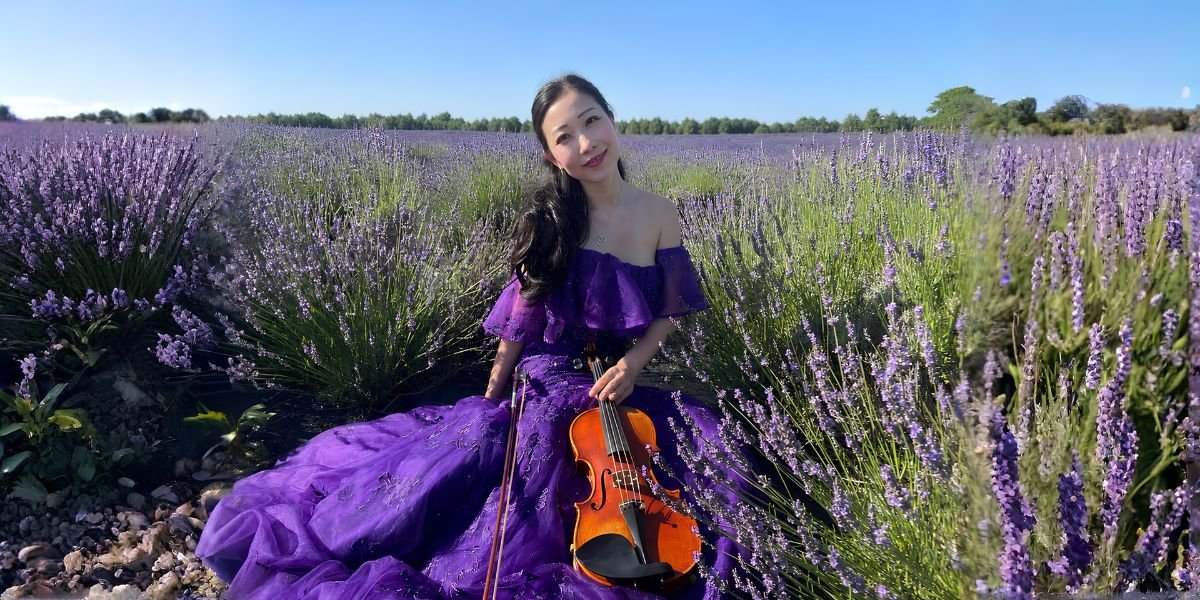
A Milestone for Viola Research
Xue Ding has published a peer-reviewed article in the Journal of the American Viola Society (JAVS), appearing in Volume 42 of the Summer 2026 Online Issue. Titled “The Classical Cadenza: A Historically Informed Approach to Stamitz’s Viola Concerto,” the work takes on one of the cornerstone pieces of the viola repertoire.
The Journal of the American Viola Society publishes research on viola performance, pedagogy, history, and repertoire, and it reaches violists internationally through the American Viola Society. Feature articles pass through the journal’s peer review process before they appear.
Addressing a Cadenza Gap in the Viola Repertoire
Carl Stamitz’s Viola Concerto in D Major is one of the few surviving viola concertos from the Classical period, and it remains a fixture in the modern violist’s repertoire. Like many eighteenth-century concertos, it comes down to us without written cadenzas for the first and second movements. That absence creates a real problem at the music stand. Training in writing cadenzas in a Classical idiom is uncommon among violists today, so many turn to the small number of published options already in circulation.
Ding’s article takes a different route. Rather than endorsing one existing cadenza over another, the research draws together eighteenth-century performance treatises, surviving Classical-period cadenzas, modern scholarship, and the stylistic features of the concerto itself. From that material it builds a framework for constructing cadenzas that hold to the conventions of the period while leaving room for the performer’s own invention.
Scholarly Contributions
Comprehensive Source Integration
Ding engages closely with primary sources, particularly Johann Joachim Quantz’s On Playing the Flute (1752) and Daniel Gottlob Türk’s School of Clavier Playing (1789). Both treatises receive careful analysis before being applied to the specific demands of the Stamitz concerto, which grounds the resulting cadenzas in eighteenth-century practice.
Methodological Innovation
Other violists can follow the method the article lays out. By identifying recurring structural conventions, melodic figuration patterns, and construction techniques across the treatises and the extant examples, Ding assembles a framework that transfers to other concertos facing the same gap.
Comparative Analysis with Mozart
A detailed comparison sets Ding’s cadenzas beside Mozart’s surviving concerto cadenzas, drawing in particular on the cadenza to Piano Concerto No. 5. The comparison traces stylistic continuity between the two, and it shows how a late eighteenth-century musician might have expanded familiar melodic figures into extended improvisatory passages.
Practical Application
Alongside the analysis, the article includes two newly composed, fully notated cadenzas by Ding for the first and second movements of the Stamitz concerto. Both are performable additions to the repertoire rather than theoretical illustrations, and recordings are available for the first movement cadenza and the second movement cadenza.
Broader Significance for Performance Practice
Beyond the Stamitz concerto, the research speaks to a wider shift in classical music toward recovering the improvisatory traditions that were central to eighteenth-century performance. Showing how historical principles translate into new cadenzas gives performers a defensible route to exercising their own creativity.
The work also functions as a model for further research. Performance practice scholarship often sits at a distance from the daily business of playing, and this article narrows some of that distance by carrying historical theory through to notated, playable results. Performers, teachers, and students can all use it directly.
A Professional Milestone for Xue Ding
For Ding, the JAVS publication marks a step forward in a developing research career. It builds on earlier work, including a previous article in the same journal, and continues a line of contributions to viola performance practice scholarship.
Close engagement with primary sources, a clearly set out method, and two playable cadenzas together make the article a useful resource for performers, teachers, and scholars. It approaches a long-standing gap in the viola repertoire with scholarly care and creative judgment, offering theoretical grounding alongside material that can be taken straight to the stand.
The full article is available in the Journal of the American Viola Society, Volume 42, Summer 2026 Online Issue.