

By: Francesca Froy and Nicolas Palominos
How can we best grow habitat for nature and wildlife in cities? This is becoming increasingly important given global biodiversity loss. The potential for “nature-based infrastructure” to solve urban challenges is also now widely recognised. However, increasing urban biodiversity will not be without its complexities. We need to be aware of how natural complexity is being incorporated within already-complex urban systems. Urban streets are not merely physical spaces – they provide the context for social, economic, environmental, and cultural systems that operate across multiple scales and interconnect in a myriad of ways to form the complex entities we call cities. As two urban architecture professionals, we explore in this blog how we can best nurture and expand the role of natural ecosystems through maximising synergies with other urban systems. We stress the importance of not ignoring hard learnt lessons about how urban street systems have evolved to promote movement, co-presence, and social interaction. We draw on our own research and architectural explorations to consider how biodiversity can best be nurtured and restored in ways that will help cities to function even more symbiotically in the future as “living entities”.
Nature in Cities?
As the farmland, which dominates much of our countryside, is becoming more sterile, cities are increasingly being seen as havens for wildlife. Britain has become particularly impoverished – nearly half of Britain’s biodiversity has disappeared since the industrial revolution, worse than for any other G7 country. Simultaneously, there is an increasing recognition of the role nature-based infrastructures can play in addressing, for example, issues of water filtration, flood control, and urban “heat island” effects. In the UK, since February 2024, the introduction of “biodiversity net gain” is causing new headaches for property developers as they attempt to ensure that each new development makes a positive impact on biodiversity compared with what was there before.
Integrating nature into cities is of course nothing new. It was a strong motivating factor behind Ebenezer Howard’s plan to promote “garden cities,” first posited in 1898. At this time, the dense urban life of cities was seen as problematic, with the introduction of green space being seen as one way that cities could replicate the benefits of rural living while still retaining access to urban amenities and opportunities. Jane Jacobs railed against such thinking in 1961, while also criticising Le Corbusier-style developments which were coming to dominate new development thinking in cities, involving the placement of single high-rise buildings in banal open green spaces characterised by “grass, grass, grass’ (p.21). Despite the British obsession with lawns, today we have become more aware that urban open spaces characterised by grass alone are anything but diverse.
Cities as Systems of Systems
To better nurture and enhance the role of biodiversity in our cities in the future, we would be wise to adopt a “systems thinking” approach. Systems thinkers point to the many interdependencies that exist in cities between social, economic, and environmental processes. Each system has self-organising properties (often developing “bottom up” from the myriad actions of individuals and species to form complex wholes). Different systems have “latent potentials” to develop in a way that helps support broader human goals for a higher quality of life. However, to understand how systems can work in synergy rather than competition, we need to understand more about how each system works on its own terms. We have learnt a great deal over the last centuries about how the street systems (that have in many cases evolved “bottom up” through a myriad of building decisions) work to help people navigate safely around cities, while also maximising opportunities for encounter and exchange. These learnings need to be preserved when discussing how biodiverse urban ecosystems (with their own logics and interdependences) can work with existing street systems, rather than abandoning street systems in a “garden city style” to provide new, hitherto untried, greener forms of urban living.
Streets as Living Entities
The diagram ‘Streets as Living Entities’ below is proposed as a strategic framework for thinking about biodiverse street systems. A selection of the observed potential relationships that streets afford is illustrated through a 2-way categorised network, spatialised as a street cross-section. The nodes and links in the network represent urban elements and phenomena that relate and reinforce each other. The colour and shape encodings show the predominant descriptor according to the role or system of descent – environmental, economic, and social – and whether intra or inter relationships are present. The symbol’s line thickness represents the estimated spatio-temporal scale in which the elements operate. The link’s widths are an estimation of the direction of influence.
The interactions between the different systems then need to be assessed. For instance, the presence of trees organised as a green corridor can increase the levels of air quality, provide shade, and increase bird song, with consequent therapeutic effects on people. Nevertheless, care needs to be taken not to block ‘lines of sight’ across urban space, which provide safety for pedestrians – what Jane Jacobs called natural surveillance: “eyes on the street” and “eyes from the street”.
The scale of the impact of different operations cannot be quantified easily. Interactions and outcomes will depend on the immediate context – for example, the socio-demographic characteristics of the population surrounding the green corridor, the land uses and urban activities nearby, and the circulation hierarchy of different streets. Interactions will be dynamic, adaptive, and difficult to predict, much like any other living system. Unintended consequences are rife, and in many cases, these can only be dealt with through consultation with multiple urban stakeholders, with municipalities such as Kristiansund in Norway currently pioneering, for example, new ways of collaboratively adapting the UN’s sustainable urban development goals to local contexts, negotiating both synergies and conflicts.
Cities Work On Multiple Scales
Thinking across systems is particularly challenging because impacts often occur across multiple scales. Blocking a street to create a safe haven for wildlife in one part of the city, for example, can disrupt networks of movement in ways that create frustration and traffic jams in a completely different part of the urban network. On the other hand, in Stockholm, a team of academics from Chalmers University is exploring how very local interventions to mitigate water run-off have impacts on more distant parts of the city. They are also investigating how initiatives to build biodiversity on single plots (as with the UK’s new net gain targets) can be better integrated into network-based corridors, which maximise the benefits for wildlife.
Closer to home, Oxford University is an important stakeholder in a new development on and to the north of the Begbroke Science Park, which will provide both new affordable housing and space for innovation and research. There is a clear intention to experiment with new ‘biodiverse’ ways of living, with the developer, Hawkins Brown, promoting on their website the idea of ‘restorative landscapes’, ‘green arteries’ (incorporating water), and ‘living streets’. Care will need to be taken, however, with the introduction of these innovations, particularly as some of the urban morphologies being proposed are rather reminiscent of post-war planning, including a separation between pedestrian and car traffic. It will be important that the inclusion of greater foliage and vegetation in this new development does not further undermine mutual surveillance.
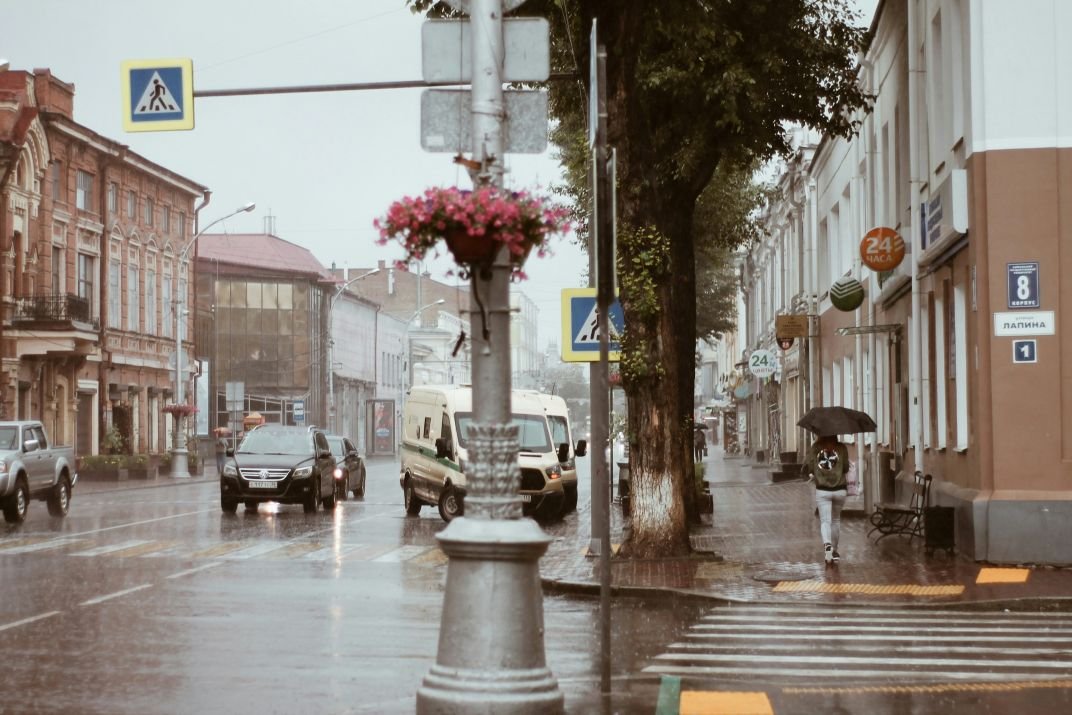
Over the channel, officials in Paris have long incorporated nature in the city’s famous boulevards, such as Boulevard de la Chapelle, Boulevard de Clichy and Boulevard de Batignolles to the north of the city, which combine space for cars with space for trees, pedestrians, cyclists, and leisure activities such as markets, table tennis tables and children’s play facilities. Nevertheless, even in these long-established parts of the city, where there is insufficient pedestrian movement, the dense tree cover can make the space in the middle of the Boulevards feel unsafe and neglected (particularly at night) (as indicated in Figure 2a).
Exploiting Latent Potentials
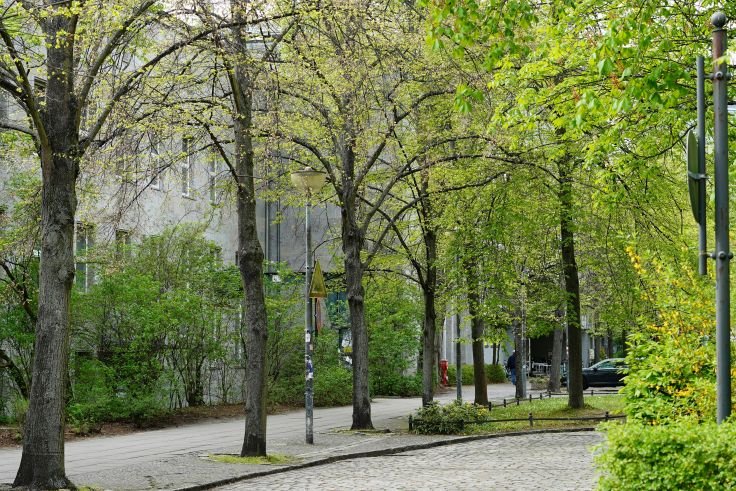
Going forward, we will need to maximise the opportunities and latent potentials associated with nature-based infrastructures while at the same time not assuming too much understanding of the complexities of how streets support other urban social and economic systems. A little knowledge can be a dangerous thing when attempting to interfere with complex systems (something Jane Jacobs again strongly expressed). As we ‘bring back nature’ into the city, and enhance the natural systems that are already there, we need to consider how to harness the synergies which exist between natural and human-made systems – combining their “latent potentials” for making our cities healthy and sustainable places to live. Recognising complexity does not require a new layer of complex language or new technological innovations – rather, it requires people to work in interdisciplinary teams, which can bring an understanding of how multiple urban systems work, while also learning from the past when creating “new solutions” for the future.
The Authors
Francesca is an Associate of the architectural and urban design-based consultancy, Space Syntax and a Kellogg Fellow. She lectures on Sustainable Urban Development at the University of Oxford, is widely published in academic journals, and has recently written a book called Rebuilding Urban Complexity for Routledge, for which Nicolas provided illustrations.
Nicolas is an Urban Design Researcher and Spatial Data Scientist working at the intersection of Cities, Analytics, Design and Strategy. He is a London-based co-leader of the Urban Strategy and Planning studio at ERA-co, a placemaking consultancy, and an Honorary Research Fellow at The Bartlett Centre for Advanced Spatial Analysis.