

The global watch industry has long relied on a layered production system. Many consumer-facing watch brands do not operate their own factories. Instead, they work through OEM and ODM manufacturers that manage machining, assembly, sourcing, finishing, and export coordination. According to data published by the Federation of the Swiss Watch Industry in recent years, China remains one of the world’s largest producers of watch units by volume, particularly in the private label and contract manufacturing sectors. Within this system, manufacturers often operate behind the scenes, producing watches that later appear under unrelated retail brand names. Over time, some factories also establish internal labels while continuing third-party manufacturing operations for overseas clients.
Within that broader manufacturing structure, Billow Time Watch Co., Ltd. developed as a Shenzhen-based OEM and ODM watch producer. Public company material states that the factory began operations in 2004 with 23 workers and eight machines. Early departments included polishing, drilling, QC, and QA functions. CNC machining, engineering, and international trading departments were added later as operations expanded. Company material further states that the business focused on OEM and ODM production rather than direct consumer retail during its earlier years. The company was formally incorporated in Shenzhen in May 2019 under the name Shenzhen Billow Time Watch Science & Technology Co., Ltd.
The company’s public documentation shows that OEM and ODM production remained central even after the introduction of PRYZM. In manufacturing terminology, OEM refers to products manufactured according to a client’s specifications, while ODM involves factories offering existing designs that can later be modified or rebranded by buyers. Billow Time’s website describes both systems as continuing parts of its operation. Its published materials state that clients can either submit full design specifications or select from a catalog of roughly 1,500 existing ODM watch models. The same material also references customization services involving cases, dials, straps, buckles, and packaging.
PRYZM emerged within this manufacturing environment rather than as a replacement for OEM activity. External reports published in 2025 describe PRYZM as an internal brand launched after years of contract manufacturing experience. Some reports place the launch in 2019, while others refer to activity beginning in 2020. Publicly available sources consistently describe the label as operating alongside the factory’s OEM and ODM divisions rather than replacing them. The available information does not indicate that Billow Time shifted away from contract production after PRYZM appeared. Instead, company pages continued advertising OEM and ODM services to international buyers during the same period.
This dual structure is not unusual within the broader manufacturing sector. Chinese watch factories frequently maintain both contract production lines and smaller internal labels. Industry analysts often describe such arrangements as practical because factories already possess machining equipment, assembly departments, sourcing systems, and engineering files needed for limited brand production. Public company information suggests that Billow Time expanded its operational structure during the 2010s through investment in CNC systems, research and development functions, and customer service departments. By the late 2010s, the company reported employing more than 300 workers across multiple departments connected to machining, assembly, inspection, and overseas communication.
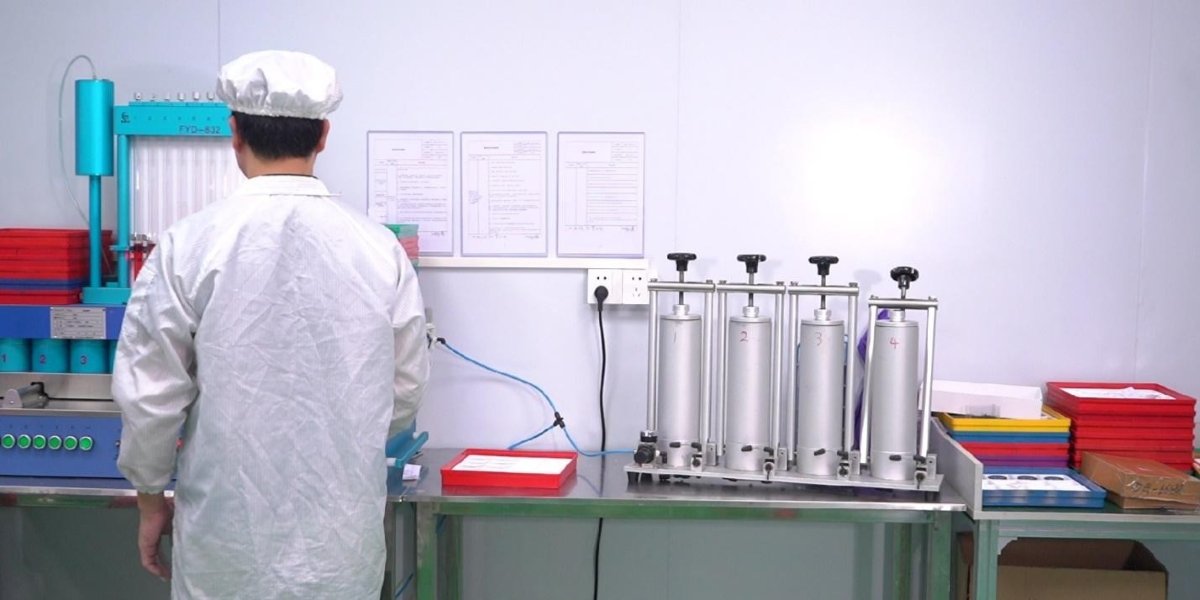
The available material also indicates that PRYZM shared manufacturing infrastructure with the OEM operation. Billow Time’s factory descriptions reference integrated departments handling CNC machining, polishing, drilling, assembly, waterproof testing, and quality inspection. No separate factory infrastructure for PRYZM has been publicly identified. Instead, descriptions of the company’s workflow suggest that the same operational framework supported both external client orders and internally branded production. The company’s published videos and factory descriptions further show common assembly and testing lines rather than isolated production facilities.
Material sourcing practices also appear connected across both structures. Billow Time publicly lists stainless steel, titanium, Damascus steel, forged carbon fiber, bronze, and ceramic among the materials used in manufacturing. These materials are repeatedly referenced across OEM product listings as well as PRYZM-related descriptions published online. Publicly available catalogs and manufacturing pages indicate that the company’s production capacity includes both quartz and mechanical watches. The overlap suggests that PRYZM drew from existing machining and sourcing capabilities already established for contract manufacturing operations.
The operational separation between OEM production and internal branding appears to have depended more on workflow management than on separate facilities. OEM manufacturing generally requires strict confidentiality because products are produced for outside companies. Internal brands, by contrast, involve direct product ownership and design management by the manufacturer itself. Public information about Billow Time suggests that documentation handling, CAD drawing preparation, SolidWorks engineering files, and client approvals remained standard parts of the OEM process even after PRYZM was introduced. The company’s OEM documentation pages continue to describe customized production sequences for overseas buyers, including technical drawings, quotation review, prototype approval, and mass production scheduling.
The growth of internal brands among OEM manufacturers has become more common during the past decade, particularly as online retail channels lowered barriers to direct market entry. Industry observers have noted that some factories establish internal labels partly to test materials, designs, or assembly processes already developed for contract clients. Publicly available information connected to Billow Time does not present PRYZM as replacing OEM operations or becoming the company’s sole focus. Instead, the company’s own factory pages continue emphasizing OEM and ODM services, customization requests, and overseas production support.
As of 2026, Billow Time’s public presence continues to describe the company primarily as an OEM and ODM manufacturing provider based in Shenzhen. PRYZM functions within that larger production environment rather than outside it. The available material portrays the brand as an additional operational layer built on existing machining, assembly, and engineering infrastructure already established through years of contract manufacturing. Public sources do not indicate that the company abandoned OEM production after PRYZM’s introduction. Instead, both activities appear to continue within the same broader manufacturing structure.