

The First Our Ocean Conference Held on African Soil Produced 320 Commitments, a Fisheries Transparency Declaration, and Growing International Momentum for a Moratorium on Deep-Sea Mining
The 11th Our Ocean Conference concluded in Mombasa, Kenya, on June 18 with $6.4 billion in new commitments to ocean conservation, sustainable fisheries, and maritime security — and with African nations playing what observers described as a defining leadership role in shaping the outcomes. The conference, held for the first time on African soil under the theme “Our Ocean, Our Heritage, Our Future,” brought together more than 5,000 delegates from governments, businesses, scientific institutions, and civil society organizations across three days of negotiations that produced 320 separate commitments, according to Carbon Brief’s on-the-ground reporting.
The conference’s three headline government-to-government outcomes — a coral reef protection coalition, a fisheries transparency declaration, and an expanding moratorium on deep-sea mining — each carry implications that extend well beyond the Mombasa venue. The commitments now face the practical test of implementation, with the next critical milestone arriving in July at the International Seabed Authority meetings.
A Science-Driven Approach to Coral Reef Survival
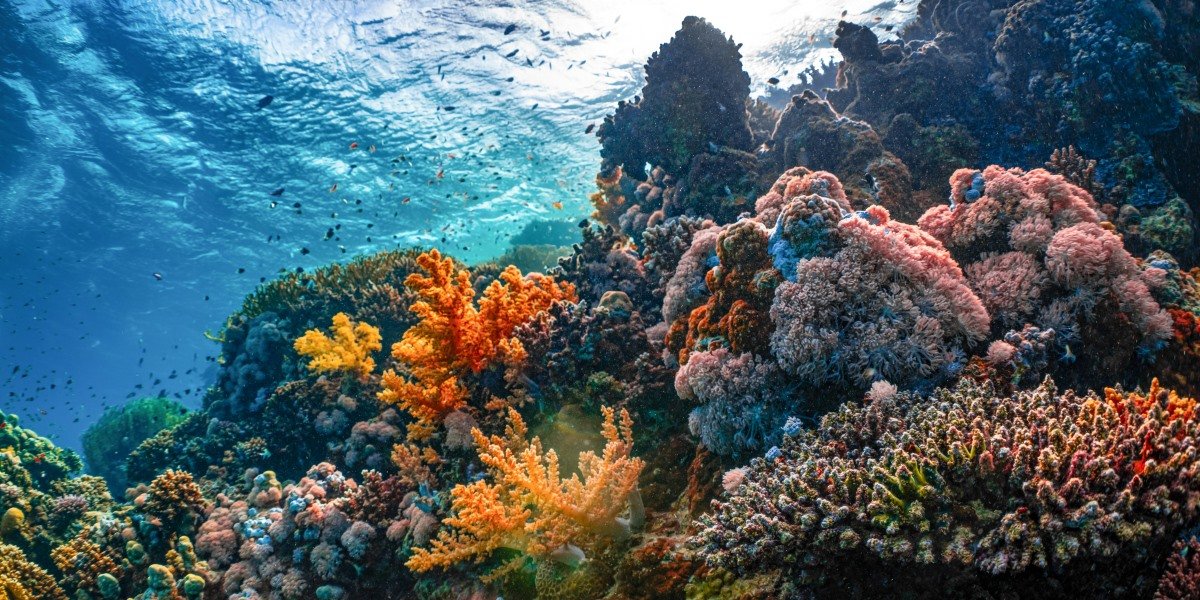
The conference’s most forward-looking outcome was the expansion of the High-Level Climate-Resilient Coral Reef Commitment, a pledge first launched at the UN Ocean Conference in Nice, France, in June 2025. Five new governments — Kenya, Comoros, the Dominican Republic, the United Kingdom, and Mexico — signed the commitment in Mombasa, bringing the coalition to 20 reef countries spanning all of the world’s coral regions.
The commitment is built on a specific scientific premise: not all coral reefs will survive climate change, and conservation resources should be directed toward the reefs with the greatest potential to endure warming oceans and serve as the foundation for future reef recovery. The Wildlife Conservation Society and Macquarie University unveiled new analysis at the conference identifying heat-resilient coral species across 71 countries and territories, covering an area of nearly 166,000 square kilometers. The research expands on a 2018 assessment that earmarked 50 coral species and provides governments with a science-based roadmap for where protections can deliver the greatest long-term return.
The stakes behind the data are substantial. Coral reefs cover less than 0.1% of the ocean floor but support approximately 25% of all marine life and generate up to $2.7 trillion annually in ecosystem services, according to the Wildlife Conservation Society. Coral reefs underpin the food security, livelihoods, and coastal protection of nearly one billion people. Only 28% of identified climate-resilient reefs currently fall within protected or conserved areas — a gap the commitment aims to close.
Kenya’s Principal Secretary for Environment and Climate Change, Dr. Eng. Festus Ng’eno, framed the pledge in direct economic terms at the official plenary. “Our reefs are not postcards. They are lifelines — sustaining over 500,000 livelihoods along Kenya’s coast alone,” Ng’eno stated. “This is the turning point — the moment we stop mourning what we’ve lost, and start funding what we can still save.”
National Marine Protection Commitments Redraw the Map
Several governments used the conference to announce expansions of marine protected areas that collectively cover hundreds of thousands of square kilometers. Senegal committed to doubling its marine protected area network by 2030. Portugal announced the creation of the D. Carlos Marine Reserve, spanning 173,000 square kilometers, a designation that would increase the share of Portuguese waters under protection from 19% to 25%. Brazil pledged to grow its marine protected estate by 240,000 square kilometers over the next five years. Indonesia committed to setting aside 7,000 square kilometers for new marine protected areas this year. Kenya and Tanzania agreed to establish the Kwale-Tanga Transboundary Marine Conservation Area by 2028, conserving coral reefs, mangroves, and seagrass habitats across a shared border.
An independent assessment released during the conference found that more than one-third of the Earth’s marine protected areas originated from commitments made at previous Our Ocean Conferences — a total area exceeding 10 million square kilometers. Nearly two-thirds of those commitments have been fully implemented, according to the analysis, with most of the remaining pledges showing measurable progress.
The European Union committed €338.35 million to ocean conservation, sustainable fisheries, and maritime security. EU Fisheries and Oceans Commissioner Costas Kadis announced the funding at the plenary, framing the contribution as part of a broader strategy to balance environmental protection with economic sustainability in coastal regions.
Deep-Sea Mining Moratorium Gains Ground
The number of countries calling for a precautionary pause or moratorium on deep-sea mining grew during the conference. Kenya and Madagascar joined the coalition, bringing the total to 43 nations — a significant expansion from the movement that began with a Seychelles-led initiative in earlier years. The Deep Sea Conservation Coalition’s global campaign director, Sofia Tsenikli, said the growing coalition “reflects an increasing recognition that the deep sea is too important to gamble with” and called for the political momentum to translate into concrete action at the International Seabed Authority, where meetings are scheduled for July.
The deep-sea mining question sits at the intersection of climate policy and resource economics. Proponents argue that minerals on the ocean floor — including manganese, cobalt, and nickel — are essential for battery production and the clean energy transition. Opponents, including the 43 governments now supporting a pause, argue that the science on deep-sea ecosystems remains too incomplete to permit industrial extraction without risking irreversible environmental damage.
The Mombasa Declaration Targets Illegal Fishing
Fifteen nations adopted the Mombasa Declaration on Fisheries Transparency, committing to increase transparency around fishing-vessel identities, ownership, licensing, and fisheries data to combat illegal, unreported, and unregulated fishing. The signatories — including Belgium, Cameroon, Chile, France, Ghana, Panama, Peru, Somalia, and South Korea — endorsed principles laid out in the Global Charter for Fisheries Transparency, a framework developed by a coalition of civil society organizations.
Illegal fishing is a persistent economic drain on developing coastal nations. The conference’s focus on transparency mechanisms reflects a shift from conservation-only framing toward enforcement infrastructure that enables governments to track and regulate commercial fishing activity in their waters.
From Pledges to Implementation
Since the Our Ocean Conference was founded in 2014, the platform has mobilized more than 2,900 commitments worth approximately $169 billion. The Mombasa edition added $6.4 billion to that total — a figure that reflects both the scale of the challenge and the growing willingness of governments to treat ocean protection as an investment rather than an expense.
Whether the commitments translate into measurable outcomes depends on what happens after the delegates leave Mombasa, and the next tests are already approaching: the International Seabed Authority meets in July, the Convention on Biological Diversity convenes for COP17 in October, and the UN climate conference COP31 follows in November — a sequence of international forums where the pledges made on Kenya’s coast will either advance or stall.