
International cooperation has become an established feature of forensic science education as universities, law enforcement agencies, and technology companies increasingly work across national borders. Modern criminal investigations often involve digital evidence, cybercrime, financial offences, and transnational intelligence, creating demand for shared research, specialist training, and common professional standards. Conferences, academic exchanges, and institutional agreements have become important methods for transferring knowledge between researchers and practitioners. Against this background, the European Forensic Institute (EFI) has developed a network of professional collaborations with public institutions, international organisations, and private technology companies, while expanding its activities beyond Malta through education, research, and applied forensic training.
The European Forensic Institute was established in 2018 by Andreas Melinato, whose professional background includes forensic engineering, fire investigation, and serving as an expert witness in court since 1999. He has also held leadership roles within the forensic science community, including serving as Past President of the Central European Association of Fire Investigators (IAAI Chapter 81). He has co-founded several professional associations and institutions related to forensic science.
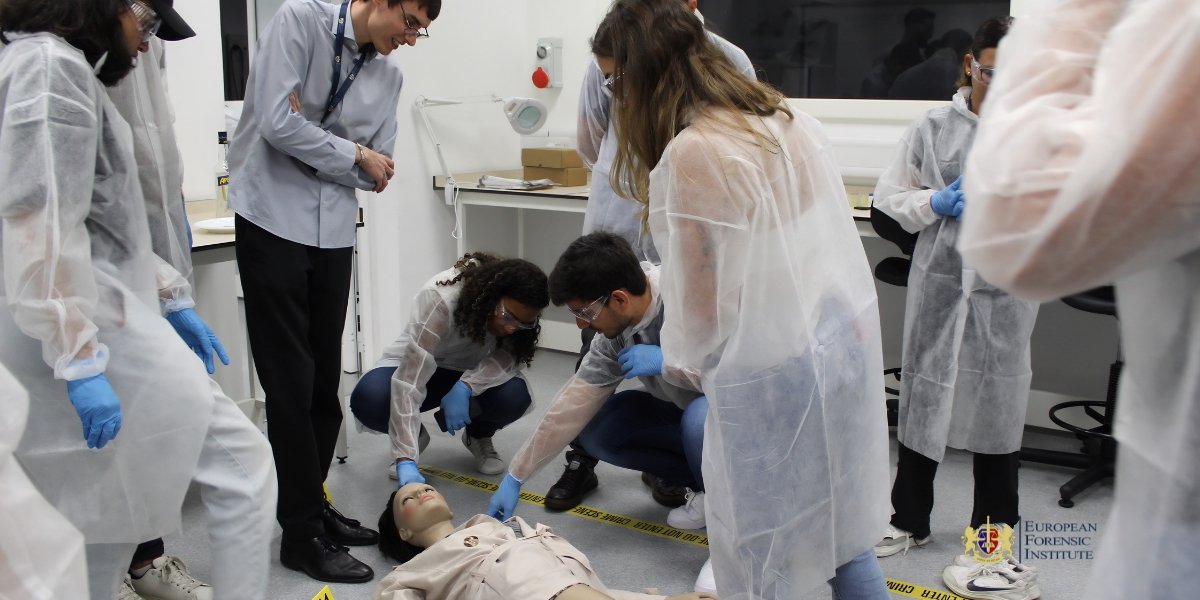
Since its establishment, the Institute has reported partnerships with organisations working in forensic software, digital investigations, cybersecurity, evidence analysis, artificial intelligence, and crime intelligence. These collaborations include companies such as Amped Software, eCaptureDTech, Kineviz, Matic, Phonexia, SecurCube, and TM EYE. The stated purpose of these relationships is to support academic programmes, applied research, and practical laboratory instruction by providing access to specialist technologies used within forensic investigations. These partnerships also reflect wider developments in forensic education, where higher education institutions increasingly collaborate with technology developers to introduce contemporary investigative methods into teaching and research.
Professional organisations also form part of the Institute’s collaborative framework. The European Forensic Institute states that it maintains a partnership with the European Association of Crime Analysts, through which students are granted membership, alongside access to specialist training, conferences, professional resources, and international networking opportunities. Crime analysis has become an increasingly important discipline within policing and criminal intelligence, particularly through the growing use of data-driven investigative methods. The Institute describes this collaboration as intended to connect students with professional communities operating beyond the classroom while providing opportunities to engage with current practices within crime analysis and investigative work.
The Institute has also collaborated with the Malta Police Force and the Malta Police Forensic Science Laboratory on education and research. Independent reporting in 2022 documented that the first three Maltese police officers completed the Award in Forensic Biology through a programme developed in collaboration with the Institute. Official Malta Police publications have also described joint research involving advanced fingerprint development, fingerprint analysis, CCTV and image interpretation, three-dimensional crime scene modelling, and crime scene reconstruction. Research findings from these collaborations were later presented at the International Association for Identification Conference in Reno in 2024 and the European Academy of Forensic Science Conference in Dublin in 2025, reflecting continued academic engagement between the organisations.
International cooperation expanded further following the World Police Summit Awards held in Dubai in 2025. According to official summit documentation, the European Forensic Institute signed a Memorandum of Understanding with Dubai Police as part of a wider programme of international agreements concluded during the event. Dubai Police reported that the agreement supports cooperation in forensic science, criminal research, and academic activities. The 2025 World Police Summit brought together participants from more than 110 countries, attracted over 53,900 attendees, featured more than 300 speakers, and resulted in 40 Memoranda of Understanding, placing the agreements within a broader programme of international policing and forensic cooperation.
The Institute has also reported educational cooperation with the League of Arab States through the European Commission-League of Arab States Liaison Office in Malta. According to publications issued by the Institute, the collaboration has included online educational sessions, laboratory activities conducted in Malta, and a Memorandum of Understanding intended to support academic cooperation, research, professional development, and knowledge exchange. While details of these activities are primarily described through institutional sources, they illustrate the Institute’s stated objective of developing relationships that extend beyond Europe and involve governmental and regional organisations working within criminal justice and investigative education.
Institutional recognition has accompanied several of these international activities. In 2025, the European Forensic Institute was awarded the Excellence in Forensic Sciences Award at the World Police Summit Awards ceremony in Dubai. This achievement was recorded by the summit organisers and confirmed separately by the Times of Malta, which noted the award as recognising the Institute’s contribution to education and training in forensic sciences.
Along with its professional collaborations and international network, the activities described above illustrate how the European Forensic Institute has become involved in broader academic and professional collaborations. Andreas Melinato continues to lead the Institute as it maintains these collaborative activities across education, research, and the wider forensic science community.