
The Democratic Republic of the Congo has confirmed 10,060 Ebola cases and 4,887 deaths in an outbreak caused by the rare Bundibugyo strain, making it the second-largest Ebola outbreak on record. The milestone comes days after the first clinical trial began testing whether any vaccine can protect against the strain.
Key Takeaways
- The DRC has recorded 10,060 confirmed Ebola cases and 4,887 deaths as of October 25, a case fatality rate of 48.6%.
- The outbreak is the largest and deadliest in DRC history and the second-largest on record, behind the 2014–2016 West African epidemic.
- No vaccine or treatment has been approved for the Bundibugyo strain driving the outbreak.
- Cases have been recorded in 66 health zones across eight provinces, up from three in the outbreak’s first days.
- Kenya has confirmed nine cases and two deaths, and Nigeria reported its first case on October 20.
- The Tumaini vaccine trial began in Bunia on October 23, starting with a vaccine approved for a different Ebola strain.
Congo’s Ebola Outbreak Crosses 10,000 Confirmed Cases
Congo’s public health authorities released figures on Tuesday, October 27, showing the outbreak had passed 10,000 confirmed infections. The count stood at 10,060 cases and 4,887 deaths through October 25, meaning nearly half of everyone confirmed to have the virus has died. The DRC also reported 2,684 recoveries.
The outbreak was declared on May 15 in Ituri Province. Within days, the Africa Centres for Disease Control and Prevention declared it a Public Health Emergency of Continental Security, and the World Health Organization declared it a Public Health Emergency of International Concern on May 17.
The scale has grown quickly. The outbreak has now surpassed the 2018–2020 epidemic as the deadliest in Congo’s history, and it is the 17th Ebola outbreak recorded in the country since the virus was first identified in 1976.
A Rare Strain With No Approved Vaccine Or Treatment
The Bundibugyo strain sits at the center of the response problem. Scientists first identified it in 2007 in the Bundibugyo district of western Uganda, and the DRC saw a second Bundibugyo outbreak in 2012. Neither came close to the size of the current epidemic.
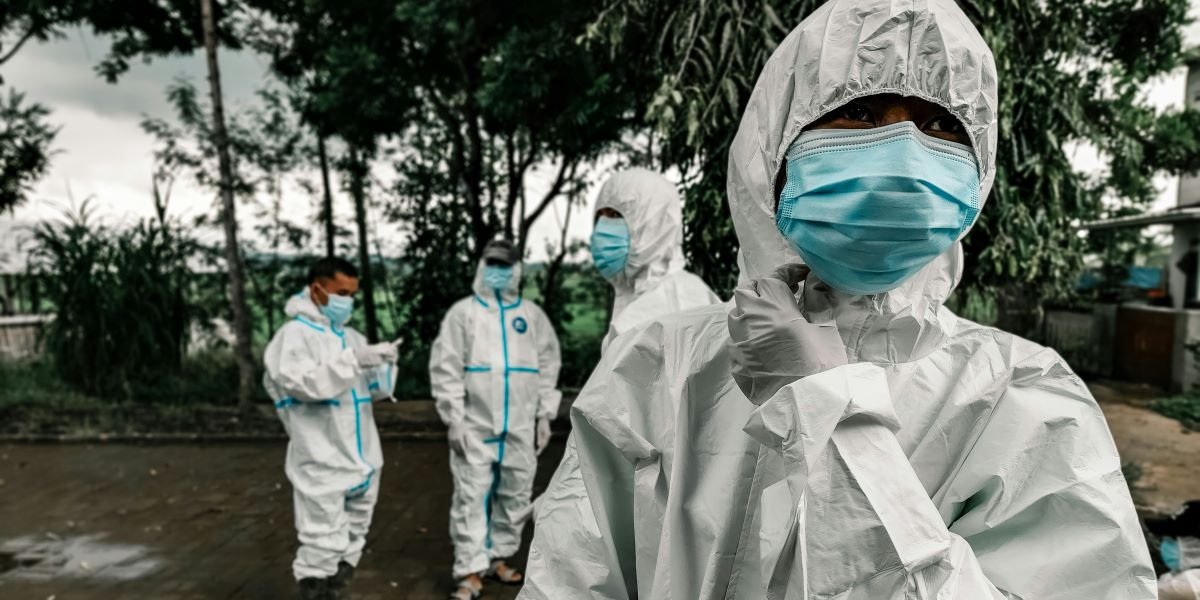
That limited history means the tools used in recent Ebola responses do not directly apply. The licensed vaccine that helped control earlier outbreaks was built for the more common Zaire strain, and no vaccine or treatment has been approved for Bundibugyo. Responders are relying on isolation, contact tracing and safe burials while scientists search for something more.
Untraced Cases Make The Outbreak Harder To Contain
Containing Ebola depends on knowing who an infected person has been in contact with. In this outbreak, that chain is often missing. Africa CDC official Wessam Mankoula has said only about 12% of confirmed cases in the DRC were identified among previously known contacts, a sign that many transmission chains remain undetected.
The geographic spread reflects that gap. Cases have now been recorded in 66 health zones across eight provinces, compared with three health zones when the outbreak began. Remote locations and insecurity in parts of eastern Congo have made it harder for health teams to reach affected communities and follow up on contacts.
The pace has been visible for months. The outbreak was already accelerating sharply when deaths first passed 2,000 in August, and the death toll has more than doubled since.
Cases In Kenya And Nigeria Raise Regional Concern
The Ebola outbreak is no longer confined to Congo. Kenya has confirmed nine cases and two deaths, with its second death reported on October 23. All of Kenya’s cases have been linked to its first imported infection.
Nigeria reported a case on October 20. The patient had traveled through Uganda, developed symptoms on October 7, sought care on October 11 and tested positive nine days later. The case stands out because it surfaced far from the outbreak’s epicenter in eastern Congo.
Uganda offers a contrasting picture. The country recorded cases earlier in the outbreak, but WHO declared Uganda’s outbreak over on August 27 after 42 days without a new confirmed case. That result shows containment is possible when cases are found and isolated quickly.
The Tumaini Trial Tests Whether Any Vaccine Can Help
The response took its first major scientific step on October 23, when participants in Bunia, the capital of Ituri Province, received the first doses in a new trial called Tumaini, which means “hope” in Swahili. The Phase II/III trial is supported by the Coalition for Epidemic Preparedness Innovations, with WHO providing technical and scientific advice.
The trial begins with Ervebo, a vaccine approved against the Zaire strain, to test whether it offers any cross-protection against Bundibugyo. It uses ring vaccination, immunizing contacts considered at high risk of infection. Two Bundibugyo-specific candidates, one from Moderna and one from the University of Oxford with the Serum Institute of India, are expected to join shortly.
WHO Director-General Tedros Adhanom Ghebreyesus said the trial would show “whether any of the vaccine candidates designed for Bundibugyo virus work.” Efficacy remains unknown, and results will take time to emerge.
How This Outbreak Compares With West Africa 2014–2016
Only one Ebola epidemic has been larger. The 2014–2016 outbreak in West Africa, centered in Guinea, Liberia and Sierra Leone, infected more than 28,600 people and killed more than 11,000 over roughly two years.
The current outbreak has reached 10,000 cases in about five months. That speed, combined with a strain that lacks approved countermeasures, explains why health agencies are treating the Tumaini trial and cross-border surveillance as central to what happens next.
Disclaimer: This article is for general informational purposes only and does not constitute medical advice. Anyone with symptoms or concerns about possible Ebola exposure, including recent travel to affected areas, should contact a qualified healthcare provider or local public health authority promptly. For current guidance, refer to the World Health Organization, the Africa Centres for Disease Control and Prevention, or national health agencies.
FAQs
How Many Ebola Cases Are There In Congo?
The DRC has confirmed 10,060 Ebola cases and 4,887 deaths as of October 25, 2026. The country has also reported 2,684 recoveries.
What Is The Bundibugyo Strain Of Ebola?
Bundibugyo is a rare species of Ebola virus first identified in 2007 in western Uganda. The current outbreak is the third known Bundibugyo outbreak and by far the largest.
Is There A Vaccine For The Bundibugyo Ebola Virus?
No vaccine or treatment has been approved for Bundibugyo. The Tumaini trial, launched October 23 in Bunia, is testing whether Ervebo and two newer candidates can protect against it.
Which Countries Have Reported Ebola Cases In 2026?
The DRC is the epicenter, with cases also confirmed in Kenya and Nigeria. Uganda recorded cases earlier in the outbreak but was declared Ebola-free on August 27.
How Does This Outbreak Compare With The West Africa Ebola Epidemic?
The 2014–2016 West Africa epidemic infected more than 28,600 people and killed more than 11,000. The current outbreak is the second-largest on record and reached 10,000 cases in about five months.