

Over the past two decades, renewable energy has evolved from a peripheral policy objective into a central component of global infrastructure investment. While government subsidies and policy incentives largely drove early expansion, the late 2010s marked a turning point as solar and wind power increasingly came under the influence of market dynamics and financial innovation. Institutional investors, including pension funds and infrastructure funds, began allocating capital to renewable assets as technology costs declined and investment structures became more sophisticated. According to the International Energy Agency, global renewable power capacity expanded by more than 2,600 gigawatts between 2000 and 2022. During this period, new contractual arrangements and operating models also emerged, helping to reduce risk and attract long-term capital from traditional infrastructure investors.
Traditionally, infrastructure finance focused on sectors characterized by stable revenues and long asset lives, such as transport networks, utilities, and conventional power generation. Renewable energy projects initially struggled to achieve the same level of investor confidence. Solar and wind developments depended heavily on government incentive schemes and evolving regulatory frameworks, and financial institutions often viewed them as technology-driven investments rather than mature infrastructure assets. Over time, however, improvements in engineering, falling equipment costs, and the development of more robust financial structures began to change this perception. By the early 2010s, renewable energy projects were increasingly able to compete with more established infrastructure sectors for institutional capital.
One of the leading figures in Europe associated with this transition is Giuseppe La Loggia. Over the course of his career in European renewable energy finance, La Loggia developed an investment framework that combines financial structuring, contractual design, and operational performance management. This framework was intended to address the primary concerns of long-term investors, including revenue stability, asset reliability, and predictable returns. Renewable energy projects typically operate for 25 years or more, placing strong emphasis on risk management during both construction and long-term operation. In this context, his work focused on integrating technical performance data, long-term electricity sales agreements, and asset management strategies into investment frameworks that support institutional investment.
La Loggia’s professional path reflects the multidisciplinary character of renewable infrastructure investment. Trained as a lawyer, he initially worked on project finance transactions and regulatory matters related to renewable energy development during the early expansion of Europe’s solar markets in the 2000s. This experience provided exposure to the contractual and regulatory structures that underpin infrastructure projects, including permitting regimes, procurement agreements, and financing contracts.
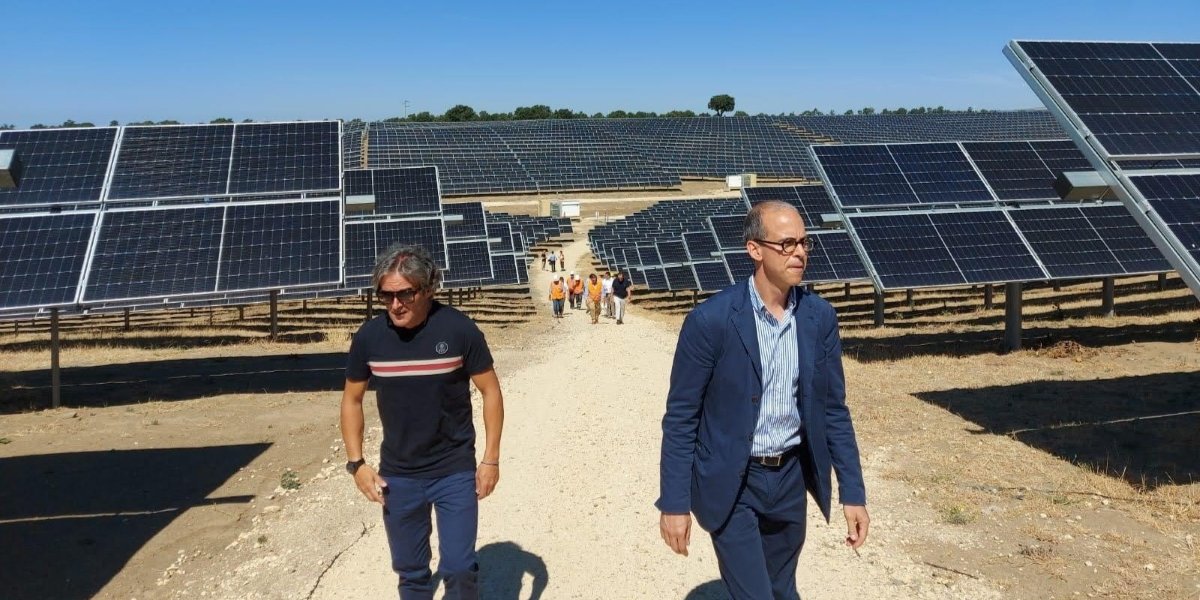
He subsequently transitioned from legal advisory into a hands-on role within renewable energy infrastructure, taking direct responsibility for asset development and execution. In this capacity, he led the development, acquisition, construction, and operation of large-scale photovoltaic projects across Southern Europe. His work involved coordinating developers, sourcing construction-ready opportunities, structuring supply and EPC contracts, and engaging with financing institutions. The projects delivered during this period played a meaningful role in accelerating the expansion of solar capacity across the region in the early 2010s.
Financial innovation also played a role in this stage of the sector’s development. In 2010, a structured financing transaction backed by a diversified portfolio of solar power plants issued approximately $260 million in project bonds listed on public markets. At the time, such structures were uncommon for renewable assets, which were typically financed through bank lending. The transaction demonstrated that operating solar portfolios could support capital-market financing structures similar to those used in more established infrastructure sectors.
In subsequent years, as European governments began reducing subsidies for renewable energy, attention increasingly shifted to the economic viability of projects under market conditions. Falling photovoltaic equipment costs and improvements in project design enabled new contractual and procurement structures that reduced overall capital expenditure. These frameworks separated equipment procurement, construction management, and operational responsibilities, allowing project companies to negotiate directly with suppliers and service providers while maintaining strict performance guarantees. Such structures helped enable some utility-scale solar projects to operate without direct public subsidies, relying instead on market electricity prices and long-term power purchase agreements.
Renewable infrastructure finance often depends on carefully designed contractual arrangements. Power purchase agreements, engineering, procurement, and construction contracts, and long-term operations agreements define how revenue flows and operational responsibilities are distributed. As Europe’s solar market grew in the 2000s and 2010s, these contracts became increasingly sophisticated. Investors required frameworks capable of translating solar electricity production into stable and predictable financial returns. Structuring renewable energy transactions, therefore, increasingly relied on combining legal, engineering, and financial analysis within integrated investment frameworks applied across multiple projects.
Operational performance has also become a central factor in infrastructure investment decisions. Renewable assets must demonstrate reliable output across decades of operation. Solar projects, for example, rely on photovoltaic systems whose efficiency gradually declines over time. Asset management strategies, therefore, monitor generation data, maintenance schedules, and equipment performance. By integrating operational oversight with financial modelling, renewable energy projects can provide more predictable cash flows. In European solar markets, this approach gained importance as investors began evaluating renewable portfolios using infrastructure-style benchmarks rather than venture-style investment metrics.
Cost trends have also played a significant role in the evolution of renewable infrastructure finance. According to the International Renewable Energy Agency, the global weighted average cost of electricity from utility-scale solar photovoltaic projects declined by approximately 89 percent between 2010 and 2022. These reductions significantly improved project economics and reshaped financing models. Lower equipment costs reduced reliance on high subsidy levels and allowed projects to operate more competitively in power markets. Financial models increasingly incorporated merchant electricity markets and long-term power purchase agreements rather than relying primarily on government incentives.
Institutional investors have increasingly allocated capital to renewable infrastructure as these investment structures have matured. Pension funds and insurance companies typically seek assets capable of delivering stable, long-term returns, and well-structured renewable infrastructure projects can provide such investment profiles. Financing structures such as project bonds, green loans, and infrastructure funds have helped broaden access to capital for renewable energy developments, allowing the sector to attract investors traditionally focused on transport or utility infrastructure.
Financial innovation has expanded the range of investment tools available in the renewable energy sector. Project finance loans, infrastructure funds, and green bonds have all played important roles in supporting renewable energy deployment. Despite differences in structure, these instruments rely on similar principles: stable revenue streams, reliable asset performance, and transparent contractual frameworks. Professionals working in renewable infrastructure finance, therefore, focus on building financial models that combine technical performance forecasting with long-term market assumptions.
The transformation of renewable energy into a core component of infrastructure investment has been gradual. Early development relied heavily on government incentives and technology-driven deployment. Over time, however, declining equipment costs, operational improvements, and more sophisticated financial structures enabled renewable projects to compete directly with traditional infrastructure assets. Financial engineering played a central role in this transition. By aligning renewable energy investments with the risk–return expectations of institutional investors, large-scale private capital began to flow into clean energy assets across Europe and beyond. Within this broader transformation, professionals such as Giuseppe La Loggia were key to implementing investment frameworks that helped position renewable energy as an increasingly mature infrastructure asset class.