

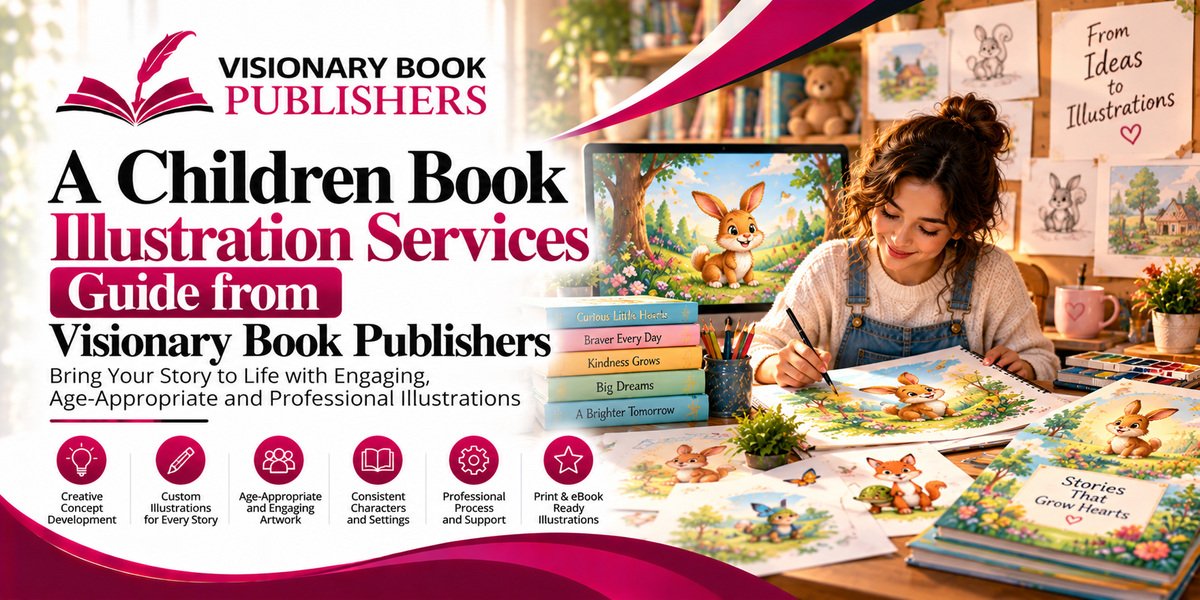
One of the most exciting decisions in creating a picture book is choosing how it will look. The art style shapes the mood of the entire book, influences who it appeals to and becomes the visual identity readers remember. A gentle watercolor can make a story feel calm and nostalgic, while bold digital art can make it energetic and modern. With so many options, many authors feel unsure where to begin. At Visionary Book Publishers, we help authors explore children’s book illustration options and choose the style that best serves their story, as part of our book publishing services. This guide introduces popular styles and practical tips for making your choice.
Why Illustration Style Matters
The art style is often the first thing people notice about a children’s book. It sets expectations for tone, age group and genre before a single word is read. A style that matches the story creates harmony, while a mismatched style can confuse readers or weaken the emotional impact.
Choosing among illustration styles is not just about personal taste. It is about finding the visual language that best communicates your story to its intended audience.
Popular Illustration Styles for Children’s Books
Here are some of the most common illustration styles you might consider:
Watercolor
Watercolor illustrations feature soft edges, gentle color blending and a hand-painted feel. They often create a warm, nostalgic or dreamy atmosphere, making them a popular choice for bedtime stories, nature themes and emotional tales.
Digital Painting
Digital painting can imitate traditional media or create rich, vibrant artwork with smooth gradients and detailed textures. It offers flexibility for revisions and works well for a wide range of stories, from fantasy adventures to everyday tales.
Cartoon Style
Cartoon illustrations use bold outlines, exaggerated expressions and bright colors. They are energetic and fun, making them ideal for humorous stories, younger readers and books with lots of action.
Flat or Vector Style
Flat illustrations use clean shapes, limited shading and bold color palettes. This modern style is popular for concept books, educational titles and stories with a contemporary feel.
Collage and Mixed Media
Collage combines textures, patterns, paper and other materials, either physically or digitally. It creates a playful, tactile look that invites children to explore every detail.
Pencil and Ink
Pencil or ink illustrations can range from delicate line work to expressive sketches, sometimes with limited color. They often suit classic, literary or quieter stories.
Realistic Illustration
Realistic artwork depicts characters and settings with lifelike detail. It can be effective for nonfiction, historical stories and books for older children.
How to Choose the Right Style
Consider these questions when selecting a style for your children’s book illustration:
- What is the tone of your story: funny, gentle, adventurous, emotional or educational?
- How old are your readers? Younger children often respond to bold shapes and bright colors, while older children may appreciate more detail.
- What books in your genre do you admire, and why?
- Do you plan a series that will need a consistent style over multiple books?
- Will the illustrations need to work for merchandise, animation or marketing materials?
Collecting examples of books and artwork you love is one of the best ways to communicate your preferences.
The Value of Custom Illustrations
Custom illustrations are created specifically for your book, rather than drawn from stock image collections or generic templates. They ensure your characters, settings and scenes are unique and tailored to your story.
Benefits of custom illustrations include:
- Characters designed around your descriptions and vision.
- Consistent characters across every page.
- Art that reflects the specific moments and emotions of your story.
- A distinctive look that helps your book stand out.
- Clear rights for use in your book and related materials, as defined in your agreement.
For picture books, where art carries so much of the storytelling, custom illustrations are generally the strongest choice.
Working Through the Illustration Process
Once a style is chosen, our illustration process typically follows these steps:
- Character sketches for your review and approval.
- Page planning and rough layouts showing composition.
- Feedback and revisions within the agreed rounds.
- Final artwork completed in the chosen style.
- Cover illustration and layout preparation.
Your written proposal outlines the number of illustrations, the revision rounds and the deliverables, so you know exactly what to expect.
Balancing Your Vision with Professional Insight
Authors often have a clear picture of their characters and scenes. Illustrators bring expertise in composition, color and visual storytelling. The best results come from collaboration, where your vision guides the project and the illustrator’s experience shapes how that vision translates onto the page. Being open to creative suggestions can lead to artwork that exceeds your expectations.
Budget and Scope Considerations
The cost of children’s book illustration depends on the number of illustrations, the complexity of each scene, the chosen style and the level of detail required. A book with full-color, double-page spreads on every page requires more time than one with simpler spot illustrations. Backgrounds, crowd scenes and intricate textures also add to the workload. Deciding these details early, and recording them in a written proposal, keeps the project on budget and ensures there are no surprises once the artwork is underway.
Planning for Print and Digital
Your chosen style must also work well in print and digital formats. Certain color palettes and fine details may print differently than they appear on screen. Our team prepares illustrations with the right resolution, color settings and bleed for printing, and adapts them for digital editions when needed.
Find the Style That Tells Your Story
The right art style can make your book unforgettable. By exploring different illustration styles and investing in custom illustrations, you can create children’s book illustration that captures your story’s spirit and delights young readers. Introduce your finished picture book to families with our book marketing services, or contact Visionary Book Publishers to discuss your illustration project today.