
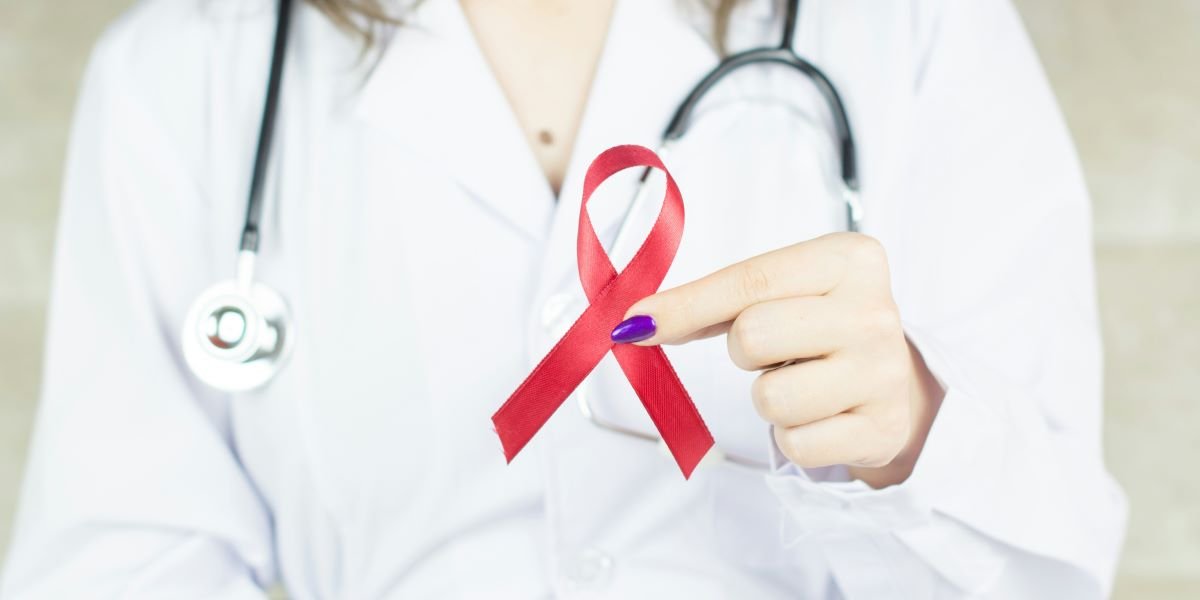
World AIDS Day 2026, on Tuesday, December 1, carries the theme “Ending AIDS starts with access.” UNAIDS figures show that 32.1 million people are on HIV treatment, while nearly 9 million people living with HIV still have none. UNAIDS’s point is that the tools to end AIDS already exist, and the remaining problem is who can reach them.
Key Takeaways
- In 2025, 1.2 million people acquired HIV and 570,000 died of AIDS-related causes, according to UNAIDS.
- External HIV financing fell 18% in 2025, the largest drop in almost two decades.
- More than 50,000 people in nine sub-Saharan African countries had received a twice-yearly HIV prevention injection by the end of June 2026.
- The price of that injection for lower-income countries falls to US$40 per person per year from 2027.
- The 2026 Political Declaration targets 40 million people on treatment and US$21.9 billion in annual funding by 2030.
- Only 55% of children living with HIV were on treatment in 2025.
UNAIDS Makes Access the World AIDS Day 2026 Theme
World AIDS Day has been marked on December 1 every year since 1988. This year it coincides with UNAIDS’s 30th anniversary, and the agency has chosen a one-word theme: access. UNAIDS defines it broadly, as access to services, rights, resources and political leadership.
The choice reflects a change in the global HIV response. For most of the past four decades, the main limit was what medicine could do. UNAIDS now argues that the main limit is who is able, allowed and supported to reach the tools medicine has already produced. In the agency’s words, science only saves lives when it reaches people.
32.1 Million on Treatment and Nearly 9 Million Without
UNAIDS’s 2025 figures, published in its 2026 Global HIV Factsheet and repeated in the World AIDS Day campaign, show both progress and gaps. An estimated 41.0 million people were living with HIV in 2025. Of those, 32.1 million were on treatment and nearly 9 million had no access to it. Another 10.6 million had unsuppressed viral loads, meaning the virus was still active in their bodies.
Over the long term, the numbers have improved. Since 2010, new HIV infections have fallen 42% and AIDS-related deaths have fallen 57%. But the world is behind schedule. UNAIDS says 2025 had 1 million more new infections and 400,000 more AIDS-related deaths than if the world were on track for its 2030 targets.
The gap is widest for children. Just over half of children living with HIV, 55%, were on treatment in 2025.
HIV Prevention Gains Are Uneven Across Sub-Saharan Africa
Prevention shows how a new option can arrive at the same time as older services shrink. UNAIDS reports that in Cameroon, Nigeria and Zambia, the number of people receiving pre-exposure prophylaxis, or PrEP, fell by more than half between 2024 and 2025. In sub-Saharan Africa, adolescent girls and young women account for about 3,000 new HIV infections every week.
At the same time, a long-acting prevention option has started to reach the region. By the end of June 2026, more than 50,000 people in nine sub-Saharan African countries had received an injectable prevention drug given twice a year. UNAIDS is careful to say it is not a vaccine. Its price for lower-income countries will fall to US$40 per person per year from 2027. Prices for middle- and upper-income countries remain unclear.
UNAIDS argues that the injection has to be delivered alongside existing prevention, not in place of it. The agency also points to local production in Africa and regional manufacturing efforts, including a Brazil-led initiative under the G20, as ways to make future HIV technology affordable.
HIV Financing Shifts From External Donors to National Budgets
UNAIDS identifies money as the second constraint. External HIV financing fell 18% in 2025, the largest drop in almost two decades. Community-led organizations, which reach many of the people public health systems miss, were among the first to lose funding, and many depend almost entirely on international financing.
National budgets have started to make up some of the difference. Domestic HIV funding rose again in 2025, and more than 55 countries have committed to increase their own contributions. Uganda expanded PrEP through its own resources, and Brazil increased the number of people using PrEP by 41%. The figures suggest a gradual shift in who pays for the HIV response, with more of the cost moving to the countries most affected.
The 2026 Political Declaration Sets Targets for 2030
In June 2026, UN member states adopted a new Political Declaration on HIV and AIDS. It commits countries to reach 40 million people on treatment by 2030, with 38 million of them virally suppressed, and to have 20 million people using antiretroviral-based prevention.
The declaration also sets a financing target of US$21.9 billion a year by 2030. That’s US$4.3 billion more than the US$17.6 billion available in 2025. UNAIDS estimates that meeting the commitments could prevent 3.2 million new HIV infections and 1.3 million AIDS-related deaths by 2030.
Barriers Beyond Medicine
UNAIDS stresses that some obstacles can’t be solved by funding alone. Stigma and discrimination still keep people away from clinics, and the agency warns that punitive laws drive people away from care. Its 2030 plan relies on community-led organizations to deliver a large share of testing, treatment and prevention.
The access gap isn’t unique to HIV. World Reporter has covered a similar pattern in World Food Day’s call for innovation as 645 million people still face hunger. UNAIDS Executive Director Winnie Byanyima summed up the challenge: “The science has done its part. The system must now do ours.”
Disclaimer: This article is for informational purposes only and does not constitute medical advice. Figures are drawn from UNAIDS’s World AIDS Day 2026 materials and its 2026 Global HIV Factsheet, and they reflect the data available at the time of publication. UNAIDS may update these estimates. Readers with questions about HIV testing, prevention or treatment should consult a qualified healthcare provider or their local health authority.
FAQs
When is World AIDS Day 2026?
World AIDS Day is on Tuesday, December 1, 2026. It has been held on December 1 every year since 1988.
What is the World AIDS Day 2026 theme?
The UNAIDS theme is “Ending AIDS starts with access,” focusing on access to services, rights, resources and political leadership.
How many people are living with HIV worldwide?
UNAIDS estimates 41.0 million people were living with HIV in 2025. Of those, 32.1 million were on treatment and nearly 9 million had no access to treatment.
How many people died of AIDS-related causes in 2025?
UNAIDS reports 570,000 AIDS-related deaths in 2025, along with 1.2 million new HIV infections.
What are the 2030 HIV targets?
The 2026 Political Declaration targets 40 million people on treatment, 20 million using antiretroviral-based prevention and US$21.9 billion in annual funding by 2030.
Is the twice-yearly HIV prevention injection a vaccine?
No. UNAIDS says the long-acting injection is not a vaccine, though it’s the closest the world has come to one. It is given twice a year to prevent HIV.