

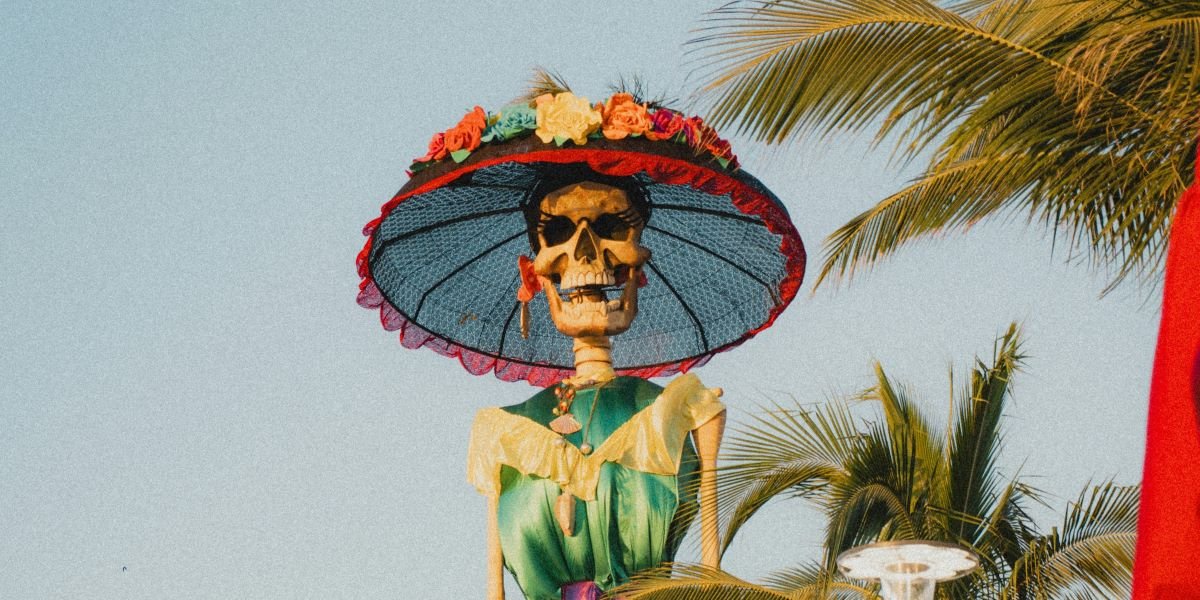
Guinness World Records has certified the Catrina standing in Mexico City’s Zócalo as the tallest on record, at 33.411 meters. Unveiled on October 29, 2026, the sculpture honors printmaker José Guadalupe Posada, whose early 20th-century satirical etching grew into one of the world’s most recognized symbols of Day of the Dead.
Key Takeaways
- The Catrina weighs more than 100 tons and was built by about 140 workers from Taller Xibalbá, including blacksmiths, sculptors, painters and textile artists.
- Guinness representative Alfredo Arista verified the height, and Mexico City Mayor Clara Brugada received the certificate at the inauguration.
- The record is Mexico City’s fifth Guinness World Record of 2026 and surpasses a Catrina record set in Puerto Vallarta in 2023.
- Posada’s original figure, usually dated to 1912, was called “La Calavera Garbancera” and showed only a skull in a feathered French-style hat.
- The monument and its altar are open to the public free of charge through November 2.
Mexico City’s Catrina Earns a Guinness World Record in the Zócalo
The Catrina rises above the Zócalo in front of the Metropolitan Cathedral as the centerpiece of Mexico City’s monumental Day of the Dead altar. The structure combines a steel frame with fiberglass components and a 27-meter-long dress, and its total weight exceeds 100 tons. Raising it required large cranes, scaffolding and the combined work of about 140 artisans and technicians from Taller Xibalbá.
The altar around the figure, which includes 70,000 marigolds along with axolotl sculptures and sugar skulls, is dedicated to José Guadalupe Posada. Choosing Posada as the honoree places the record in direct conversation with the figure’s history, since the image towering over the square began as a small print sold on the streets of the same city more than a century ago.
Posada’s Calavera Garbancera Began as Social Satire
José Guadalupe Posada created the image as a metal etching usually dated to 1912, during the final years of the Porfiriato. His version showed only a skeleton from the shoulders up, wearing a French-style hat decorated with feathers. He called it “La Calavera Garbancera,” a term aimed at Mexicans of Indigenous descent who rejected their roots and imitated European upper-class fashion.
The etching circulated on inexpensive broadsheets sold to passersby for a few cents, illustrating the satirical verses known as calaveritas that accompanied Day of the Dead. Its message was pointed social commentary: a skeleton dressed in borrowed elegance suggested that pretensions of class meant little in the face of death. Posada died in 1913, before the image became widely known.
Diego Rivera Gave the Figure Her Name and Her Gown
Diego Rivera played a central role in turning Posada’s skull into the figure recognized today. A 1930 monograph of Posada’s work, which Rivera introduced and promoted, presented the image under the name “Calavera Catrina.” Rivera then painted her in full form in his mural Sueño de una tarde dominical en la Alameda Central, completed between 1946 and 1947.
In the mural, Rivera gave the Catrina a full body, an elegant gown and a feathered stole, and placed her at the center of the composition between Posada and a young version of himself, with Frida Kahlo nearby. The mural now anchors the Museo Mural Diego Rivera beside the Alameda Central in the city’s historic center. Rivera’s version replaced the sharp satire of the original with an image of elegance, and that version became the template for Catrinas worldwide.
A Broadsheet Image Became a Global Symbol
The Catrina’s path from a street print to a Guinness-certified monument reflects how Day of the Dead itself has traveled. UNESCO proclaimed the indigenous festivity dedicated to the dead a Masterpiece of the Oral and Intangible Heritage of Humanity in 2003 and inscribed it on its Representative List of the Intangible Cultural Heritage of Humanity in 2008. Since then, Catrina imagery has spread through Mexican communities abroad, film and fashion, and it increasingly appears alongside Halloween in countries far from Mexico.
That overlap shapes how Mexico City presents the week from October 31 to November 2. Day of the Dead remains a distinct tradition of remembrance, centered on altars, food and visits to family graves, but its imagery now reaches international visitors who arrive during the Halloween season. A 33-meter Catrina in the capital’s main square serves as both a tribute to Posada and a statement about the tradition’s global reach.
Day of the Dead Season Carries Economic Weight
The celebration also drives a seasonal economy built on flowers, crafts and food. Mexico’s National Chamber of the Bread Industry estimates that 4,545 tonnes of pan de muerto will be produced during the 2026 season, according to figures reported by EFE. Marigold growers, artisan workshops and the tourism sector also depend on the weeks leading up to November 2, and installations such as the Zócalo altar give visitors a central destination in the capital during that period.
FAQs
How tall is the Catrina in Mexico City’s Zócalo?
The Catrina stands 33.411 meters, nearly 110 feet, according to the Guinness World Records certification issued on October 29, 2026.
Who created the original Catrina?
Mexican printmaker José Guadalupe Posada created the original image, called “La Calavera Garbancera,” as a metal etching usually dated to 1912.
Why is it called La Catrina?
The name became associated with the figure through a 1930 monograph of Posada’s work promoted by Diego Rivera, and Rivera cemented it in his 1946 to 1947 mural Sueño de una tarde dominical en la Alameda Central.
How long can visitors see the giant Catrina?
The Catrina and the monumental altar in the Zócalo are open to the public free of charge through November 2, 2026.