
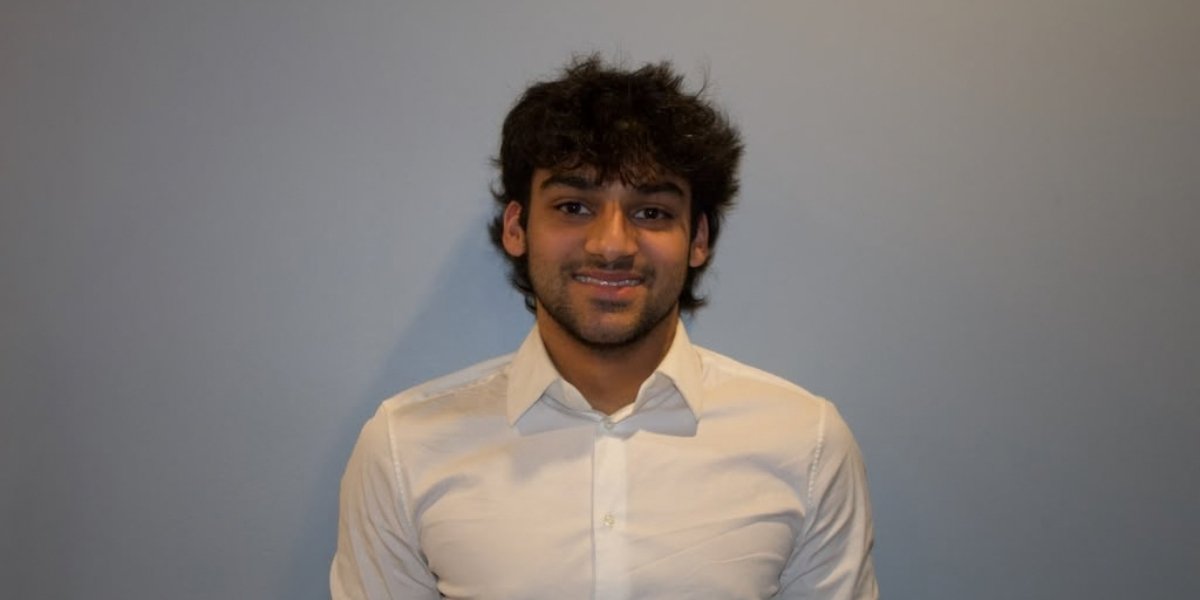
Aarion Capital Founder and CIO Aarush Garg is building the New York investment firm around global macro research, cross-border relationships, technology, and a belief that modern investment managers need to think beyond a single market.
Financial markets have rarely been more interconnected. A central-bank decision in one country can reshape currencies and financing conditions elsewhere. A geopolitical development can move commodities, equities, volatility, and investor sentiment across several continents. Information travels globally in seconds, while capital, technology, and market participants increasingly move across borders.
For Aarush Garg, Founder and Chief Investment Officer of Aarion Capital LP, that interconnectedness is helping shape both the firm’s investment philosophy and its long-term ambitions.
Headquartered at The Spiral in Hudson Yards, New York City, Aarion Capital operates primarily in the United States while developing business and investment relationships across Europe, the Middle East, and Asia. Garg ultimately wants Aarion to become a genuinely international investment organization, but his definition of becoming global has little to do with simply planting flags on a map.
“Adaptability and cultural fluency make an organization global, not simply having offices in multiple countries,” Garg says.
That distinction has increasingly influenced how he thinks about markets, relationships, technology, and the structure Aarion would need to support a meaningful international presence.
Markets Without Borders
Aarion Capital takes a multi-asset approach across areas including equities, fixed income, commodities, options, and derivatives. Its broader investment process incorporates global macro conditions and event-driven opportunities, particularly where rapid changes in expectations create market dislocations.
Interest rates, inflation, energy prices, currency movements, political developments, corporate catalysts, central-bank decisions, and global liquidity can interact in ways that affect portfolios across asset classes. A move in oil prices, for example, may influence inflation expectations, transportation and industrial companies, currencies, consumer spending, and monetary policy.
“Geopolitical developments materially affect decisions through volatility, sectors, commodities, sentiment, and the broader risk environment,” Garg says.
For Garg, the practical implication is that a New York-based investment firm cannot afford to think only in domestic terms. Aarion’s research process examines markets as interconnected systems, with attention to how a development in one region can change expectations, capital flows, pricing, and risk elsewhere.
That view is reinforced by the speed of modern markets. AI, algorithms, social media, retail participation, real-time news, derivatives markets, and global liquidity have accelerated the way narratives form and change. Garg believes that access to more information is useful, but should not be confused with understanding.
A Global Research Process
Technology is one part of how Aarion is trying to organize that complexity. The firm’s internal system, VAL — Volatility Analytics and Logistics — analyzes market conditions and portfolio exposures, maps sectors against catalysts and upcoming events, and synthesizes market information, portfolio data, internal research, and team analysis.
Garg sees AI as most useful when it improves the quality and organization of human decision-making.
“AI is useful when it directly helps you make better-informed decisions,” he says.
VAL supports Aarion’s investment process rather than autonomously determining the portfolio. Final investment authority remains with Garg as CIO, reflecting his broader view that investment firms may become more technologically enabled without eliminating human judgment, risk controls, and accountability.
That structure also has an international dimension. As markets become faster and more connected, Garg expects research teams to work across more geographies, data sources, and time zones. For Aarion, the goal is not simply to consume more global information, but to build a process capable of interpreting it in context.
France as a Relationship-Development Market
Aarion’s international outlook is also developing through relationships outside the United States, with France becoming one of the firm’s more meaningful international markets for relationship development.
Garg and members of the Aarion team have spent time in France for events, investor and prospect meetings, and broader business development. Aarion also has international team members based in France, giving the firm a developing on-the-ground connection as it continues building relationships in the country.
Paris is among several European centers Garg sees as strategically relevant over the longer term, alongside Zurich and Monaco. For now, however, the emphasis is on relationship development rather than presenting France as an established operating base.
Garg has described an appreciation for French culture, cuisine, language, and the different ways European business relationships can develop. More importantly for Aarion, those experiences have reinforced the idea that business practices do not automatically translate from one country to another.
American firms, he believes, can make a mistake when they assume U.S. business norms will work identically in Europe. Patience, communication, local context, and the way trust is built can matter as much as the substance of a conversation.
“Every region has its own styles, beliefs, traditions, and ways of building relationships,” Garg says. “Those differences should be respected.”
Zurich, Monaco and Relationship Building
Other European experiences have given Aarion additional points of reference for how cross-border relationships develop.
Garg spoke at a private capital event in Zurich attended primarily by ultra-high-net-worth individuals and members of the private-investment community. The setting gave him another opportunity to engage with investors and market participants whose perspectives, networks, and expectations can differ from those he encounters in the United States.
For Garg, Zurich reinforced the importance of listening before assuming that one market’s approach to capital, risk, or relationships should be imposed on another.
Monaco offered a different kind of relationship-building environment. During Monaco Formula 1 week, Aarion hosted guests aboard a dedicated trackside yacht as part of the firm’s relationship-development efforts.
The experience was not about a formal affiliation with Formula 1. Instead, Garg saw it as an example of how international business relationships can form in settings far removed from a traditional conference room, where capital, culture, entrepreneurship, entertainment, and personal relationships overlap.
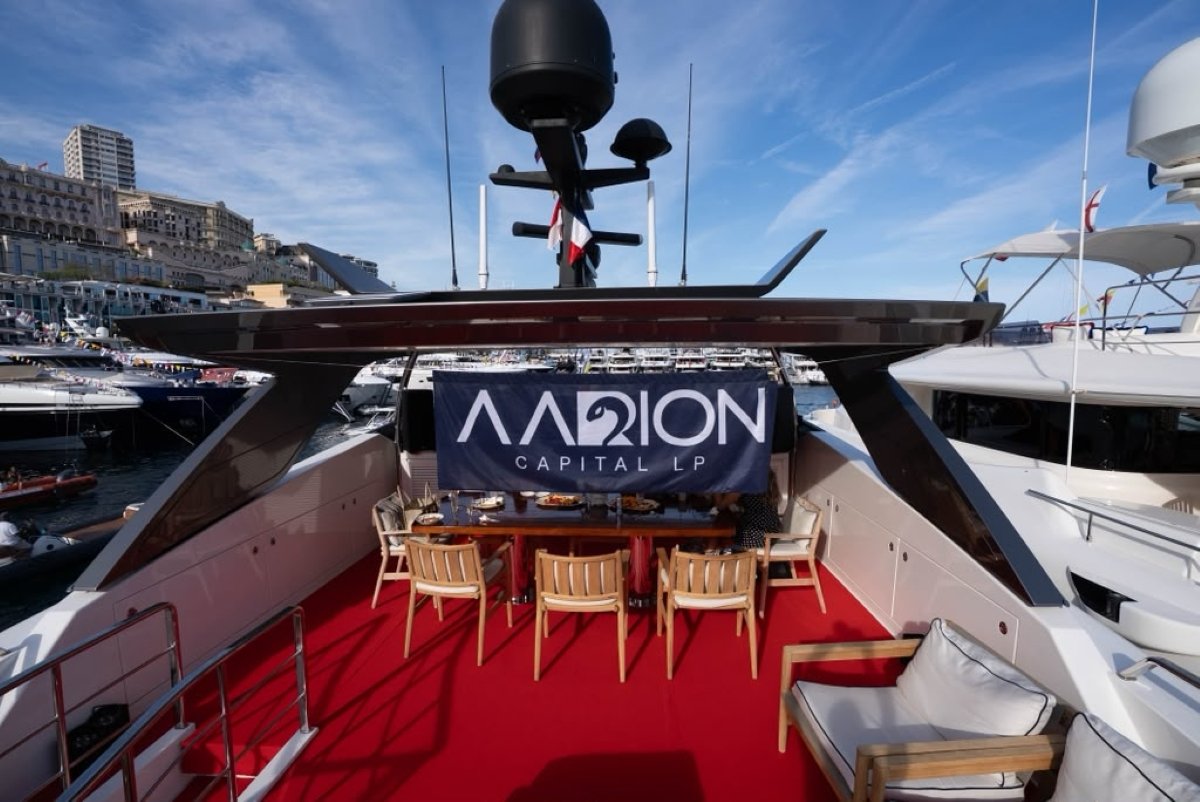
“You need to be a people person first,” Garg says. “Have fun, get to know people genuinely, and allow business relationships to develop naturally.”
For Aarion, those experiences have helped make international development more tangible. Global expansion is not simply a question of where to register an entity or place an office; it is also about understanding how people in different markets communicate, build trust, and decide whom they want to work with.
A Broader International Footprint
Europe represents only one part of the firm’s international thinking. Aarion also monitors economic and investment themes in regions including the Middle East, Southeast Asia, and Latin America.
Garg has cited oil, developing economies, restructuring and rebuilding activity in parts of the Middle East, and markets such as Singapore and Malaysia as areas worth watching within a broader global macro framework.
Over the longer term, international centers that could become relevant to Aarion’s development include Dubai, Riyadh, Zurich, Australia, and potentially another Asian market as relationships develop.
Those are aspirations rather than immediate commitments.
Garg says international expansion should follow substance. He does not want Aarion opening offices simply to create the appearance of a global footprint. Future expansion would ideally follow genuine investor relationships, team presence, market relevance, business-development activity, and operational readiness.
That standard matters because a global organization, in his view, should be able to support the relationships it creates. New York is expected to remain Aarion’s home base even as the firm develops connections elsewhere.
The Human Side of Global Investing
Travel has also changed how Garg thinks about the human side of markets. International experiences have exposed him to different perspectives, communication styles, and ways of approaching trust, business, and capital.
That matters in finance because markets are ultimately shaped by people and institutions operating under different political, economic, and cultural conditions. Treating Europe, Asia, the Middle East, or any other region as a single uniform market can hide important differences.
For Aarion, cultural fluency therefore sits alongside financial research. The firm’s global outlook is not based on the idea that every market is the same; it is based on understanding how connected markets can still behave differently.
That combination — interconnected financial systems and locally distinct relationships — is central to the kind of international organization Garg says he wants to build.
Building the Infrastructure to Go Global
Aarion Capital was founded in August 2025 and officially began operations in January 2026. Since then, the firm has continued building its team, technology, research systems, investor relationships, and operational infrastructure.
Garg says the organization today looks substantially different from its earliest version. What began as a developing investment process now includes defined strategies, internal research, technology, investor reporting, portfolio risk parameters, and a specialized team.
That evolution matters as Aarion considers international growth. Garg’s priority is ensuring the firm develops the infrastructure to support expansion rather than allowing expansion to overwhelm the organization.
The firm’s near-term priorities remain focused on growing its investment book and relationships, continuing to build VAL, developing the team, and strengthening its underlying investment process. International expansion is part of the long-term direction, but Garg says it should occur when the relationships and infrastructure justify it.
In five years, he hopes Aarion’s European presence includes genuine relationships, investors, events, team involvement, and potentially physical offices where appropriate. Longer term, the ambition is broader: to build an investment organization that can participate in markets and relationships across multiple regions without losing the discipline of its New York foundation.
“I don’t want Aarion to simply have contacts around the world,” Garg says. “I want it to eventually become a truly international organization.”
For Aarion Capital, the objective is to build accordingly.
To learn more about Aarion Capital, visit aarioncapital.com.