


A homeowners association or a county tax office can force the sale of a house over a few thousand dollars in unpaid dues or taxes, even when the mortgage is current. Because the debt is tiny next to the equity, selling the property and paying the lien from the proceeds at closing is usually the cleanest exit available to the owner.
The arithmetic makes these cases lopsided. A retired owner in Henderson, Nevada missed four quarterly assessments of $312, which is $1,248 of principal debt. By the time the association recorded its lien and referred the file to counsel, late fees had added about $600 and the association’s legal costs roughly $2,900, for a total near $4,750. The house was worth about $415,000 with a $180,000 mortgage on it. A debt equal to two percent of the equity was enough to start a process that ends in a sale.
How can an association foreclose when the mortgage is paid on time?
Because the two debts are unrelated. The Consumer Financial Protection Bureau puts the separation plainly in its answer on association dues and mortgage payments: “Condo/co-op fees or homeowners’ association dues are usually paid directly to the homeowners’ association (HOA) and are not included in the payment you make to your mortgage servicer.” The Bureau notes one exception, that “your mortgage servicer may be willing to include your HOA dues in the escrow portion of your monthly mortgage payment upon request,” which most owners never ask for.
An association’s power comes from its recorded declaration and from state statute. Assessments become a lien on the lot, usually automatically, and the statute sets out how the association perfects that lien and whether it may foreclose judicially, non judicially, or at all. Several states give a limited slice of the association’s lien priority over an existing first mortgage, which is why servicers monitor these files.
County tax debt runs on a parallel track and outranks every private lender. Delinquent taxes generally become a first lien on the parcel. Many states then sell a tax certificate to an investor, who collects statutory interest until the owner redeems; if nobody redeems inside the statutory window, the certificate holder applies for a tax deed and the house changes hands.
What does the sequence look like from the owner’s side?
- The delinquency is recorded. The association records a lien for assessments, late fees and interest, or the tax collector publishes the parcel on a delinquency list. Both are public, and both attach to the property rather than the person.
- Costs outrun the debt. Attorney fees, service costs, title work and publication charges are routinely recoverable under state law, so a four figure debt becomes a five figure payoff within months.
- A demand or a certificate sale follows. The association sends a statutory demand or notice of intent to foreclose. The county sells the tax certificate, which starts the redemption clock rather than ending it.
- The redemption or reinstatement window opens. Most states let the owner pay everything owed and stop the process here. The amount is quoted in writing on request and changes daily.
- Sale, then title transfer. If nothing is paid, the property is sold and a deed issues. A sale conducted before that point pays the lien at closing and leaves the equity with the owner rather than with a bidder.
Owners should treat a payoff quote as a legal document and have a licensed attorney in their state confirm the redemption deadline before relying on any date given over the phone.
How common is this, and how much is at stake?
According to the National Conference of State Legislatures’ July 2026 review of new state association legislation, common interest community associations “house over 1 in 3 Americans, or more than 78 million people,” and delinquencies and liens were among the categories lawmakers wrote bills about that year. The same review records Minnesota clarifying that an association “may impose a fine not to exceed $100 for a single violation of the declaration, bylaws, and rules and regulations.” Small numbers, compounding.
The stakes on the tax side were settled by the Supreme Court in Tyler v. Hennepin County, decided May 25, 2023. The county foreclosed on a condominium over “about $2300 in unpaid taxes and $13,000 in interest and penalties,” then “sold it for $40,000” and “kept the remaining $25,000.” The Court held that “Tyler has stated a claim under the Takings Clause and is entitled to just compensation.” Surplus proceeds now have to reach the owner, but recovering them takes a claim, a court and time, none of which a sale before the auction requires.
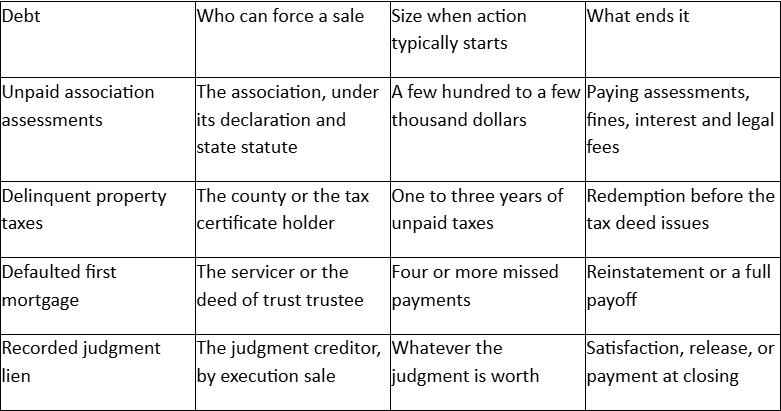
Where does a direct buyer fit?
HomeWise, a direct home-buying company that purchases distressed single-family houses, including homes carrying association liens, tax certificates and judgment liens, in Florida, Texas, Georgia and other states, treats the payoff sheet as the first document in the file rather than the last. Its team orders the association estoppel letter and the county payoff on day one, has the title company confirm every recorded encumbrance before the contract is signed, and pays the assessments, penalties, interest and legal costs from the purchase price at closing so the seller brings nothing to the table. That process is described on the HomeWise site, alongside a page on selling a house with liens that a retail buyer’s lender would refuse to finance.
None of that removes the deadline. An association can proceed while a sale is pending, and a tax deed application does not pause for a contract. What a direct sale changes is sequencing: buyers such as HomeWise can close inside the redemption window because no appraisal contingency and no underwriter stand between the contract and the closing table.
Frequently asked questions

Can an HOA really foreclose over unpaid dues?
In most states, yes. Assessments become a lien on the property, and the declaration plus state statute give the association a route to force a sale. Some states cap fees, require mediation, or bar foreclosure below a dollar threshold, so the answer depends on where the house sits.
What is a super lien on an HOA account?
It is the portion of an association’s lien that state law places ahead of an existing first mortgage, usually a set number of months of assessments. Where it applies, a completed association foreclosure can affect the lender’s position, which is why servicers often pay the delinquent assessments themselves.
How long is the redemption period after a tax sale?
It varies widely by state, from a few months to several years, and the clock usually starts when the certificate is sold rather than when the taxes were first missed. The county issues an exact redemption figure in writing, and it grows with statutory interest every month.
Does selling the house pay off an HOA lien automatically?
At a normal closing, yes. The title company orders an estoppel or payoff letter, pays the association and the tax collector from the sale proceeds, and records the releases. The seller receives whatever remains after the mortgage, the liens and closing costs are satisfied.