

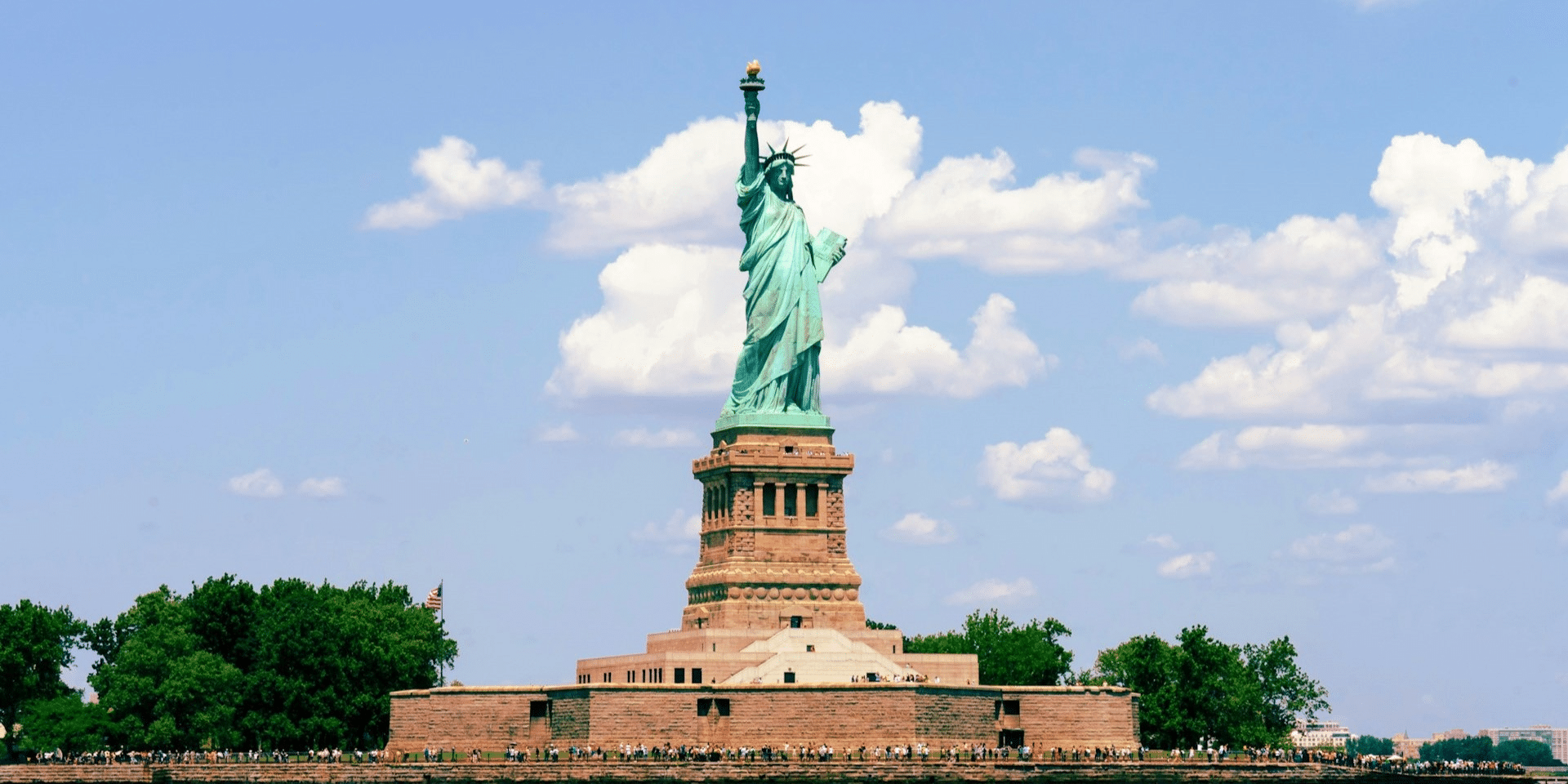
A Gift of Friendship and Freedom
The Statue of Liberty, officially titled Liberty Enlightening the World, was presented to the United States by France in 1886. Designed by French sculptor Frédéric Auguste Bartholdi, the statue was intended as a gesture of friendship and a celebration of shared democratic ideals. According to the National Park Service, the monument quickly took on a deeper meaning, representing not only liberty but also the promise of opportunity.
Standing at the entrance to New York Harbor, the statue became one of the first sights for millions of immigrants arriving by ship. For them, it was more than a gift of diplomacy; it was a sign that they had reached a place where they could begin again. The statue’s torch, raised high, symbolized light and guidance, offering reassurance to those who had left behind uncertainty in search of stability.
This dual identity—both a diplomatic gesture and a beacon of hope—laid the foundation for the statue’s association with the American Dream. It became a physical representation of the idea that freedom and opportunity were not abstract ideals but lived experiences awaiting those who arrived on American shores.
Immigration and the Promise of Opportunity
Between the late 19th and early 20th centuries, the United States experienced a surge of immigration, with Ellis Island serving as the main entry point. For many, the Statue of Liberty was the first symbol of their new life. As Seattle Wire notes, the statue came to embody the values of freedom, opportunity, and the pursuit of a better life—values that defined the American Dream.
The American Dream, a phrase popularized by historian James Truslow Adams in 1931, referred to the belief that anyone, regardless of background, could achieve a better life through hard work and determination. For immigrants, the statue was a visual confirmation of this promise. It reassured them that their journey had meaning and that their sacrifices could lead to a brighter future.
Generations of families carried stories of seeing the statue for the first time, passing down its significance as part of their cultural memory. These personal narratives reinforced the statue’s symbolic power, making it not just a national monument but a global emblem of aspiration.
Literature, Poetry, and Cultural Reinforcement
The symbolic weight of the Statue of Liberty was amplified through literature and poetry. Emma Lazarus’s 1883 sonnet The New Colossus, inscribed on a plaque at the statue’s base, gave voice to its meaning. The famous lines—“Give me your tired, your poor, your huddled masses yearning to breathe free”—transformed the statue into a welcoming figure for those seeking refuge.
This literary framing ensured that the statue’s symbolism extended beyond physical presence. It became part of the cultural imagination, shaping how Americans and the world understood the nation’s values. As Wikipedia’s entry on the American Dream explains, the statue’s role as a symbol of opportunity was reinforced by its visibility in art, literature, and political discourse.
By linking the statue to ideals of inclusivity and opportunity, Lazarus’s words helped cement its role as a symbol of the American Dream. The poem reframed the statue from a diplomatic gift into a humanitarian emblem, ensuring its relevance across generations.
The Statue in Times of Change
The meaning of the American Dream has shifted over time, and so too has the interpretation of the Statue of Liberty. During the Great Depression, it symbolized resilience and the hope of recovery. During the civil rights movement, it was invoked as a reminder of the nation’s unfinished promises of equality.
The statue’s adaptability is part of its strength. It has been used to highlight both progress and shortcomings, serving as a mirror for the nation’s evolving identity. For immigrants, it continues to represent opportunity. For citizens, it remains a reminder of the values that define the United States.
This flexibility ensures that the statue remains relevant. It is not tied to a single historical moment but continues to evolve alongside the American Dream itself, reflecting both aspirations and challenges.
A Global Symbol of Aspiration
Today, the Statue of Liberty is recognized worldwide as a symbol of freedom and opportunity. Tourists from across the globe visit Liberty Island, not only to admire its scale but also to connect with its meaning. The statue has transcended its original purpose, becoming a universal emblem of human aspiration.
Its symbolism extends beyond the United States. For many, it represents the broader idea that societies can strive toward fairness, opportunity, and dignity. This global recognition reinforces its role as more than a national monument; it is a shared symbol of hope.
By continuing to inspire both Americans and international visitors, the Statue of Liberty maintains its place as a living symbol of the American Dream. It embodies the idea that opportunity, though not guaranteed, is possible, and that freedom remains a guiding principle for those who seek a better life.