

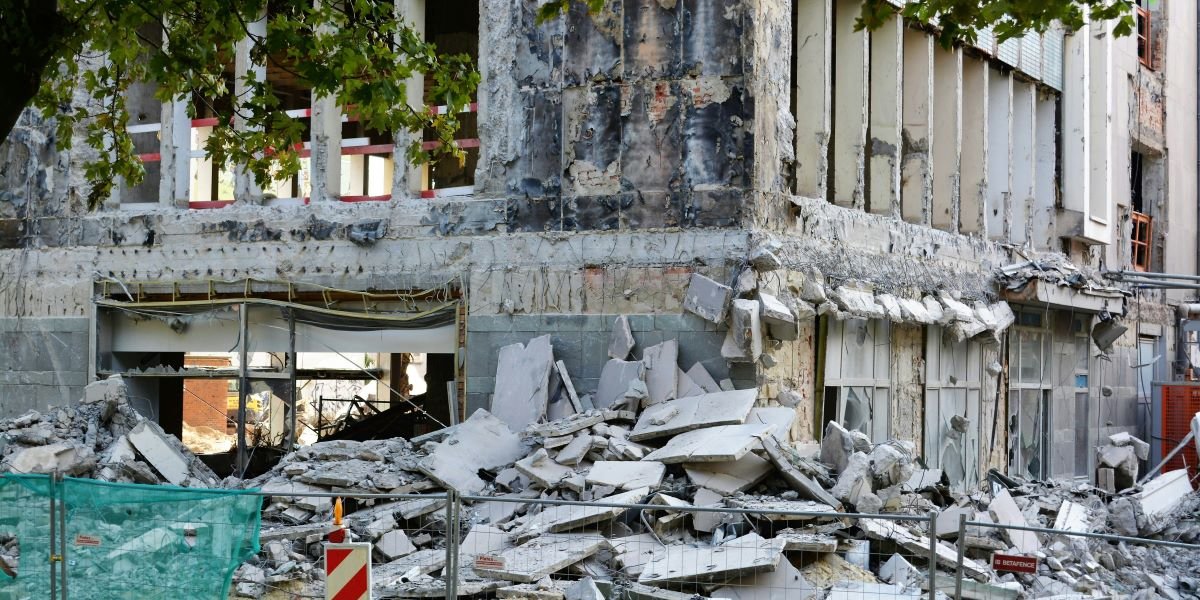
A powerful earthquake that struck the southern Philippine island of Mindanao on June 8 has left a widening trail of destruction, with the confirmed death toll climbing to at least 47 by midweek and rescue teams still searching for the missing. The magnitude 7.8 quake, the strongest to hit the country this year, flattened buildings, severed roads, and triggered tsunami warnings across Southeast Asia, exposing once again the seismic fragility of an archipelago that sits on one of the most violent geological boundaries on earth.
A Violent Morning Off Sarangani
The earthquake struck at 7:37 a.m. local time, with its epicenter offshore roughly 20 miles west-southwest of Maasim in Sarangani province, in the Soccsksargen region. The Philippine Institute of Volcanology and Seismology placed the magnitude at 7.8 after an initial lower estimate, a figure broadly matched by the U.S. Geological Survey, with depth measurements varying among agencies as is common in the immediate aftermath.
The cause was subduction along the Cotabato Trench, a major fault structure where one tectonic plate grinds beneath another. The main shock was followed by an extended sequence of aftershocks, some exceeding magnitude 6, that hampered rescue efforts and kept residents away from damaged structures. Authorities recorded tsunami waves of up to 1.4 meters along several southern coasts and issued warnings that reached as far as Indonesia, Malaysia, Palau, Japan, Taiwan, and Papua New Guinea before the threat receded hours later.
General Santos Bears the Brunt
The damage was concentrated in and around General Santos, a port city of more than 700,000 people that serves as a regional hub for the tuna-export industry and other commerce. Buildings collapsed, roads and bridges buckled, and the timing compounded the danger, as the quake struck on the first day of the new school year, when millions of children were returning to classrooms.
Among the hardest blows was to the city’s health infrastructure. Parts of St. Elizabeth Hospital sustained severe damage, forcing patients and medical staff to evacuate and operate temporarily outside the main building. Landslides buried structures in outlying areas, and the search for those trapped beneath debris and earth continued for days. The provinces of Sarangani and South Cotabato, along with Davao Occidental, were also among the worst affected across a region home to tens of millions.
A Familiar Danger on the Ring of Fire
The disaster is a stark reminder of why the Philippines ranks among the most earthquake-prone nations on the planet. The country sits on the Pacific Ring of Fire, the horseshoe-shaped belt of intense seismic and volcanic activity that encircles the Pacific Ocean, where the collision of tectonic plates produces the majority of the world’s largest earthquakes.
Mindanao’s exposure is particularly acute. The Cotabato Trench that ruptured on June 8 has a destructive history; in 1976, a magnitude 8.0 earthquake and tsunami along the same structure killed an estimated 8,000 people, one of the deadliest natural disasters in the country’s modern history. That precedent frames the latest quake not as an anomaly but as the recurrence of a known and persistent threat, one that demands sustained investment in preparedness rather than episodic response.
Strain on Health and Rescue Systems
The earthquake has tested the limits of regional disaster infrastructure. Damaged hospitals forced medical care into improvised outdoor settings at precisely the moment demand for it surged, a dangerous bottleneck in treating the nearly 700 injured. Rescue operations raced against time for the dozens still listed as missing, complicated by aftershocks, blocked roads, and landslide-altered terrain.
The strain illustrates a broader vulnerability common to seismically active developing regions, where the same event that generates mass casualties can simultaneously cripple the systems meant to respond to them. When hospitals, roads, and communications are damaged in a single stroke, the capacity to save lives in the critical hours after a quake is sharply reduced, turning infrastructure resilience into a matter of survival.
The Long Road to Recovery
The national government moved quickly to mobilize. President Ferdinand Marcos Jr. ordered the cancellation of classes and directed disaster-response agencies into the affected provinces, pledging that the country would “not leave Mindanao behind.” Local governments began approving emergency financial assistance for the hardest-hit communities, including General Santos.
Yet the immediate response is only the first phase of a far longer undertaking. Rebuilding homes, hospitals, schools, and transport links across a wide swath of Mindanao, the Philippines’ second-most populous island with roughly 26 million residents, will take months or years and substantial resources. The recovery will test not only reconstruction budgets but the durability of building standards and early-warning systems that determine how the next inevitable quake plays out.
For now, the focus remains on the search for survivors and the care of the injured. But the deeper question the disaster raises is one of preparedness in a nation that cannot avoid earthquakes, only prepare for them. The June 8 quake, like the catastrophe along the same trench a half-century earlier, is a reminder that for the Philippines, seismic risk is not a possibility to be managed once but a permanent condition to be built around. The toll, officials warned, may yet climb further.