
For most of the world, helium is the gas that floats birthday balloons. For the semiconductor industry, it is an irreplaceable industrial input — and right now, it is running out.
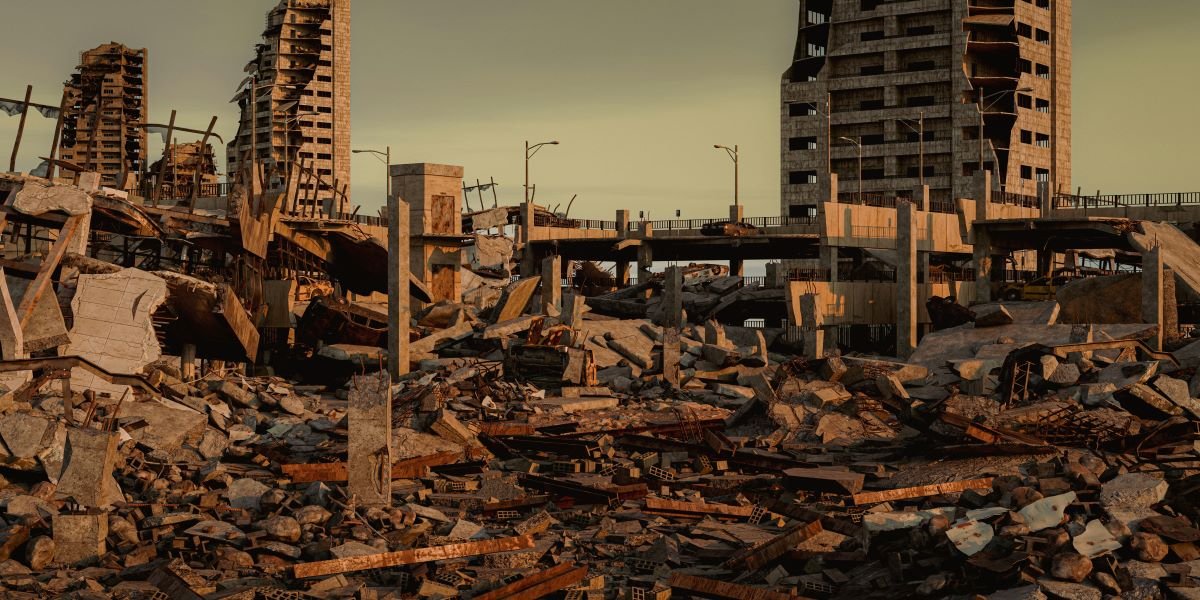
On February 28, 2026, Iranian drone and missile strikes hit QatarEnergy’s Ras Laffan Industrial City, knocking offline one of the world’s two plants capable of producing semiconductor-grade helium and removing roughly 30% of global supply from the market in a matter of days. What followed was not just an energy story. It was the sudden exposure of a supply chain vulnerability that analysts had long flagged but the world had largely ignored.
Why Qatar, and Why Helium
Helium is not mined. It is extracted almost entirely as a byproduct of natural gas processing, separated during cryogenic processing from fields where it occurs in concentrations of 0.1 to 7 percent. This byproduct structure creates a fundamental vulnerability: helium production depends entirely on natural gas production decisions. When QatarEnergy halted LNG operations, helium supply ceased automatically — not because the helium market changed, but because the primary revenue driver went offline.
Qatar accounts for roughly one-third of the world’s helium supply. Attacks on Qatar’s liquefied natural gas facilities mean it could take years to rebuild production lines. QatarEnergy told Reuters that the attacks wiped out 17% of the country’s LNG export capacity, and that repairs could take three to five years.
Compounding the production halt is a logistics crisis. Roughly 200 specialized cryogenic containers are reportedly stranded near the Strait of Hormuz. Helium is a cryogenic liquid that must be stored near absolute zero and transported within 45 days of liquefaction — once insulation is depleted, it warms, expands into gas, and escapes permanently. There is no stockpile strategy that accounts for an indefinitely closed shipping lane.
The Semiconductor Industry Is Counting Down
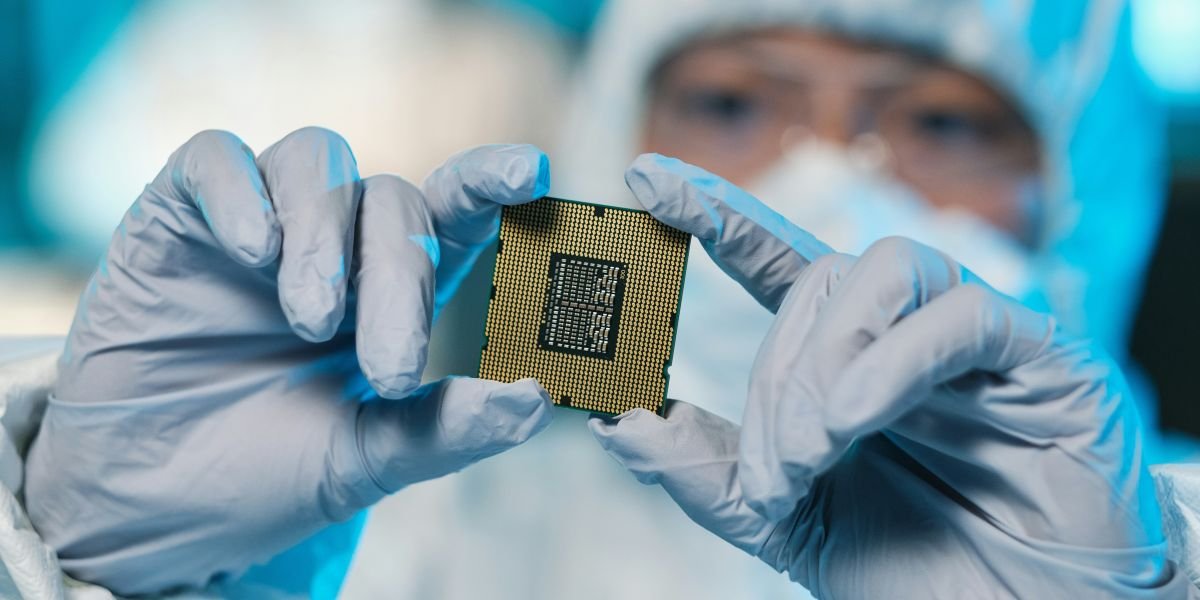
Semiconductor manufacturing accounts for 24% of global helium consumption in 2025, projected to reach 30% by 2030. Helium cools superconducting magnets during chip fabrication, flushes toxic residue after wafer washing, and supports leak detection in the vacuum systems that advanced lithography depends on.
The geographic exposure is concentrated and acute. Samsung Electronics and SK Hynix, which together supply approximately two-thirds of the world’s memory chips, sourced 64.7% of their helium from Qatar in 2025. Northeast Asia spot prices reached $152.70 per thousand cubic feet in March 2026 — a 21.5% premium over December levels and the steepest regional increase globally.
A 60 to 90-day helium squeeze could push delivered helium costs up by 25 to 50%, with the sharpest impact falling on buyers with weaker contract protection. Helium tightness is likely to protect high-value AI and HBM-linked production first, while lower-margin consumer and legacy chips become more vulnerable to rationing.
Cliff Cain of Pulsar Helium told CBS News: “Everything from vehicle chips to iPhones will definitely be affected. Semiconductor manufacturers have already indicated that they will not be able to meet their 2030 manufacturing goals.”
Healthcare: The Less-Covered Crisis
While the semiconductor angle has dominated coverage, the healthcare impact may prove equally severe. MRI machines require approximately 1,500 to 2,000 liters of liquid helium to cool their superconducting magnets to operating temperature — near absolute zero. There are roughly 40,000 to 50,000 MRI scanners installed worldwide, each requiring refills every two to six weeks. Healthcare accounts for roughly 32% of global helium consumption.
Airgas, a major US industrial gas supplier, restricted deliveries to multiple hospital systems by up to 50% by late March 2026, citing the Qatar shutdown. Premier Inc., which manages supply contracts for over 4,400 US hospitals, identified MRI machines as the most acute healthcare risk from a prolonged shortage. Without sufficient helium, a scanner becomes inoperable — there is no repair, no workaround, and no substitute technology that can perform equivalent diagnostics in the same timeframe.
The Structural Fragility Laid Bare
Vidya Mani, a global supply chain expert at the University of Virginia’s Darden School of Business, put the oversight plainly: “We were so focused on gas supply that we didn’t see the helium shortage.”
Alternative suppliers offer little short-term relief. Russia’s Amur Gas Processing Plant was expected to supply up to 25% of global demand at full capacity, but has been plagued by delays, explosions, technical setbacks, and Western sanctions. As of early 2026, Amur is still running well below capacity, and new exploration projects in Saskatchewan, Tanzania, and South Africa are years from lifting off.
China, which imports approximately 85% of its helium split between Russia and Qatar, is facing significant shortages impacting its high-tech sectors. Beijing has announced plans to add 250 million standard cubic feet per year of domestic helium capacity from May 2026, but this will take time to come online.
The planet has a finite amount of helium — it cannot be manufactured, and it cannot be recaptured once released. The applications that depend on it — medical imaging, advanced semiconductors, quantum computing, space launch, and defense — are the applications that define whether a country can function at a 21st-century technological level. The constraint was always there. It took a war to make it visible.
Disclaimer: This article is intended for informational and analytical purposes only. World Reporter does not endorse, support, or take a position on any military conflict, geopolitical dispute, or foreign policy matter referenced herein. All references to ongoing hostilities are included solely to provide economic and supply chain context, and do not constitute war commentary, conflict-sensitive advocacy, or political opinion. All data and figures cited are sourced from publicly available reports by verified institutions including the IMF, World Economic Forum, Reuters, and CBS News. Readers are encouraged to consult primary sources for the most current developments. World Reporter assumes no liability for decisions made on the basis of information contained in this article.