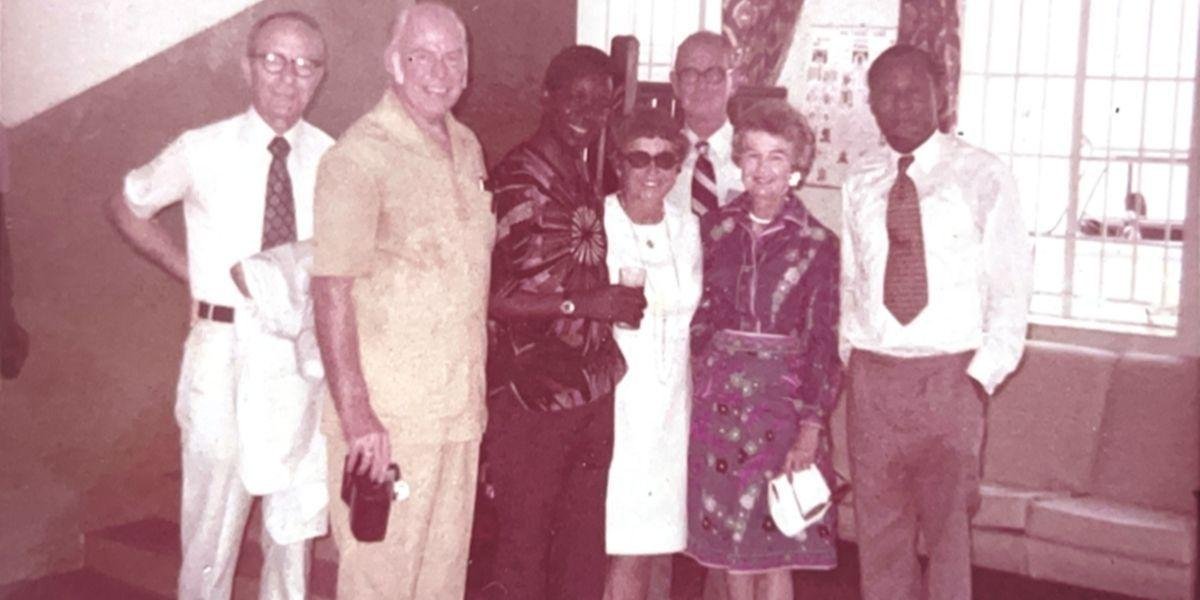

Professional medical associations played a major role in the development of healthcare systems during the twentieth century. Across Africa, these bodies provided doctors with a common platform to discuss standards, ethics, education, and public policy. In newly independent countries, they also became important voices on issues affecting medical practice and training. Ghana was no exception. By the late 1950s, the country was undergoing rapid political and social change, and members of the medical profession sought to establish institutions that could represent their interests and advance healthcare development. These efforts led to the creation of the Ghana Medical Association in 1958 and the emergence of several initiatives that shaped modern medicine in the country.
Before independence, doctors in the Gold Coast operated through earlier organizations, including the Gold Coast Medical Practitioners Union and the Gold Coast branch of the British Medical Association. The transition to self-government created a need for a national body to represent physicians in independent Ghana. On 4 January 1958, the Ghana Medical Association was formally inaugurated in Accra by Prime Minister Kwame Nkrumah. Charles Easmon became its first president, while Francis Sai served as secretary. The association later expanded into regional divisions and became one of the principal professional bodies in the country’s health sector. By recent counts, it has grown to include more than 1,700 members.
Among the physicians involved in this formative period was Dr. Matthew A. Barnor. Having returned to Ghana after medical studies in Scotland and additional training in London, Barnor became active within the Society of Private Medical Practitioners. That body later played a role in the formation of the Ghana Medical Association. Contemporary records and later historical accounts place him among the doctors present during the organization’s early years. During this period, Ghana was attempting to build institutions capable of supporting a growing healthcare system, while the medical profession sought ways to strengthen its organization and public standing.
Barnor held several positions within the association. He served as Second Secretary for multiple terms. He became one of the officers responsible for maintaining the affairs of the young organization. In 1963, he succeeded Schandorf and became the third president of the Ghana Medical Association. He remained president until 1966. Historical narratives that came much later characterized that era as one of political uncertainty and of shifting relations between professional bodies and government bodies. At that time, the association was seeking to build credibility while retaining its autonomy and presence in the country.
The years surrounding Barnor’s presidency also coincided with important changes in medical education. In 1962, the Ghana Medical School was established and later became part of the University of Ghana. Barnor belonged to the group of physicians who supported efforts to expand local medical training. According to later accounts, he served on the interim council before the school became a faculty of the university. He also lectured on professional ethics and responsibility during the institution’s first decade. These activities reflected broader efforts to develop local expertise and reduce dependence on overseas training.
Another aspect of Barnor’s work involved medical publishing. In September 1962, the Ghana Medical Journal released its first issue. The publication became the official journal of the Ghana Medical Association and later achieved indexing in international databases. The journal has remained in circulation for decades and reached its fiftieth anniversary in 2012. Barnor contributed to its early years and authored “A History of Medical Societies in Ghana,” which appeared in the journal in 1962. The article documented the origins of earlier professional organizations. It preserved details concerning the development of organized medicine in the country. Today, the paper remains catalogued in PubMed.
His interest in recording institutional history continued long after his years as president. In later life, Barnor published A Socio-Medical Adventure in Ghana. This work reflected on changes within medicine and healthcare. Excerpts from the book have been cited in discussions concerning the origins of the Ghana Medical Association and the debates that preceded its creation. These accounts offered firsthand observations from one of the physicians who participated in the development of professional organizations after independence. They also provided historical context for the expansion of medical associations and their role in shaping healthcare policy.
Barnor’s professional activities extended into other institutions, including medical education and healthcare administration. However, his role within organized medicine remained a recurring theme throughout his career. He belonged to a generation that witnessed the transition from colonial medical structures to nationally managed institutions. In his work with the Society of Private Medical Practitioners, the Ghana Medical Association, the Ghana Medical Journal, and the Medical School of the University of Ghana, he was involved in activities that would shape the profession for decades to come. His involvement was part of an overall strategy by the country’s doctors to establish institutions to serve the growing health sector.
Dr. Matthew A. Barnor died in June 2005. By that time, the Ghana Medical Association had existed for nearly half a century, and many of the institutions that emerged during its early years had become established parts of the country’s health sector. His published writings and years of service within the association remain part of the historical record surrounding the development of organized medicine in Ghana.