

In Europe, growing heat waves, a push to cut down on carbon, and worries about energy supply are changing how people think about buildings. Before, debates about making them efficient were mostly in tech magazines. Now, they guide government policies too.
People are asking how to keep cities comfortable when it’s super-hot outside. There’s also a need to figure out how to use less energy inside homes and offices, while keeping population content. Plus, officials want structures to help tackle bigger climate and energy issues facing us.
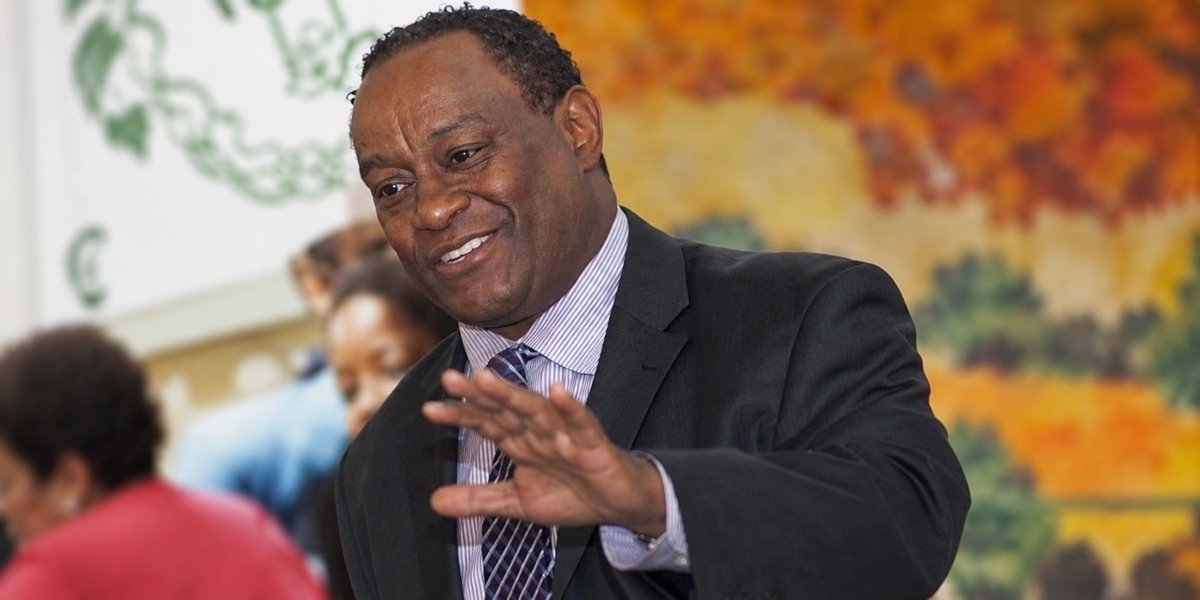
Those questions have defined much of the professional career of French scientist Frédéric Kuznik.
Kuznik is a Professor of Civil Engineering at the National Institute of Applied Sciences of Lyon, known as INSA Lyon, and a researcher at the Centre for Energy and Thermal Sciences of Lyon, or CETHIL. The laboratory is a joint research unit involving INSA Lyon, the French National Centre for Scientific Research and Claude Bernard University Lyon 1. Beyond his research activities, he directed CETHIL from 2018 to 2022 and led the joint EDF-CETHIL BHEE laboratory from 2015 to 2025. Since November 2023, he has served as France’s representative on the Executive Committee of the International Energy Agency’s Energy Storage Technology Collaboration Programme.
The route that led there began in the late 1990s.
In 1997, Kuznik entered the École Normale Supérieure de Cachan, today known as ENS Paris-Saclay. He studied civil engineering and energy, completing the Magistère programme with highest distinction. In 2000, he obtained the Agrégation in Civil Engineering, one of France’s most selective academic examinations.
His studies continued at INSA Lyon, where he completed a research master’s degree before undertaking doctoral research at CETHIL. The subject of his PhD was highly specialized. Defended in December 2005, the work examined anisothermal horizontal jets developing near walls and their application to the numerical modelling of ventilated cavities. Behind the technical language stood a broader interest that would remain present throughout his career: understanding heat transfer, airflow, and energy behaviour inside buildings.
Five years later, he completed his Habilitation à Diriger des Recherches. The thesis focused on thermo-convective transfers and heat storage phenomena in buildings.
Academic careers often develop gradually. Kuznik followed that path.
After working as a teaching and research fellow, he became an Associate Professor at INSA Lyon in 2006. He was appointed Full Professor in 2014 and promoted to Exceptional Class Professor in 2021, one of the highest academic grades within the French university system. During this period, he also spent time in industry. Between 2011 and 2012, he joined the Lafarge Research Center, now the Holcim Innovation Center, as a Senior Researcher and Project Manager.
The move offered a different perspective.
Many of the challenges explored in academic laboratories eventually find their way into construction materials, building systems, and industrial applications. The connection between research and practice became a recurring theme throughout his work.
Thermal energy storage has been one of Kuznik’s principal research interests. The concept appears straightforward. Heat is stored when available and released later when needed. In reality, the science is far more complex. Materials must remain stable, performance must remain predictable, and systems must operate efficiently over long periods.
His research explored several approaches.
Among the best known is his work on phase change materials, commonly called PCMs. These substances absorb and release heat as they change physical state. Integrated into building components, they can help moderate indoor temperatures and reduce energy demand. A review article published in 2011 became one of the most cited papers in this field. More than a decade later, Kuznik, together with Benoit Lamrani and Kévin Johannes, published an updated assessment reflecting how quickly research on the subject had expanded.
Yet phase change materials represent only part of the story.
Another major area of investigation involved adsorption and thermochemical heat storage. Here, the objective was long-term storage using physical or chemical processes rather than sensible heat alone. Research teams associated with Kuznik examined materials including zeolites, magnesium sulfate, strontium bromide, lanthanum chloride, and ettringite. Laboratory reactors ranging from a few kilograms to much larger experimental systems were developed to test storage behaviour, thermodynamics, and reaction kinetics.
The work attracted attention beyond France.
In a 2025 interview with Solarthermalworld, Kuznik highlighted the development of characterization protocols for thermal storage materials as one of the most important outcomes achieved by his research group. Reliable measurement methods, he argued, are essential if different technologies are to be compared on a consistent basis.
Climate adaptation gradually became another major focus.
Heatwaves have become increasingly common across Europe. Buildings that were designed decades ago often struggle under new climate conditions. For researchers, this has created a growing need to understand not only buildings themselves but also the urban environments surrounding them.
Kuznik contributed to this area through research on urban microclimates and advanced numerical modelling. He was among researchers applying highly parallelized lattice Boltzmann methods using graphics processing units to study airflow and heat transfer in cities. These methods made it possible to simulate complex urban conditions with greater efficiency, supporting investigations into wind flow, thermal exchanges, and urban heat exposure.
Some of that research extended beyond buildings altogether.
Recent projects have examined heat stress among older populations, linking building simulations with thermo-physiological models. Field studies involving elderly residents helped researchers explore how housing conditions and urban environments influence exposure to extreme heat.
At the same time, attention was turning toward larger energy systems.
Through the EDF-CETHIL partnership, Kuznik participated in the development of the MoDEM platform for predicting and managing energy demand at building and district scales. The platform remains in use within EDF Research and Development. Recent studies have used machine learning to boost energy forecasting and predict peak demand better. Research is just part of the story, though.
Kuznik collaborates with universities and companies globally. Kuznik’s partners include Tsinghua University, Zhejiang University, the Chinese Academy of Sciences, Inha University, the University of Tokyo, and the International University of Rabat, amongst others. So far, he’s guided over 26 PhD students to completion and keeps advising new doctoral researchers too.
He’s also authored over 120 peer-reviewed articles, along with several book chapters and even a patent. Plus, Kuznik has taken on editor roles for journals like Energy Storage and Sustainable Cities and Society Advances. On top of all that, he frequently reviews for organizations like the European Innovation Council and the European Research Council, plus various national research groups.
Recognition followed over time rather than all at once.
From 2020 to 2025, Frédéric Kuznik was on every edition of Stanford University’s list for the world’s top 2% most-cited scientists. In 2024, the Chinese Academy of Sciences made him a Distinguished Scientist under its President’s International Fellowship Initiative. The following year, he got INSA Lyon’s Research Medal.
These honors only scratch the surface of his broader academic track record. Still, they show a career that’s evolved with big shifts in research on buildings, energy, and cities. With Europe tackling climate adaptation, energy efficiency, and urban resilience, much of what Kuznik has focused on is still very relevant in both science and public discussions.