
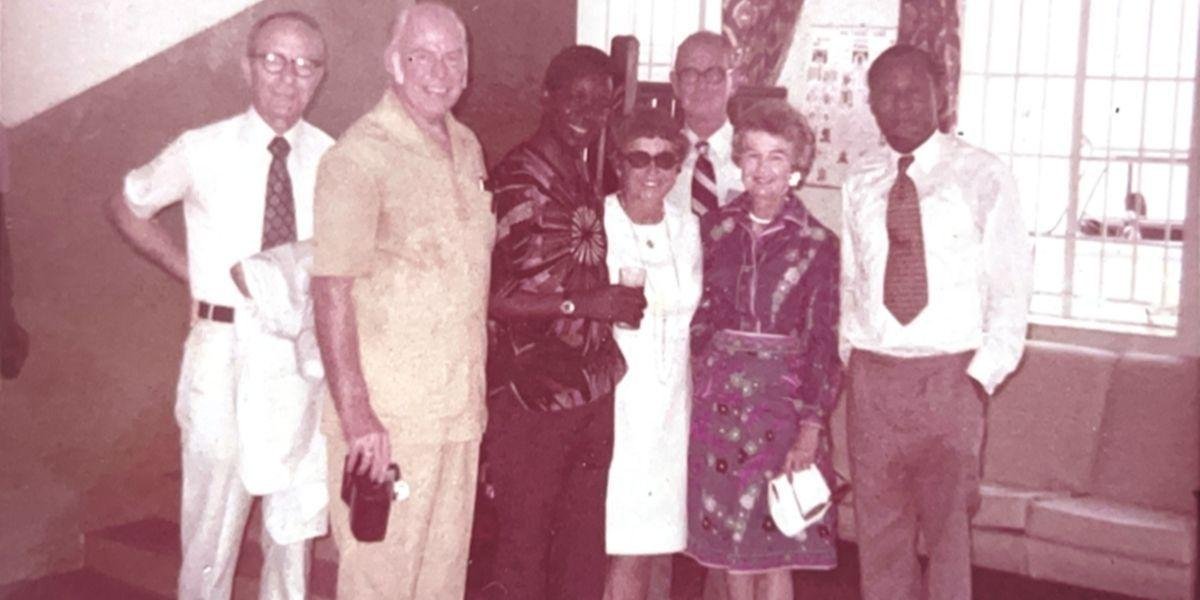
The years after the Second World War were characterized by many political changes in Africa. There was a weakening of colonial rule in Africa, as well as an increase in the power of the nationalists after the late 1940s. Over twenty territories in Africa gained their independence between 1957 and 1965, and in turn created a need for diplomats to represent themselves on the international stage. The United Nations emerged as one such arena. At the same time, African officials gradually entered diplomatic positions once dominated by European administrators.
Nigeria, which became independent from Britain on October 1, 1960, emerged as one of the largest states within that transition. Among the Nigerian officials connected to this period was Francis Chukwuka Nwokedi, whose career extended from colonial administration into international diplomacy.
Before entering foreign affairs, Nwokedi had already built a long career within the colonial civil service. Born on June 22, 1915, in Nnewi, he first worked as a teacher before joining the colonial administration in Port Harcourt in 1936. During the 1940s and 1950s, he rose through several senior positions linked to labor administration and Nigerianisation policy. He became the first Nigerian acting assistant district officer in Port Harcourt in 1941, the first Nigerian assistant labor officer in Lagos in 1943, and the first indigenous labor officer in Nigeria in 1948. By 1958, he had become the first indigenous permanent secretary of the Federal Ministry of Labour and Social Welfare. Those appointments placed him among the earliest Nigerian administrators transferred into senior leadership roles before independence.
The international stage entered Nwokedi’s career during one of Africa’s most unstable post-colonial conflicts. The Republic of Congo won its freedom from Belgium in June 1960. But the independence did not last long, since the country was immediately thrown into chaos marked by political disturbances, mutinies, and secession in some regions. This was a very important event in terms of Cold War politics, which included various African countries, Western countries, the Soviet Union, and the UN itself. Indeed, UN Operation in Congo (ONUC), an important mission undertaken by the UN, was the biggest peacekeeping effort conducted by the organization in the early 1960s, with around 20,000 troops from different nations participating in it. In 1960, Nwokedi became the secretary of the UN Special Representative in the Congo.
The Congo operation carried political weight far beyond Central Africa. Newly independent African governments viewed the conflict as a test of whether African states could preserve sovereignty without external control. The United Nations faced criticism from several sides as the crisis deepened following the assassination of Congolese Prime Minister Patrice Lumumba in January 1961. Within that environment, administrative and diplomatic coordination became central to UN operations. In 1961, Nwokedi became the first African representative on the United Nations Congo operations in New York. The appointment reflected the growing involvement of African officials within international institutions that had previously remained heavily European and American in leadership structure.
Nigeria itself was increasing its diplomatic role during this period. By the early 1960s, the country had become one of Africa’s most influential post-colonial states because of its population, regional position, and Commonwealth ties. The federal government expanded its diplomatic service rapidly after independence, requiring experienced civil servants with administrative backgrounds. In 1962, Nwokedi became permanent secretary of Nigeria’s Ministry of External Affairs and Commonwealth Relations. Permanent secretaries occupied the highest non-political roles within federal ministries. They played an important role in coordinating policy, diplomatic communication, and government administration. His movement from labor administration into foreign affairs reflected the broader transition of senior Nigerian civil servants into international policy positions after independence.
Africa in the early 1960s did not move in one direction. Some countries had already become independent. Others were still fighting colonial rule. Across the continent, governments faced pressure from Cold War politics and growing regional disputes. In May 1963, African leaders gathered in Addis Ababa and formed the Organization of African Unity with thirty-two founding states. Nwokedi joined the committee responsible for drafting the charter. The negotiations stretched across questions many governments could not fully agree on. Sovereignty became one issue. Borders became another. There were also debates over liberation movements and how closely African states should work together. The final charter carried traces of those disagreements.
OAU emerged at a time when there was a clash of political ideologies on the continent. There were those who wanted stronger continental integration, and others favored weaker cooperation among sovereign nations. Compromise characterized the resultant OAU charter. Nigeria was one of the most active members in the early days of the OAU, especially on issues of decolonization and diplomacy. Being an administrator as well as diplomat, Nwokedi was a product of that generation of government functionaries whose duty was to translate political independence into state machinery as well as representation internationally. Earlier experience in the realm of civil service administration would be highly advantageous in such a setting where organizational skill would be very important.
There is yet another example of Nwokedi’s participation in a diplomatic undertaking, which was greatly influenced by the rising international reputation of Nigeria. This took place during the 1965 conference of the Prime Ministers of the Commonwealth that convened in Lagos. The conference took place at a time when there were discussions about economic development and racial issues amid political unrest in some of the erstwhile colonies. Nwokedi was involved in organizing the conference through his position within the Ministry of External Affairs and Commonwealth Relations.
By the mid-1960s, political instability within Nigeria began affecting the federal government and civil service. Coups in January and July 1966 reshaped the country’s political structure. They weakened many of the institutions developed during the independence period. Nwokedi retired from the federal civil service in 1965 but was later recalled in 1966 and appointed chairman of the Committee on the Unification of the Nigerian Civil Service. Although much of his public reputation remained tied to domestic administration, his diplomatic career connected him to several major international developments during the first decade of African independence.
Francis Chukwuka Nwokedi died in Enugu on December 18, 1988. His career crossed labor administration, foreign affairs, and international diplomacy during a period when African governments were entering global institutions in greater numbers. His appointments within the United Nations, the Ministry of External Affairs and Commonwealth Relations, and the drafting committee for the Organization of African Unity linked him to broader diplomatic changes taking place across Africa after decolonization. While many African officials participated in the early expansion of post-colonial diplomacy, relatively few occupied international administrative positions as early as Nwokedi did during the first years after Nigerian independence.