
By: Sophie Williams
Pain is something everyone tries to avoid. We run from it. We medicate it. We distract ourselves from it. We pretend it does not exist. We tell ourselves that if we just stay busy enough, work hard enough, or ignore it long enough, it will eventually disappear.
But pain does not disappear. It transforms. The question is not whether pain will shape your life. The question is what it will shape your life into.
Marion Welch knows this truth more intimately than most people ever will. She grew up in a home where fear was part of the air she breathed. She knew violence before she knew safety. She learned to read tension before she learned to read books. She spent her childhood hiding in the bushes behind her house, trying to make herself small enough to disappear.
But she did not stay hidden forever. She did not let fear define her future. She made a decision. She decided that her pain would not have the final word. And that decision changed everything.
The Reality of Childhood Trauma
Marion Welch does not romanticize her past. She does not say she is grateful for what happened to her. She does not pretend that the violence, the fear, and the uncertainty were gifts in disguise. They were not. No child should have to grow up afraid. No child should have to learn survival before safety. No child should have to confuse fear with normal life.
She remembers running into the bush behind her house and hiding among the trees. She remembers wanting to disappear into the branches, hoping that if she stayed quiet enough, she would not be found. She remembers the feeling of trying to make herself small. Not just physically small, but emotionally small. As if taking up less space might somehow keep her safe.
She remembers walking home from school and looking toward the driveway. That walk could change in an instant depending on what she saw. If her father’s truck was not there, she could breathe a little easier. If it was there, everything inside her changed. Sometimes the fear hit so suddenly that she wet herself before she even reached the front door.
That is not an easy thing to write. It is not something a person shares lightly. But she includes it because people need to understand what fear can do to a child. It does not only live in thoughts. It lives in the nervous system. It changes the body. It changes the way a child sees the world, the way they see people, and eventually, the way they see themselves.
The Refusal to Let Pain Win
Here is what makes Marion Welch different from many people who write about trauma. She does not offer easy answers. She does not say that everything happens for a reason. She does not tell people to just get over it or look on the bright side.
Instead, she says something far more honest. She says, “I refuse to let pain have the final word.”
That is a critical distinction. She does not pretend the pain was good. She does not pretend it did not hurt. She does not minimize the suffering. She acknowledges it fully and honestly. But then she makes a choice. She chooses to use that pain instead of being consumed by it.
This is not toxic positivity. This is not pretending that trauma is a gift. This is the mature and difficult work of taking something ugly and refusing to let it be the end of your story. It is looking at the worst parts of your life and asking a different question. Not “Why did this happen to me?” but “What did this teach me that I can now use to help someone else?”
How Survival Became Service
The transformation in Marion Welch’s life did not happen overnight. It happened slowly, through hundreds of small decisions. But looking back, the pattern is clear. Every painful experience became a foundation for something that could help others.
Her childhood fear taught her to recognize fear in others. She learned how to read a room before anyone spoke. She learned how to sense when someone was uncomfortable or unsafe. And instead of using that skill to protect herself, she used it to protect others. She became the safe place she never had. She opened her home to children who needed stability. She created an environment where children did not have to be afraid.
Her physical pain taught her something valuable too. After thirty-two surgeries, cancer at twenty-three, and a devastating spinal cord injury, she knew what chronic pain felt like. She knew the exhaustion. She knew the hopelessness. She knew the desperation for relief. And instead of accepting that pain as her permanent reality, she began researching natural ways to manage it. She developed a topical cream, and over time she shared it beyond her own household. Seniors living with arthritis asked about it. Friends who lived with chronic pain asked about it. Strangers asked about it. She did not start a business with a plan for profit. She started it because she wanted to put what she had learned into other people’s hands.
Her experience with rejection taught her to create solutions for others. When she tried to buy her first home as a self-employed single mother, she heard no more than once. Traditional systems did not know what to do with her. They saw a complicated situation and closed the door. But she did not accept that answer as final. She kept asking. She kept looking. She found someone willing to see the bigger picture. She bought her home. And then she helped over one hundred other families do the same thing through creative financing.
Pain Does Not Have to Be Wasted
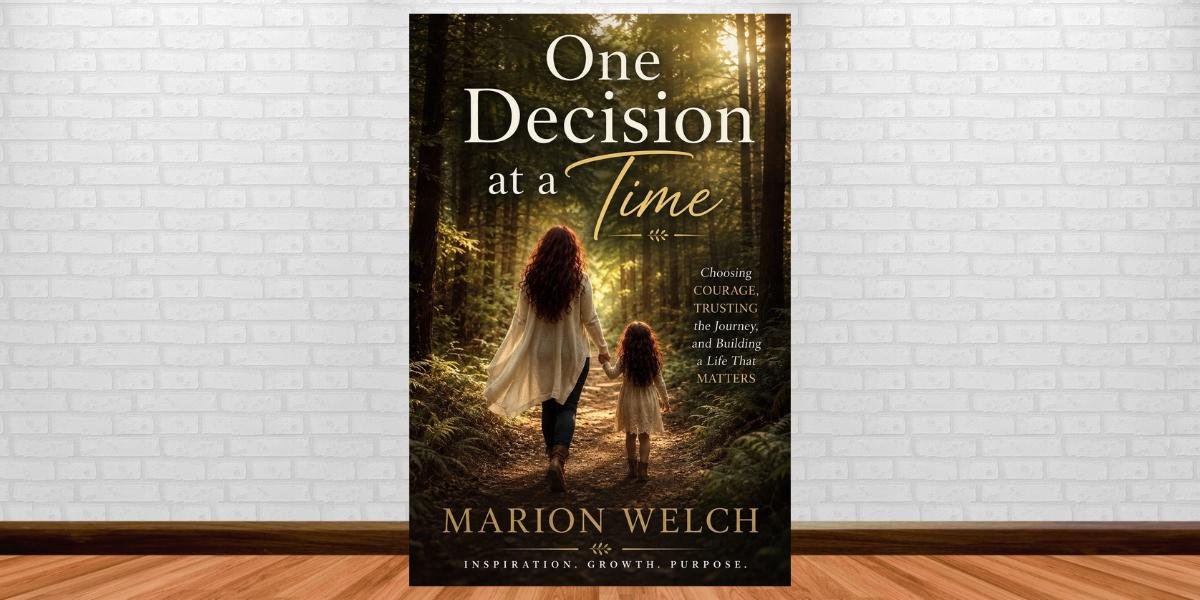
This is the central message of “One Decision at a Time: The Resilience Mindset by Design.” Pain does not have to be wasted. It can become wisdom. It can become compassion. It can become service. But only if you decide to use it that way.
Marion Welch did not have a perfect plan. She did not know how her childhood fear would eventually help her become a foster mom and a protector of children. She did not know how her physical suffering would lead her to create something that helped others manage their own pain. She did not know how her rejection in real estate would lead her to help over one hundred families find homes. She simply made one decision. She decided that her pain would not have the final word.
The Question That Changes Everything
Marion Welch asks a question that can change the way anyone looks at their life. She asks, “What did this teach me that I can now use to help someone else?”
This question does not erase the pain. It does not pretend the suffering did not happen. It does not minimize the hurt. But it gives the pain somewhere to go. It takes the hardest parts of your life and transforms them into something useful.
If you have been hurt, ask yourself what that hurt taught you. If you have been rejected, ask yourself what that rejection showed you about persistence. If you have been afraid, ask yourself what that fear taught you about courage. If you have been in pain, ask yourself what that pain taught you about compassion.
You do not have to be grateful for what happened to you. You do not have to pretend it was a gift. But you can decide that it will not be the end of your story.
Why Marion Welch Speaks with Authority
Marion Welch is not someone who read about pain in a book and decided to write about it. She is someone who lived through pain and chose to transform it. She survived a childhood filled with fear. She survived thirty-two surgeries. She survived cancer. She survived a spinal cord injury. She survived financial hardship and multiple rebuilds. And through all of it, she kept asking what she could do with what she had learned.
That is why her voice carries so much weight. She does not offer easy answers. She does not pretend that suffering is beautiful. She sits with the ugliness of it. She acknowledges the reality of it. And then she shows you that you can refuse to let it have the final word.
In “One Decision at a Time,” Marion Welch does not tell you that your pain is a gift. She tells you that your pain is information. It is a teacher. It is a compass. It is the raw material for something greater if you are willing to use it that way.
What Pain Can Become
Your pain does not have to be wasted. Your suffering does not have to be the end of your story. You can choose to use it. You can choose to transform it. You can choose to let it become wisdom, compassion, and service. But that choice starts with one decision. Make that decision today.
The pain you have endured does not have to define you. It can become the foundation of your purpose. In “One Decision at a Time: The Resilience Mindset by Design,” Marion Welch shows you how to transform your deepest wounds into wisdom and service. Stop letting pain have the final word. Start building something meaningful from what you have survived. Get your copy and begin the journey toward purpose. Your next decision matters. Make it count.