

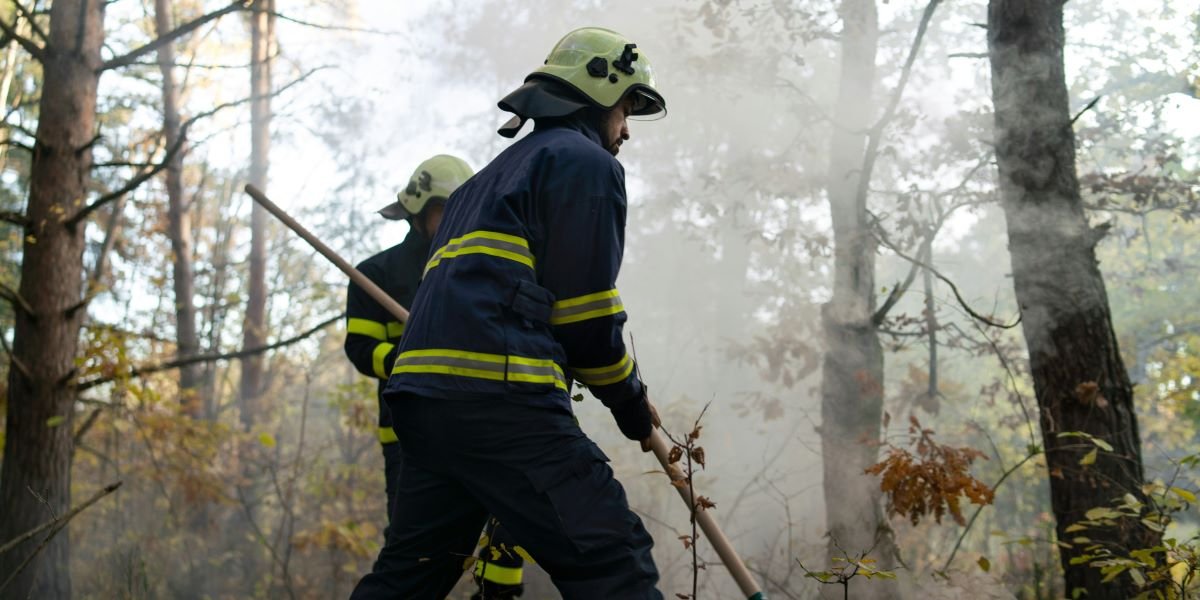
Wildfires burning across southwestern France and central Spain have displaced more than 300,000 people, destroyed at least 240 homes in France’s Gironde region alone, and killed at least one person in Spain, in what French Prime Minister Sébastien Lecornu described as fires that “have reached a level that has never been seen before.” French President Emmanuel Macron scheduled an emergency cabinet meeting for Monday as fire crews battled a 280-kilometer perimeter of active flame across multiple fronts, while Spain’s government declared its first-ever national emergency over wildfires only the country’s second national emergency declaration overall, following April 2025’s nationwide blackout.
Key Takeaways
- More than 300,000 people have been displaced across France and Spain, with over 250,000 evacuated in southwestern France and approximately 90,000 in Spain’s Madrid, Ávila, Toledo, and Valencia regions combined.
- Spain declared a national emergency over wildfires for the first time in its history, deploying 1,200 military personnel and 400 vehicles to the Madrid and Ávila fronts; fire crews confronted a 280-kilometer perimeter covering 77,000 hectares across Madrid, Ávila, and Toledo.
- French authorities pre-emptively evacuated suburbs near Bordeaux that house defense industry and nuclear deterrent facilities, including factories integral to France’s M51 submarine-launched ballistic missile program in Le Haillan and Saint-Médard-en-Jalles.
- A fourth heat wave is expected to push temperatures higher this week with no rain in the forecast, creating conditions that meteorological agencies in both countries warn will intensify fire risk before crews can establish full containment.
What Is Happening in France?
The French wildfire crisis centers on two fires that broke out last week in the Gironde and Landes departments near Bordeaux, one of Europe’s most prominent wine-producing regions and a major transport hub for Atlantic coast tourism. The fires spread rapidly through dried-out pine forests and scrubland that had been baked by three consecutive heat waves since May, with the largest front advancing to within 15 kilometers of Bordeaux’s metropolitan boundary and 25 to 30 kilometers from the city center.
By Sunday, at least 240 homes had been destroyed in Gironde. Approximately 55,000 people were ordered to evacuate villages near Bordeaux including Le Barp, Marcheprime, Biganos, Mios, and Cestas overnight on Saturday alone. The upmarket Cap Ferret peninsula south of Bordeaux saw 44,000 residents and vacationers flee after the only road off the peninsula was threatened by flames. Boats were deployed to move hundreds of people from waterfront properties, while more than 50 homes on the peninsula were destroyed. In total, more than 250,000 people across southwestern France were forced to evacuate in recent days.
The French army was deployed to supplement civilian firefighting operations, and Macron formally requested assistance from the European Union. French Interior Minister Laurent Nuñez told La Tribune Dimanche on Sunday that the fire would be “long to combat,” citing dry weather, extreme temperatures, and dense ground vegetation as factors that allow flames to spread faster than crews can establish containment lines. France’s meteorological agency warned that wildfire danger remained elevated across multiple departments despite a slight improvement over the weekend, particularly as a fourth heat wave was forecast to worsen conditions in the coming days.
The fires disrupted the final stage of the Tour de France on Sunday, with organizers shortening the Paris stage from 133 kilometers to 89 kilometers so that police and security personnel could be redeployed to wildfire-affected areas an unprecedented logistical intervention in the race’s 113-year history.
What Is Happening in Spain?
Spain’s wildfire crisis is concentrated across the regions of Madrid, Ávila, Toledo, and Valencia, where fire crews have confronted a 280-kilometer perimeter of active fire covering 77,000 hectares. The country’s Secretary-General for Civil Protection and Emergencies, Virginia Barcones, provided those figures to state broadcaster TVE. Spain’s government declared a national emergency in Madrid and Ávila on Thursday evening and extended it to Toledo on Saturday the first time in Spanish history that a national emergency had been declared over wildfires.
Two separate wildfires west of Madrid combined on Friday into a single massive blaze that was close to merging with yet another fire in the neighboring Castilla y León region. Carlos Novillo, the Madrid regional government’s emergency management chief, described the wildfire as “at its peak and currently beyond the capacity of firefighters to contain.” Spain’s Military Emergencies Unit deployed 1,200 personnel and 400 vehicles to the fronts, and at least 37 sections of road were closed to traffic across seven provinces on Sunday morning.
Spain recorded its first death from the latest fires on Saturday when a 78-year-old man with reduced mobility was found dead in his car in Manises, near Valencia. Several major fronts in Madrid and Ávila were reported as contained by Sunday morning, although the fires remained active and Spain’s meteorological agency Aemet warned that wildfire risk would increase again as temperatures rise this week. Spain has recorded 32 major forest fires so far in 2026, compared with seven over the same period in 2025.
Why Are the Fires So Severe This Year?
The immediate cause is a combination of record heat and prolonged drought. Europe has warmed at roughly twice the global average rate since the 1980s, and 2026 has produced four successive heat waves across the continent since May. Each wave has further dried out vegetation, creating conditions where any ignition whether from lightning, human activity, or infrastructure failure can escalate rapidly into uncontrollable fire. Stefan Doerr, a wildfire scientist cited by CNBC, noted that the severity is driven less by a lack of preparedness than by the cumulative effect of repeated heat stress on landscapes. Wildfires occur annually in Mediterranean regions, Doerr explained, but three consecutive heat waves in a single summer have dried out the landscape so thoroughly that fires escalate far beyond what historical firefighting infrastructure was designed to manage.
The World Weather Attribution group published a study this week concluding that drought conditions exacerbated by human-caused climate change have heightened wildfire threat across multiple European regions in 2026. Spain has been particularly affected, with the 32 major forest fires this year representing a rate more than four times the pace of 2025. Earlier this summer, at least 13 people were killed in a wildfire in Los Gallardos in southern Spain, and a 22-year-old volunteer firefighter died battling a vegetation fire in Savoie, France making the current crisis part of an already deadly fire season rather than an isolated event.
What Happens This Week?
The forecast carries a direct warning. Temperatures across the affected regions are expected to climb again with no meaningful precipitation in sight, creating what fire agencies in both countries describe as a race against time. Macron’s emergency cabinet meeting on Monday is expected to address both the immediate firefighting response and longer-term questions about resource allocation for a fire season that shows no sign of easing. Spain’s Prime Minister Pedro Sánchez visited affected areas over the weekend and framed the crisis in structural terms, stating that the Iberian Peninsula is suffering the consequences of a climate emergency.
As of Sunday, 2,468 evacuees in Spain were receiving assistance at 15 temporary shelters where local authorities supplied meals, beds, and basic hygiene products. Bordeaux officials reported approximately 3,500 evacuees staying at the city’s exhibition center shelter. For the hundreds of thousands of displaced residents and vacationers across both countries, the week ahead depends on whether fire crews can consolidate containment before the next heat wave intensifies conditions that are already, by every official metric available, unprecedented.
FAQs
How many people have been displaced by the wildfires in France and Spain?
More than 300,000 people have been displaced across both countries. Over 250,000 were evacuated in southwestern France, primarily from the Gironde and Landes departments near Bordeaux. In Spain, approximately 90,000 people were evacuated or sheltered in place across the Madrid, Ávila, Toledo, and Valencia regions.
Why did France evacuate areas near Bordeaux housing defense facilities?
Several strategic sites linked to France’s defense industry and nuclear deterrent are located in western Bordeaux suburbs, including factories in Le Haillan and Saint-Médard-en-Jalles that are integral to the production and fueling of France’s M51 submarine-launched ballistic missiles. Authorities ordered pre-emptive evacuations of these areas as the fire front advanced to within 15 kilometers of the Bordeaux metropolitan boundary.
Has Spain ever declared a national emergency over wildfires before?
No. The declaration issued for Madrid and Ávila on Thursday and extended to Toledo on Saturday was the first national emergency over wildfires in Spanish history. It was only the country’s second national emergency declaration overall, following the nationwide blackout in April 2025. The government deployed 1,200 military personnel and 400 vehicles to the affected regions under the declaration.
How did the wildfires affect the Tour de France?
The final stage of the 2026 Tour de France, held in Paris on Sunday, July 26, was shortened from 133 kilometers to 89 kilometers because police and security personnel were redeployed from the event to assist with wildfire operations in southwestern France. It was an unprecedented logistical disruption to the race’s concluding stage in its 113-year history.