

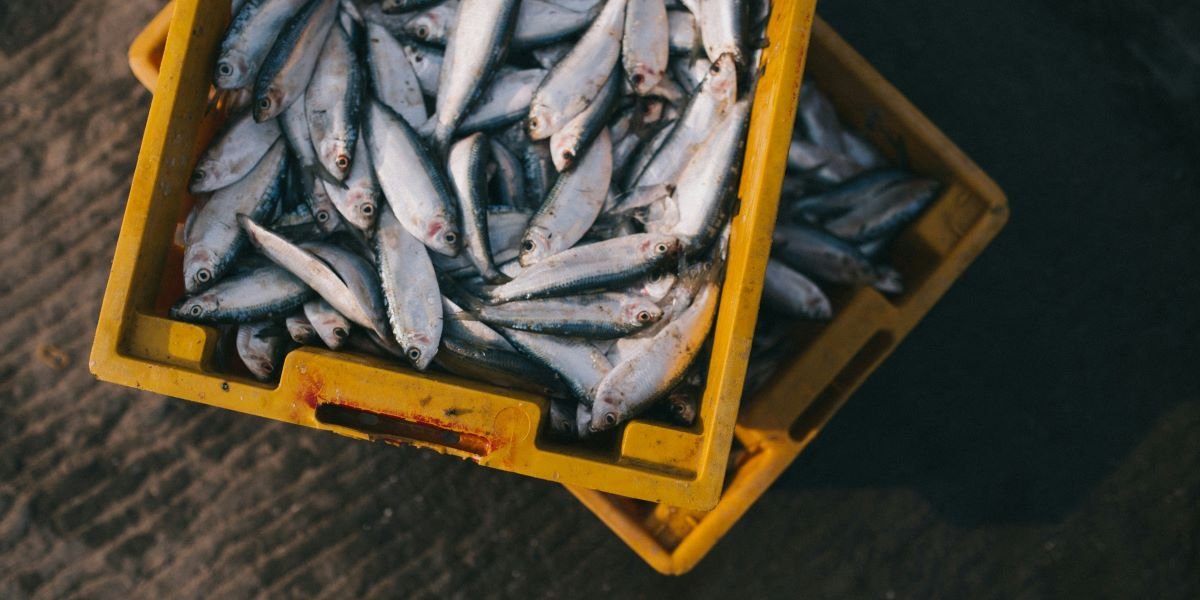
Morocco, the world’s largest sardine supplier, saw its fish landings fall nearly 46 percent between 2022 and 2024, dropping from approximately 965,000 metric tons to 525,000 metric tons, according to data from the country’s National Fisheries Office. The decline is driven by a combination of warming ocean temperatures that are pushing sardine populations into new territories and surging fuel costs that have made it significantly more expensive for fishing fleets to pursue a shrinking catch across longer distances. The result is a tightening global sardine supply at a moment when consumer demand for tinned fish is at a historic high, with fishmeal prices climbing roughly 80 percent over the past year and production declining by as much as 40 percent.
Key Takeaways
- Morocco’s sardine landings fell 46 percent from 965,000 metric tons in 2022 to 525,000 metric tons in 2024, prompting the government to impose an indefinite export ban on frozen sardines beginning February 1, 2026.
- Sardines account for an estimated 62 percent of Morocco’s wild catch and 91 percent of raw material used in the country’s canning industry, making the supply decline a structural threat to the nation’s maritime economy.
- Fishmeal prices have risen approximately 80 percent over the past year while production has fallen by as much as 40 percent, creating downstream pricing pressure across the global seafood supply chain.
- Portugal opened its 2026 sardine season in May with a catch limit of 33,446 tonnes, nearly 1,000 fewer than the prior year; Spain’s quota dropped roughly 3 percent while average sardine prices rose to 1.50 euros per kilogram.
- The global tinned fish market was valued at $10.24 billion in 2024 and is projected to reach $17.97 billion by 2034; sardines have overtaken salmon as the second most popular canned fish in the United States behind tuna.
Warming Waters and Rising Fuel Costs Create a Compounding Pressure on Moroccan Fleets
The mechanics of the sardine decline involve two forces that compound each other in ways that make the problem progressively harder to manage. Sardines are unusually sensitive to water temperature. As ocean temperatures rise, the fish migrate toward cooler water farther from the traditional fishing grounds along Morocco’s Atlantic coast. Shifts in plankton distribution, climate variability, and broader environmental stress have all contributed to what the Moroccan government and industry groups describe as a sustained contraction in available stocks.
At the same time, global energy prices have surged. The disruption to transit through the Strait of Hormuz, through which roughly one-fifth of the world’s oil supply normally passes, has driven fuel costs sharply higher. Brent crude rose 10 to 13 percent in the immediate aftermath of the Strait’s effective closure to shipping earlier in 2026, and the International Energy Agency characterized the disruption as the largest oil supply event in the market’s history. For Moroccan fishing fleets, the energy price spike arrives at the moment they need to travel farther to find fish that have moved away from shore.
Rashid Sumaila, a professor and Canada Research Chair in interdisciplinary ocean and fisheries economics at the University of British Columbia, described the convergence as unprecedented in its combined impact on the industry. Sumaila, whose research focuses on how fishing communities navigate geopolitical and environmental forces, said the interaction between climate-driven migration and energy costs creates a feedback loop that erodes the economics of small-scale fishing.
The financial strain extends beyond Morocco. Sumaila noted that fishermen in Thailand, the Pacific Islands, and across West Africa are experiencing the same fuel cost pressures, even though their waters are geographically distant from the source of the energy disruption. The cost of a fishing trip has risen not only because fuel is more expensive but because the trips themselves are longer, less predictable, and yield less catch per voyage. Insurance costs, crew safety considerations, and maintenance expenses all increase alongside the extended range.
Morocco’s Export Ban Reflects a Food Security Calculation
In response to the declining catch and rising domestic prices, Morocco imposed an indefinite ban on frozen sardine exports beginning February 1, 2026. Secretary of State for Maritime Fisheries Zakia Driouich announced the measure in parliament, describing it as necessary to protect domestic food supply and stabilize prices, particularly ahead of Ramadan, when sardine consumption traditionally peaks across the country.
The policy reflects the depth of sardines’ role in Morocco’s food system. The fish accounts for an estimated 80 percent of the country’s small pelagic stocks and serves as one of the primary sources of affordable protein for low- and middle-income households. In urban markets from Casablanca to Agadir, wholesale sardine prices surged through 2025 as the supply contraction translated into retail-level scarcity. The government’s 2025-2027 fisheries roadmap had set a target of 19 kilograms of fish consumption per capita, a goal that the declining catch has made increasingly difficult to reach.
The export ban carries its own economic trade-offs. Frozen sardine exports generated an estimated $83 million for Morocco in 2023, and the broader seafood export sector contributes billions to the national economy. Markets in Europe, Russia, and West Africa that previously depended on Moroccan frozen sardines are now competing for alternative supply from an already-tightened global market. Frozen sardine exports had already fallen from approximately 70 percent of Morocco’s small open-sea fish exports in 2020 to roughly 23 percent in 2025, reflecting the supply contraction that preceded the formal ban.
Sumaila expressed skepticism about the ban’s effectiveness as a long-term solution, drawing a parallel to trade disputes in other commodity markets. Export restrictions can provide short-term domestic relief, he noted, but they tend to trigger retaliatory dynamics and secondary effects that may not be visible when the policy is enacted. The professor also pointed to a human dimension that rarely enters economic analysis: as fishing communities lose their livelihoods, emigration accelerates, feeding into broader migration patterns between North Africa and Southern Europe.
European Quotas Are Falling While Prices Climb
The pressure on sardine stocks is not confined to Morocco. Portugal opened its 2026 sardine season in May with a national catch limit of 33,446 tonnes, nearly 1,000 tonnes fewer than the prior year. Portugal had already closed its purse-seine sardine fishery for the final weeks of 2025 after its fleet worked through roughly two-thirds of the combined Portugal-Spain quota ahead of schedule. Spain’s 2026 quota came in approximately 3 percent lower than the prior year, yet the fishery still fetched stronger prices, with sardines selling at an average of 1.50 euros per kilogram, 50 cents above 2024 levels.
The dynamic of catching less fish at higher prices is playing out across the entire European sardine market. For producers, the margin arithmetic works only as long as the price increase outpaces the volume decline. For consumers, the result is simple: tinned sardines are becoming more expensive and harder to find on shelves. The National Union of Canning Industries in Morocco, known as UNICOP, has warned that the supply contraction now threatens the viability of canning operations that depend on sardines for 91 percent of their raw material input.
Industry groups have called for stricter port controls, bans on juvenile fish capture, and enforcement of biological rest periods to allow depleted stocks to recover. Whether these measures can reverse a decline driven in part by ocean temperature changes that are outside any single country’s control remains an open question. Sardine populations have historically fluctuated with climate cycles, but the current decline is occurring against a backdrop of sustained warming that may be shifting the baseline rather than oscillating around it.
Consumer Demand Is Rising as Supply Contracts
The supply-side contraction is colliding with a surge in global demand that has been building since the pandemic. The tinned fish trend that began as a pantry-stocking habit during lockdowns has evolved into a sustained consumer shift. In the United States, shelf-stable seafood sales reached $3.52 billion over the past year, and sardines have overtaken salmon as the second most popular canned fish behind tuna. Grubhub reported that orders of tinned fish tripled in 2025. The global tinned fish market, valued at $10.24 billion in 2024, is projected to nearly double to $17.97 billion by 2034.
The supply shortage is already visible at the retail level. In New York, the Park Slope Food Coop reported that brands including Bela, Bar Harbor, Crown Prince Brisling, and King Oscar have become unavailable, while the cooperative has added new brands such as Matiz, Sea Tales, Season, and FishSnax, the tinned fish line from chef José Andrés, to fill the gaps. The coop’s buying coordinator noted that sardine supply disruptions first became noticeable around late May and early June 2026 and have persisted since.
The fishmeal market adds another layer of concern. Fishmeal, which is produced from small pelagic fish including sardines and used as feed in aquaculture and livestock operations, has seen prices climb roughly 80 percent over the past year as production has declined by as much as 40 percent. The downstream implications extend beyond sardines: higher fishmeal costs feed into the pricing of farmed salmon, shrimp, and other aquaculture products, creating a cascading effect across the broader seafood supply chain that may take years to work through.
The Structural Forces Behind the Shortage Are Not Temporary
What distinguishes the current sardine shortage from previous cyclical fluctuations is the convergence of structural forces that are unlikely to reverse on their own. Ocean warming is not a seasonal phenomenon that corrects in the next year’s catch. The energy price environment, while tied to specific geopolitical events, has exposed the vulnerability of fuel-dependent fishing operations to external shocks. And the demand trajectory for tinned fish shows no signs of flattening, meaning the market is pulling harder on a supply that is simultaneously contracting.
Sumaila’s research on global fisheries subsidies adds a policy dimension to the supply problem. His team’s most recently published estimates put global fisheries subsidies at $35.4 billion in 2018, with $22.2 billion of that classified as capacity-enhancing subsidies that effectively pay for overfishing. Fuel subsidies, in particular, encourage fleets to travel farther and fish longer than they otherwise would, accelerating stock depletion while masking the true cost of extraction. The result, Sumaila argues, is a system that subsidizes its own decline.
For consumers, the practical outcome is straightforward: sardines are becoming scarcer and more expensive, and the forces driving the shortage operate on timelines measured in years and decades rather than months. For the fishing communities that depend on sardine stocks for their livelihoods, from Morocco’s Atlantic coast to Portugal’s purse-seine fleet, the question is whether the ocean will recover fast enough to sustain an industry that is being squeezed from both sides.
FAQs
Why Are Sardine Prices Rising Globally?
Sardine prices are rising due to a combination of declining catch volumes and increasing demand. Morocco, the world’s largest sardine supplier, saw landings drop 46 percent between 2022 and 2024. At the same time, warming ocean temperatures are pushing sardine populations farther from traditional fishing grounds, and surging fuel costs are making it more expensive for fleets to pursue the diminished catch. Consumer demand for tinned fish has simultaneously reached historic highs, with the global market projected to nearly double by 2034.
What Is Morocco’s Sardine Export Ban?
Morocco imposed an indefinite ban on frozen sardine exports beginning February 1, 2026. The measure was announced by Secretary of State for Maritime Fisheries Zakia Driouich to protect domestic food supply and stabilize prices for Moroccan consumers, particularly low- and middle-income households that rely on sardines as a staple protein source. No end date has been specified.
How Are European Sardine Quotas Changing?
Portugal opened its 2026 sardine season with a catch limit of 33,446 tonnes, nearly 1,000 fewer than the prior year, after closing its fishery early in 2025 when its fleet exhausted roughly two-thirds of the combined Portugal-Spain quota. Spain’s 2026 quota dropped approximately 3 percent, though sardine prices rose to an average of 1.50 euros per kilogram, 50 cents above 2024 levels.
Are Sardines Still Available in U.S. Grocery Stores?
Sardine availability has become inconsistent in U.S. retail, with some established brands disappearing from shelves and new brands entering the market to fill gaps. Retailers have reported supply disruptions since late May 2026. Americans bought $3.52 billion worth of shelf-stable seafood over the past year, and sardines have overtaken salmon as the second most popular canned fish behind tuna.
What Is Fishmeal and Why Does Its Price Matter?
Fishmeal is a protein-rich product made from small pelagic fish, including sardines, and used as feed in aquaculture and livestock operations. Fishmeal prices have risen approximately 80 percent over the past year while production has declined by as much as 40 percent. Higher fishmeal costs flow through to the pricing of farmed salmon, shrimp, and other seafood, creating cascading price increases across the global protein supply chain.