

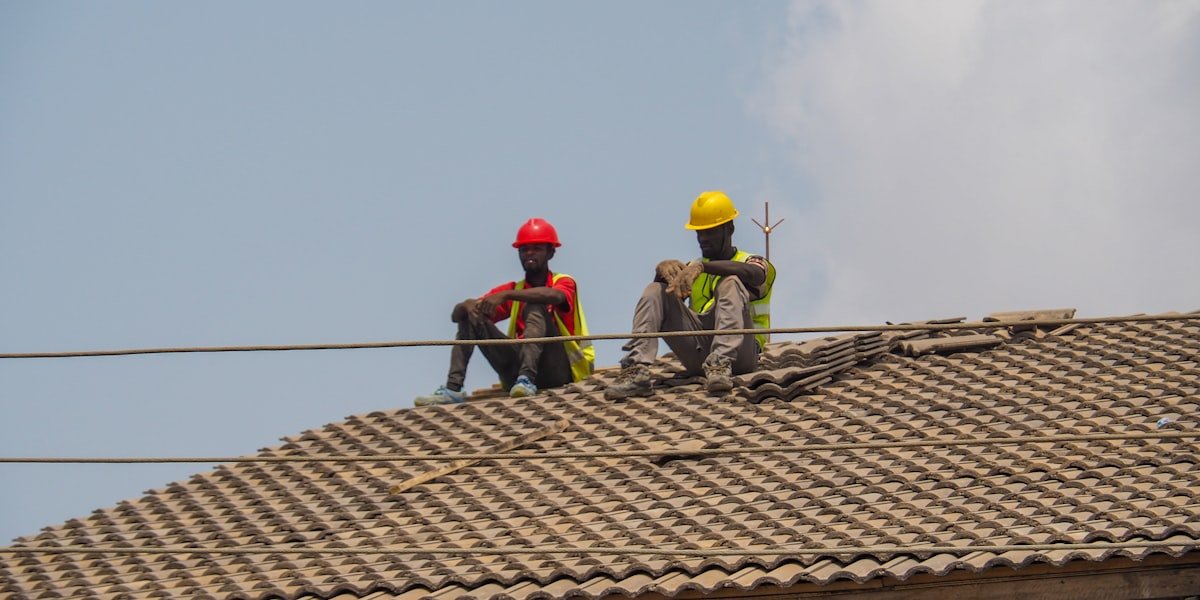
Workplace productivity losses from heat stress have reached levels that now register as a measurable drag on global economic output, with the International Labour Organization projecting that 2.2% of total working hours worldwide will be lost to excessive heat by the end of this decade. That figure translates to the equivalent of 80 million full-time jobs and an estimated $2.4 trillion in annual economic losses. The projections, based on a conservative scenario of 1.5°C global temperature rise by the end of the century, assume that affected work is performed in the shade. If outdoor exposure under direct sunlight is factored in, the ILO estimates the losses climb to 3.8% of global working hours, or 136 million full-time jobs. The gap between those two figures underscores how heavily the real-world impact depends on the physical conditions workers actually face, not just the ambient temperature.
- The ILO projects that 2.2% of total global working hours will be lost to heat stress by 2030, equivalent to 80 million full-time jobs and $2.4 trillion in annual economic losses
- Approximately 2.41 billion workers, more than 70% of the global workforce, are exposed to excessive heat annually; the proportion has risen from 65.5% to 70.9% since 2000
- In 2020 alone, excessive heat was linked to 22.87 million occupational injuries and 18,970 deaths worldwide, with 26.2 million people living with chronic kidney disease tied to workplace heat exposure
- Agriculture accounts for 60% of projected global working hours lost to heat stress, followed by construction at 19%; South Asia and West Africa face losses exceeding 5% of working hours
- OSHA’s proposed federal Heat Injury and Illness Prevention Standard remains stalled in 2026 with no finalization date, though the agency expanded its National Emphasis Program to cover 55 high-risk industries
The Scale of Exposure and the Sectors Hit Hardest
The ILO’s 2024 “Heat at Work” report documented that 2.41 billion workers worldwide are exposed to excessive heat each year, a figure that represents more than 70% of the global labor force. The exposure rate has increased by 8.8 percentage points since 2000, with the sharpest rises occurring in regions already contending with high baseline temperatures. Africa leads at 92.9% of workers exposed, followed by the Arab States at 83.6% and Asia and the Pacific at 74.7%. Europe and Central Asia recorded the fastest rate of increase, reflecting the northward expansion of dangerous heat conditions into regions where workplaces and labor regulations were not historically designed for extreme temperatures.
Agriculture and construction bear the heaviest burden. The ILO projects that agriculture will account for 60% of global working hours lost to heat stress by 2030, a figure driven by the 940 million people employed in the sector worldwide, the majority of whom work outdoors with limited access to cooling infrastructure. Construction is expected to absorb another 19% of lost hours. But the impact extends beyond outdoor trades. Indoor workers in manufacturing, warehousing, and food processing face elevated risk when facilities lack adequate ventilation or climate control, a condition common in low- and middle-income countries and in aging industrial buildings across developed economies.
The health consequences compound the productivity losses. The ILO linked excessive heat exposure to 22.87 million occupational injuries and 18,970 deaths in 2020 alone. Critically, nine out of ten workers globally were exposed to excessive heat outside of a formal heatwave, and eight in ten occupational injuries from extreme heat occurred during non-heatwave periods. That finding challenges the assumption that heat risk is an episodic, event-driven phenomenon and reframes it as a chronic workplace hazard present across the full calendar in many regions.
Chronic Health Effects Beyond the Workday
Heat stress produces health damage that extends well past the immediate risk of heat stroke or exhaustion. The ILO’s research identified 26.2 million people worldwide living with chronic kidney disease attributable to workplace heat exposure, a condition that progresses over years of repeated dehydration and thermal strain. Workers in sugar cane harvesting, brick manufacturing, and outdoor agriculture in Central America, South Asia, and Sub-Saharan Africa have shown elevated rates of chronic kidney disease that epidemiologists have linked directly to occupational heat exposure rather than traditional risk factors like diabetes or hypertension.
Mental health and cognitive performance also deteriorate under sustained heat. Reduced concentration, slower reaction times, and impaired decision-making increase the risk of workplace accidents, particularly in construction, transportation, and heavy machinery operation. A peer-reviewed scoping review published in the European Journal of Public Health found that actual global productivity losses from heat exposure are already approaching 10%, with projections reaching 30% to 40% under higher-emission climate scenarios by the end of the century. The gap between the ILO’s conservative 2.2% estimate and the 10% figure from field-study evidence reflects the difference between modeling projections and measured outcomes in real workplaces.
The U.S. Regulatory Landscape in 2026
In the United States, the regulatory response has moved slowly relative to the scale of the hazard. OSHA published a Notice of Proposed Rulemaking for its Heat Injury and Illness Prevention Standard in August 2024, the first federal labor rule to specifically address heat-related risks across general industry, construction, maritime, and agriculture. The proposed rule would require employers to develop written heat injury and illness prevention plans, monitor workplace heat conditions, provide water, shade, and rest breaks, implement acclimatization protocols for new or returning workers, and designate a Heat Safety Coordinator responsible for monitoring conditions.
The rule established two trigger thresholds: an initial heat trigger at a heat index of 80°F, where employers must provide access to water, shade, and cooling measures, and a high heat trigger at 90°F, which activates mandatory rest breaks, enhanced monitoring, and additional protective measures. Public hearings concluded in late 2025, and the post-hearing comment period closed in October 2025. As of August 2026, OSHA’s rulemaking page still describes the rule as proposed rather than final, and no finalization date has been set.
OSHA did expand its enforcement posture through a revised National Emphasis Program, effective April 2026 and running through April 2031. The updated NEP directs compliance officers to prioritize inspections across 55 high-risk industries using recent injury, illness, and enforcement data. Inspectors can initiate proactive facility inspections when the National Weather Service issues a heat advisory or when the heat index reaches approximately 80°F. The NEP does not carry the force of a finalized standard, but it gives OSHA the authority to cite employers under the General Duty Clause for recognized heat hazards that remain unmitigated.
State-Level Standards and the Patchwork Problem
Several states have moved ahead of the federal government. California added an indoor heat illness standard in July 2024, triggered at 82°F, alongside its existing outdoor rules that activate at 80°F with enhanced measures at 95°F. Washington revised its outdoor heat rule in 2023 with year-round application, lower temperature triggers, mandatory paid breaks at higher temperatures, and buddy-system requirements. Oregon, Minnesota, and Colorado have adopted their own enforceable standards or are in active rulemaking processes.
The patchwork creates compliance complexity for employers operating across state lines, particularly in construction, agriculture, and logistics where workforces move between jurisdictions. A construction firm operating projects in California, Arizona, and Texas faces three different regulatory frameworks, one with an enforceable standard, one with no state-level heat rule, and one relying solely on federal guidance that has not been finalized. The absence of a uniform federal standard means that worker protections vary dramatically depending on geography, a gap that the ILO has flagged as a structural weakness in the global response to occupational heat stress.
The Economic Argument for Intervention
The ILO’s 2026 meeting of experts on occupational safety and health in extreme weather estimated that $361 billion could be saved globally if occupational safety and health measures to prevent heat-related injuries were implemented at scale. The figure accounts for avoided medical treatment costs, reduced absenteeism, and sustained productivity levels during high-heat periods. A separate finding from the same body of research noted that productivity declines by 2.3% for every degree Celsius above 19°C, a threshold that most outdoor and many indoor workplaces in tropical and subtropical regions exceed for the majority of the working year.
The economic losses are not distributed evenly. South Asia and West Africa face projected losses exceeding 5% of total working hours by 2030, concentrated in the agricultural and construction sectors that employ the largest share of workers in those regions. The ILO has emphasized that heat stress will widen inequality between nations, with the worst-affected countries overwhelmingly concentrated among low-income and least-developed economies that have the fewest resources to invest in cooling infrastructure, workplace redesign, and regulatory enforcement.
FAQs
How much economic output is lost globally to workplace heat stress?
The International Labour Organization projects that $2.4 trillion in annual economic output will be lost to heat stress by 2030, equivalent to 2.2% of total global working hours or 80 million full-time jobs. Field studies suggest actual current losses may already approach 10% of global productivity.
Which workers are most affected by heat stress?
Agricultural workers face the highest exposure, accounting for 60% of projected lost working hours. Construction workers account for another 19%. Indoor workers in manufacturing, warehousing, and food processing without adequate ventilation also face elevated risk.
Has the United States finalized a federal heat workplace standard?
No. OSHA published a proposed Heat Injury and Illness Prevention Standard in August 2024, but as of August 2026 the rule has not been finalized and no target date has been set. OSHA expanded its National Emphasis Program in April 2026 to enable proactive inspections across 55 high-risk industries.
Which U.S. states have their own heat workplace standards?
California, Washington, Oregon, Minnesota, and Colorado have adopted enforceable heat illness prevention standards or are in active rulemaking. California’s rules cover both indoor (triggered at 82°F) and outdoor (triggered at 80°F) workplaces.