

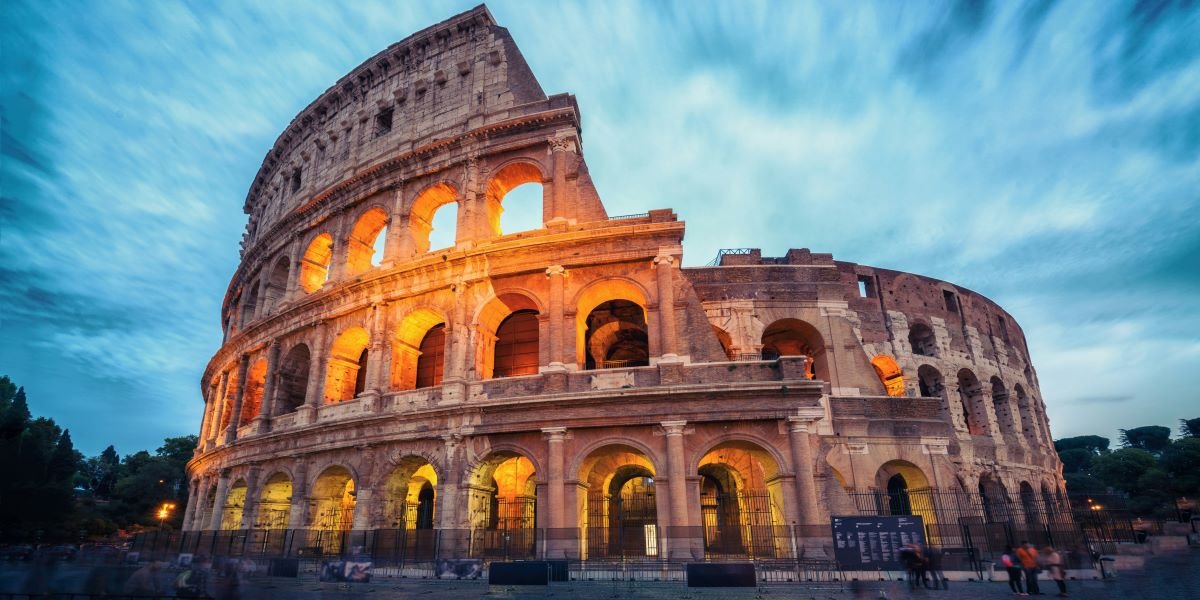
A place becomes a UNESCO World Heritage Site when the World Heritage Committee inscribes it on the World Heritage List after a multi-year process. The country must first place the site on its Tentative List, independent experts then evaluate the nomination, and the site must show Outstanding Universal Value by meeting at least one of ten criteria.
Key Takeaways
- The World Heritage List reached 1,273 sites across 173 countries after the World Heritage Committee’s July 2026 session.
- The Committee inscribed 25 new sites in 2026: 19 cultural, 5 natural and 1 mixed.
- A site must demonstrate Outstanding Universal Value and meet at least one of ten criteria in UNESCO’s Operational Guidelines.
- Nominations are independently evaluated over 14 months by ICOMOS for cultural sites and IUCN for natural sites.
- There are 58 properties on the List of World Heritage in Danger after the 2026 session.
- The Committee received 46 nominations by its January 2026 deadline for review at its 2027 session in Istanbul.
What a UNESCO World Heritage Site Is
A UNESCO World Heritage Site is a cultural or natural place inscribed on the World Heritage List under the Convention Concerning the Protection of the World Cultural and Natural Heritage, which UNESCO adopted in 1972. The Convention’s purpose is to identify, protect and preserve properties of what it calls Outstanding Universal Value, meaning significance that goes beyond national borders.
Sites fall into three categories: cultural, natural and mixed. They range from ancient archaeological landscapes to modern architecture, and from historic city centers to protected ecosystems. Recent additions illustrate that range, including Finland’s Aalto Works, Brazil’s Amazonia Theaters, Poland’s Gdynia Modernist City Centre and Japan’s Asuka-Fujiwara archaeological sites.
How a Site Becomes a UNESCO World Heritage Site, Step by Step
Inscription is the final step of a long process controlled by the country where the site is located. UNESCO does not select sites on its own initiative.
Step 1: The Tentative List
The first mandatory step is the Tentative List, an inventory of sites a country considers candidates. Placing a site there does not mean it has been judged valuable. It signals an intention to nominate it in the future. Before this stage, countries can also use a voluntary Upstream Process to receive early advice before drafting a nomination.
Step 2: Preliminary Assessment and Nomination
Once a site is on the Tentative List, the country can begin a two-phase nomination process. The first phase is a mandatory Preliminary Assessment, a desk-based review in which the country seeks advice from the Advisory Bodies on whether the site has the potential to justify Outstanding Universal Value. If the outlook is positive, the country prepares a full nomination file.
Step 3: Independent Evaluation
Each complete nomination is evaluated independently over 14 months by two Advisory Bodies named in the Convention: the International Council on Monuments and Sites (ICOMOS), which evaluates cultural sites, and the International Union for Conservation of Nature (IUCN), which evaluates natural sites. A third body, ICCROM, provides expertise on conservation and training.
Step 4: The World Heritage Committee Decides
The World Heritage Committee, made up of representatives of States Parties to the Convention, meets once a year to decide which nominations are inscribed. To succeed, a site must demonstrate Outstanding Universal Value and meet at least one of the ten criteria set out in the Operational Guidelines for the Implementation of the World Heritage Convention.
What the 2026 World Heritage Session Changed
The Committee’s 48th session took place in Busan, Republic of Korea, from July 19 to 29, 2026. It inscribed 25 new sites, all adopted by consensus, bringing the World Heritage List to 1,273 sites across 173 countries. The session also marked the first-ever inscriptions for Comoros, São Tomé and Príncipe, and South Sudan.
UNESCO framed inscription as a starting point rather than a finish line. Its Director-General described it as the beginning of a lasting commitment to protect a site, manage it effectively and ensure it benefits local communities.
What the List of World Heritage in Danger Signals
Inscription is not permanent protection. The List of World Heritage in Danger identifies sites whose Outstanding Universal Value is under threat and that need strengthened protection. At its 2026 session, the Committee added six sites to the Danger List, leaving 58 properties on it.
A Danger listing is meant to draw international attention and support. Sites can be placed on the list, retained on it from year to year, or removed from it once conditions improve.
The Next Round of UNESCO World Heritage Nominations
The pipeline for the next session is already set. By the January 30, 2026 deadline, the World Heritage Centre received 46 nominations for review at the 2027 session, of which 34 were complete after a completeness check. The Committee’s next session will be held in Istanbul, Türkiye, in 2027.
FAQs
What are UNESCO World Heritage Sites?
UNESCO World Heritage Sites are cultural, natural or mixed places inscribed on the World Heritage List for their Outstanding Universal Value. The list is maintained under the 1972 World Heritage Convention.
How does a site become a World Heritage Site?
A country places the site on its Tentative List, completes a Preliminary Assessment and submits a nomination. After a 14-month evaluation by the Advisory Bodies, the World Heritage Committee decides on inscription at its annual session.
How many UNESCO World Heritage Sites are there?
After the July 2026 session, the World Heritage List includes 1,273 sites across 173 countries. The total changes each year as the Committee inscribes new sites.
Which country has the most UNESCO World Heritage Sites?
Italy holds the largest number, with 61 sites as of July 2025 according to Guinness World Records, just ahead of China. Totals vary slightly between tallies because properties shared across borders are counted differently.
What is the List of World Heritage in Danger?
The List of World Heritage in Danger identifies inscribed sites whose Outstanding Universal Value is under threat. After the 2026 session, 58 properties are on the list.