
Disability football in England had, for most of its history, been played in the shadow of professional football. While there were domestic competitions for the sport that attracted enthusiasts and volunteers, TV coverage was rare, and the national press paid little attention to disability football tournaments, except for international tournaments. This trend has changed over the last few years as governing bodies and other stakeholders have begun investing more in highlighting disability football to educate more people about the sport and the types of disability football played in England. Nonetheless, disability football is still getting less media attention than the professional men’s and women’s game.
The Football Association has played an important role in increasing the visibility of disability football through national competitions and broader inclusion strategies. As part of its Football Without Limits strategy for 2024 through 2028, The FA has introduced initiatives aimed at improving participation, coaching, competition, workforce development, and public awareness across several forms of disability football. Those include blind football, cerebral palsy football, deaf football, partially sighted football, and powerchair football. Amputee football operates separately through the England Amputee Football Association rather than under The FA, although the Amputee FA Cup Final is staged as part of The FA Disability Cup event.
Each discipline has its own rules and governance structure while contributing to wider efforts to make football more accessible.
Broadcasting became one of the clearest ways to increase public awareness. In 2024, TNT Sports aired all six finals of The FA Disability Cup, including the Amputee FA Cup Final. The broadcast brought together competitions from several disability football disciplines, even though not all of them are governed by The FA. Coverage included live presentation, match commentary, British Sign Language interpretation, and audio description. Using the same production standards applied to other major football events helped introduce disability football to a broader audience and provided greater visibility for competitions that have historically received limited television coverage.
As television coverage has expanded, coaches and former players have taken on a more public role by providing expert analysis before, during, and after matches. Their contributions often explain tactical decisions, player positioning, and competition formats that may be unfamiliar to viewers watching disability football for the first time. This approach has become increasingly common across televised sport, where technical analysis helps audiences understand the game beyond the final score.
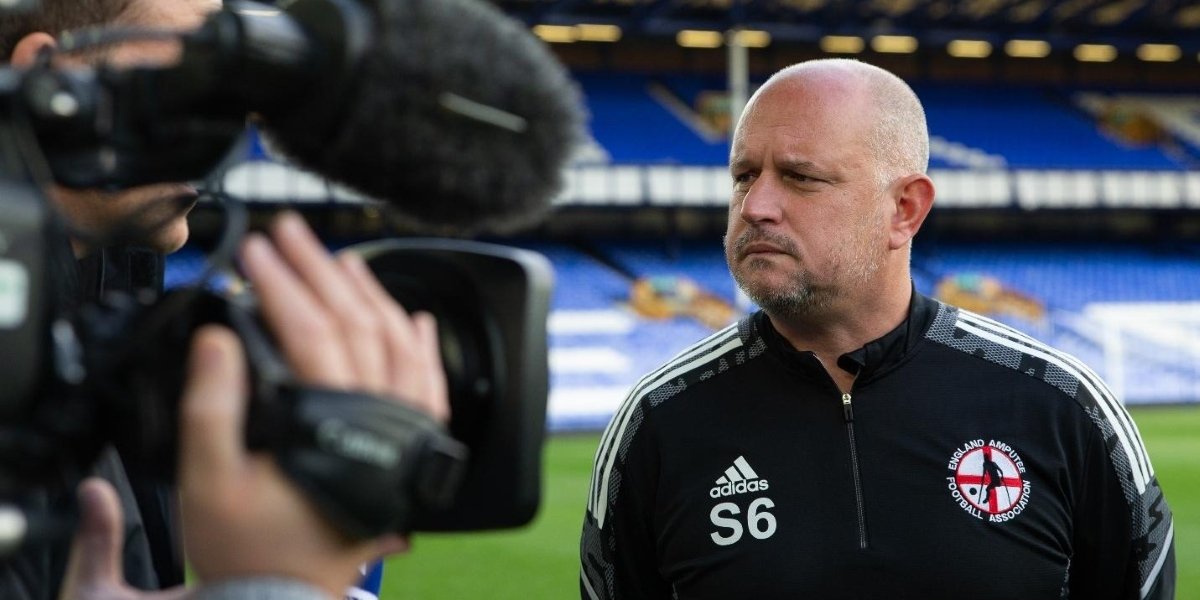
Among those contributing to that coverage is England Amputee National Team head coach Scott Steven Rogers. Alongside his coaching responsibilities, Rogers has appeared as a television pundit and match analyst during TNT Sports broadcasts, including coverage of the Amputee FA Cup Final. His television work has added another dimension to his involvement in the sport, allowing him to discuss competition and coaching from the perspective of someone working within the international game. His appearances have formed part of a broader trend in which coaches increasingly participate in media coverage as technical experts rather than simply remaining behind the scenes.
Traditional media have also devoted greater attention to disability football. National and regional outlets, including ITV, the Manchester Evening News, the Liverpool Echo, Wigan Today, and the St Helens Star, have reported on England’s international tournaments, domestic competitions, and developments within the sport. Coverage has ranged from match reporting and tournament previews to interviews with players and coaches. Although disability football remains less prominent than mainstream professional football, the volume and frequency of reporting have increased in recent years, particularly around major competitions and national team events.
In addition to public participation in television and newspapers, several exhibitions and events have been held by football clubs, charities, museums, and bodies of governance, including disability football as one element of English football. This was after the country won the European Amputee Football Federation Nations League for the first time in 2023. The trophy is currently on display at the National Football Museum. This allowed visitors to learn about amputee football and its role in the history of the game in England.
Also, the development of broadcasting in disability football is facilitated by digital media. The national associations, clubs, coaches, and players communicate with their fans on official websites and social media, where they can publish match updates, tournament information, educational content, and other interesting material. This direct contact is an addition to traditional journalism and TV, helping people get regular updates on what’s happening during the season. For example, professional online accounts of coaches such as Rogers describe their coaching activities, media contacts, and other public events.
It should be stated that the development of the broadcasting of disability football matches is connected with the general processes taking place in the field of English sport. Though increased coverage of the sport has not changed its competitiveness, it has helped make competitions more accessible to audiences who could not watch them before. Thus, today, TV channels, digital media, museums, and community projects work together to promote disability football as a tradition in the British football system. Even though some difficulties arise in making this sport as popular as other types of football, it has become more visible and available to the public than ever before.