
By: Ashley Clark
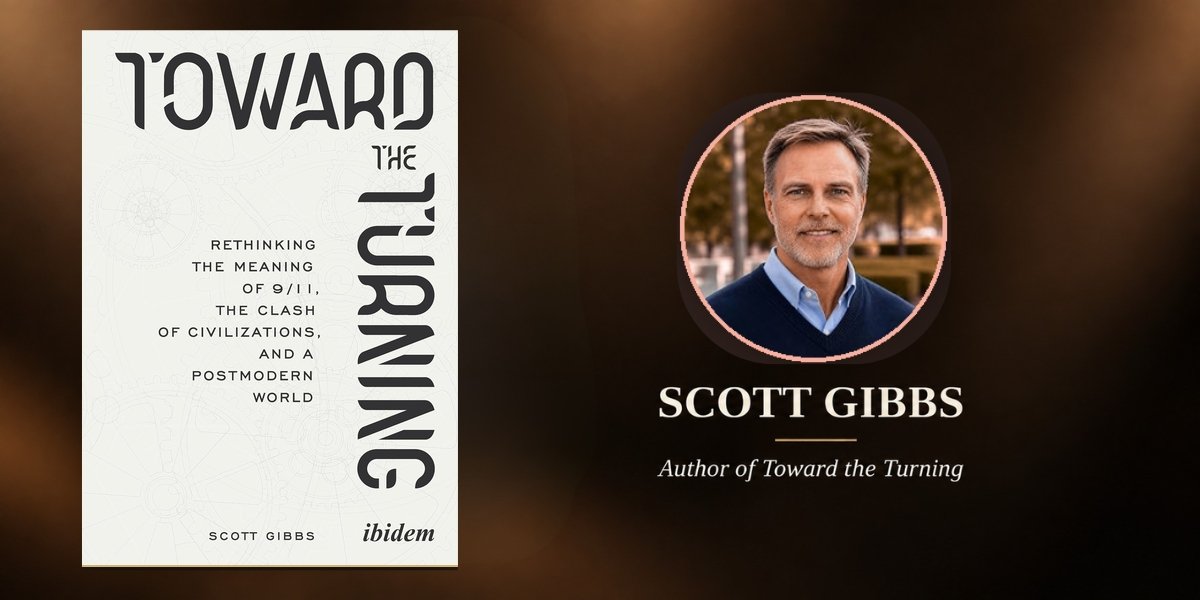
Many books about 9/11 are about what happened and why. Scott Gibbs wrote one about why these types of events keep happening, and why the way we’ve been trying to understand them has been making things worse.
Toward the Turning: Rethinking the Meaning of 9/11, the Clash of Civilizations, and a Postmodern World is the kind of book that arrives at exactly the right moment. Political polarization is intensifying. Religious and secular worldviews are colliding in ways that feel increasingly personal and absolute. Institutions that once provided coherence and meaning are losing authority faster than anything is replacing them. And the conflicts that defined the early years of the twenty-first century, far from being resolved, have deepened into something that feels almost structural.
Scott’s central argument is that we keep misreading these conflicts because we focus on the surface, on grievances and blame, on perpetrators and victims, while missing the deeper structures beneath them. And until we understand those structures, the patterns will keep repeating.
The Identity Systems Nobody Talks About
The foundation of Scott’s framework is an idea that sounds deceptively simple. Human beings don’t just hold beliefs. They live through identity systems, spiritual and secular, that tell them who they are and what reality means. These systems function like faiths, not just religious ones but secular ones too, including American Exceptionalism, the American Dream, and Zionism. Each is a kind of social compact that tells its members how to interpret the world, what matters, who they are, and what they may hope to receive in return.
When those systems are held as given realities rather than as constructed ways of making sense of the world, something dangerous happens. Threats to the system begin to feel like threats to existence itself. Fear and desire take over. The result is what Scott calls a deadly dance of mutual provocation, defensiveness, and contempt that can escalate toward dehumanization and violence.
This pattern, he argues, explains the attacks of September 11, 2001 as more than a singular historical event. It explains the intensifying polarization between American Ethnocentrism and Progressivism. And it explains why so many of these conflicts feel impossible to resolve through conventional political means.
Why Modernity Is the Underlying Force
One of the most illuminating threads in the book is Scott’s treatment of modernity as the deep driver beneath most of the conflicts he examines. Modernity shifted where authority lives and what human life is understood to be for. God gave way to man as the ultimate authority. Revelation and tradition gave way to reason, science, individual freedom, and progress.
That shift produced extraordinary gains. It also destabilized older religious worlds and created entirely new secular faiths to replace them. Modernity liberates and unsettles simultaneously. It gives people new power and new possibilities while exposing them to uncertainty, fragmentation, and the loss of meaning that comes when no final authority is available.
Those conditions, Scott argues, make fundamentalism more likely, not less. Threatened people and groups seek certainty, order, and control. They harden their identity systems against the thing that feels like it is dissolving them. And then the deadly dance begins.
What the Turning Actually Is
The solution Scott offers isn’t a new ideology or a political program. He calls it The Turning, and it is less a destination than a shift in perception. The self, he argues, is better understood not as a fixed entity but as a living, contingent process, fluid and interdependent. Our worlds are not given realities. They are constructed ways of understanding and responding to experience.
Recognizing that, sitting with the anxiety that recognition exposes rather than retreating from it into the certainty of a hardened identity system, is what makes something different possible. Not the end of conflict. But the beginning of resilience, reciprocity, and genuine connection across the divides that currently feel absolute.
Readers may come to this book looking for an explanation of geopolitical conflict. They may leave having learned something about themselves. That dual movement, outward toward the world and inward toward the self, is what makes Toward the Turning genuinely unusual among books attempting to address the civilizational tensions of our time.
As the 25th anniversary of September 11, 2001 approaches, the questions that moment opened about identity, belonging, and the conditions that produce conflict feel more urgent than ever. Scott Gibbs offers not a political answer but a philosophical one, grounded in decades of preparation and delivered with the rigor and honesty the subject demands.
If you’ve ever sensed that the conflicts shaping our world run deeper than politics, grievance, or ideology, Toward the Turning by Scott Gibbs is available now on Amazon. You may come for an explanation of conflict. You’ll leave having learned something about yourself.