
By: Fabiana Barbery
The Tools Are Not the Problem
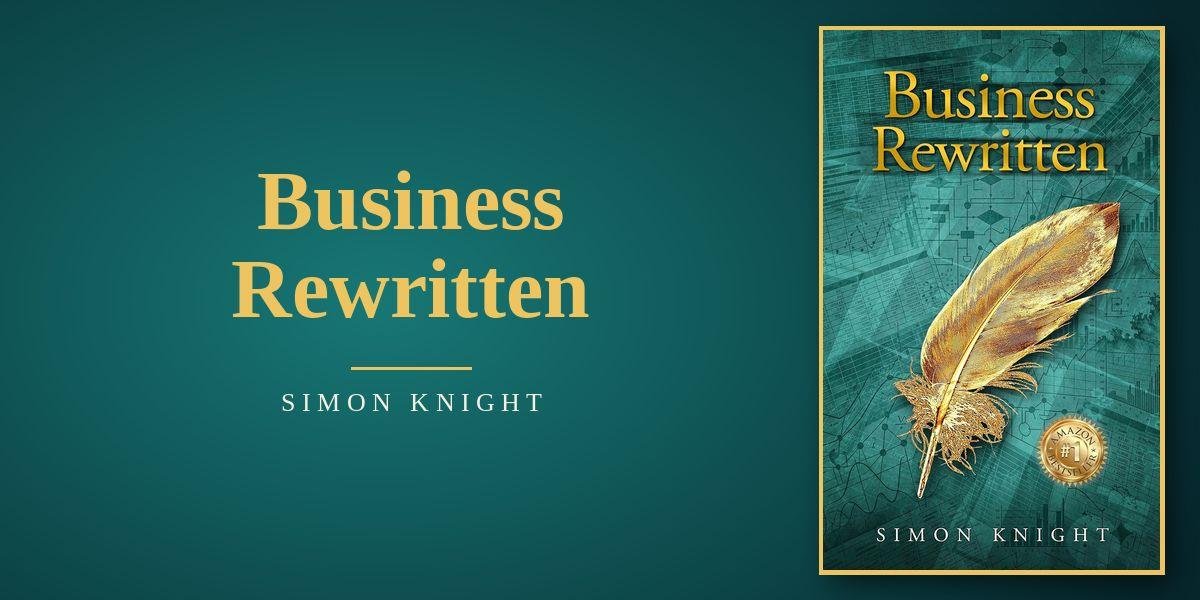
Strategic planning. Six Sigma. SWOT analysis. Process reengineering. AI-assisted analysis. These are not bad tools. They are, in Simon Knight’s assessment, effective tools that are consistently misapplied, aimed at the symptoms of organizational problems rather than the root causes underneath them. That distinction sounds simple, and it is. It is also the reason why so many well-resourced, well-intentioned leadership teams spend years solving the wrong thing and wondering why the same problems keep returning. Business Rewritten is Simon’s answer to that cycle, a framework designed not to replace the tools organizations already trust but to ensure those tools are finally pointed at what actually drives outcomes.
What Conventional Analysis Cannot See
Simon identifies three forces that shape organizational outcomes and that conventional tools are structurally blind to: human dynamics, path dependencies, and hidden themes. Of the three, hidden themes are the most consistently invisible to leadership teams, and the reason is built into their nature. Hidden themes are patterns masked by more obvious factors, assumptions about how a business really operates that have become so ingrained they are no longer examined. The LEGO case study Simon uses in the book illustrates this precisely. LEGO’s problems were caused in part by uncontrolled innovation, a plethora of initiatives that strayed from the company’s core strength and proved unprofitable. Innovation is supposed to be a strength. That assumption is exactly what made the pattern so hard to see.
The Difference Between Unsolved and Intractable
One of the most important distinctions the book draws is between a problem that is simply unsolved and one that is genuinely intractable. Intractable problems, in Simon’s framework, are the ones that have typically been tackled unsuccessfully multiple times, often because different symptoms have been treated without anyone identifying the true root cause. A service delivery problem, for example, may have nothing to do with the service delivery team. It may be caused by a sales compensation plan that incentivizes over-promising to customers, creating expectations that operations can never meet. The problem manifests in one place and lives somewhere else entirely, which is precisely why sequential, departmental approaches to change keep failing to resolve it.
Path Dependencies and the Weight of Past Decisions
Path dependencies are another force Simon surfaces in Business Rewritten: the ways that past decisions quietly constrain present choices in ways that have become invisible through familiarity. Leaders inside an organization often cannot see the path dependencies shaping their decisions because those dependencies have long since stopped feeling like choices. They feel like the way things are. The Business Rewrite Framework is designed to interrupt that invisibility by forcing a holistic view of the organization’s backstory, surfacing the characters involved, their attributes and motives, and the relationships between them that produce outcomes no one fully planned for and no one has fully examined.
What the Framework Actually Does
The Business Rewrite Framework accommodates both incremental and fundamental change, which is an important clarification Simon makes in the book. The framing of rewriting business rather than simply improving it might suggest that the framework is only for organizations facing existential challenges, but that is not the case. The personas defined within the framework determine the scope of change. A change agent pursuing a full transformation and a problem solver working within a much narrower brief can both use the same structure, because the framework’s value is in the quality of the analysis it produces, not the scale of the intervention it demands. Two business leaders who endorsed the book put elements of it to use immediately after reading it, finding that the narrative structure alone helped them see problems more clearly and understand how processes actually worked rather than how they assumed they did.
What AI Gets Wrong and What the Book Does About It
Simon’s inclusion of AI-assisted analysis on his list of tools that miss what matters most is a deliberately bold position, and he supports it with specificity. An MIT Project NANDA report found that ninety-five percent of enterprise generative AI pilots fail to show a measurable profit-and-loss impact. The problem is not the technology. It is that AI, like every other analytical tool, needs to be applied to the right problems with the right information. The Business Rewrite Framework is designed to do exactly that, and the accompanying AI course provides example prompts and guidance specifically designed to address the pitfalls Simon identifies most often, including sycophancy and surface narrative bias, the tendency of AI tools to confirm what the user already believes rather than surface what the user has not yet seen.
Pick up your copy of Business Rewritten by Simon Knight on Amazon today and discover the framework that finally shows you where your organization’s real problems live. To take these insights further, explore Simon’s AI Courses, which offer practical guidance on using AI more effectively in business and avoiding the common pitfalls that can undermine its results. Visit business-rewritten.com/ai-courses to learn more.