
By: Kristine Kennedy
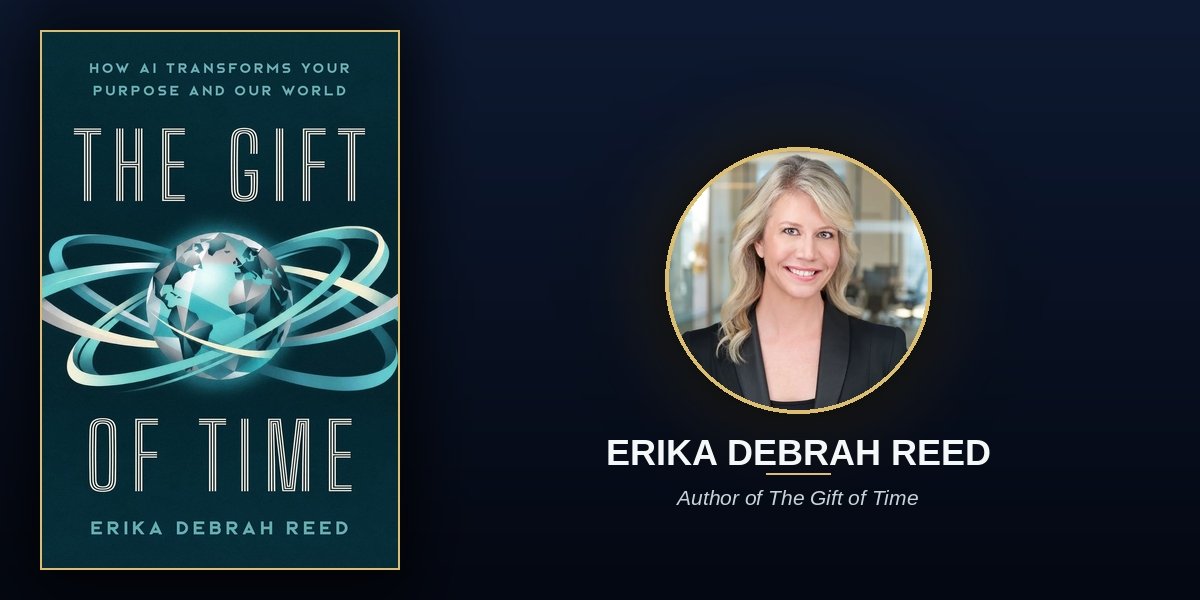
Erika Debrah Reed chose Tolkien’s line as the philosophical anchor of The Gift of Time, and the more you read the book, the more clearly you understand why. Gandalf’s counsel to Frodo in the darkness of Moria is not optimistic in a simplistic sense. It does not promise comfort or safety or that things will go well. It insists only that moral responsibility remains possible even within uncertainty, upheaval, and fear, that the only true choice lies in how one responds to the conditions of the age into which one has been born. Reed uses that insight to frame the entire AI conversation differently than almost anyone else has thought to frame it.
Most AI discourse positions human beings as the recipients of a technological transformation that is happening to them, alternately as potential beneficiaries of efficiency gains or potential victims of displacement, but rarely as genuine agents of the historical moment they are living through. Reed’s book insists on agency, not in the naive sense of suggesting that individual choices alone will determine how AI reshapes society, but in the deeper sense of refusing to allow her readers the passivity of treating the future as something descending upon them from above rather than something being continuously shaped through participation, imagination, experimentation, and thought.
That insistence on agency is what gives the book its particular emotional register. It is neither anxious nor uncritically enthusiastic. It is something more useful than either, a sustained and serious attempt to help readers develop the clarity about their own values, their own purposes, and their own relationship with time that would allow them to actually receive the gift that AI is beginning to offer rather than simply being carried along by it.
Reed structures the argument as a journey from the philosophy of time through the specific technologies that are returning time to human use, autonomous vehicles, humanoid robots, electric air taxis, AI-driven administrative tools, the shortened work week, and from there into the questions of equity and access and education and curiosity that will determine whether those time savings become genuinely transformative or simply generate new varieties of the same busyness they were supposed to relieve. That structure is not linear. It is cumulative, each chapter adding a new dimension to the central argument and each five-minute reflection offering a new opportunity to bring the argument into contact with the reader’s own actual life.
Reed writes from a professional background in forecasting how large systems change and what those changes mean for the people working inside them. She brings that perspective to the most personal question the AI era has raised. The result reads as both a serious work of ideas and a practical companion for anyone trying to live this particular historical moment with intention.
If you are ready to engage with the question of what AI means for your life, your time, and your purpose with the seriousness and the depth it deserves, The Gift of Time by Erika Debrah Reed is the most complete, the most rigorously grounded, and the most humanistically rich guide available. Head over to Amazon and get your copy today. All you have to decide is what to do with the time that is given to you. This book will help you decide well.