
By: Jordan Jacobs
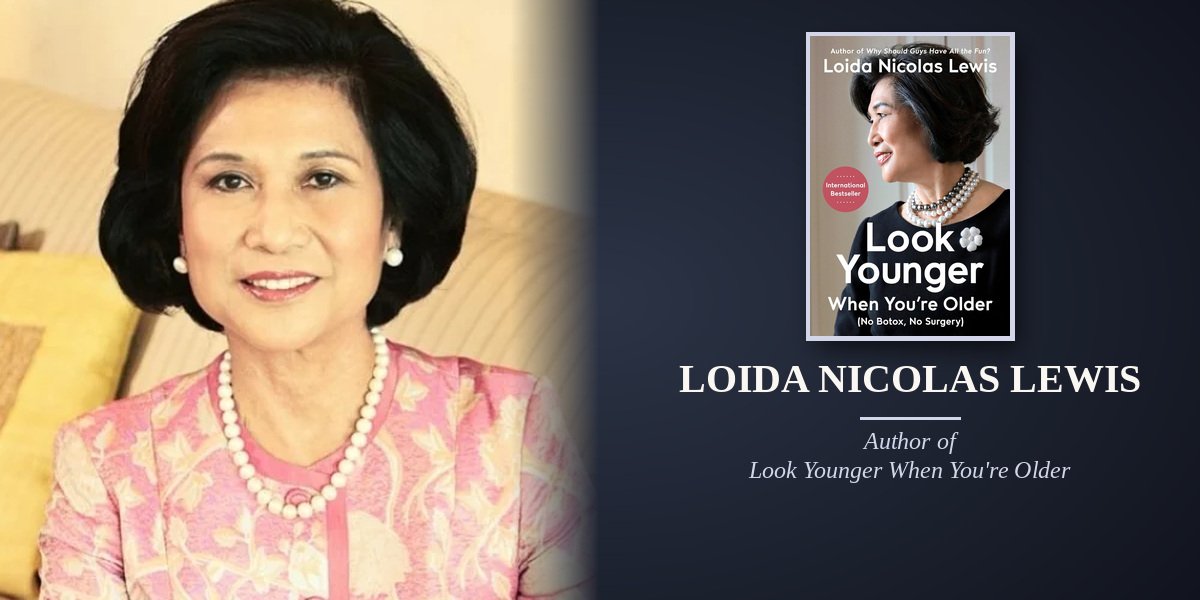
Purpose is not an abstract concept in the life of Loida Nicolas Lewis. It is the organizing principle of everything she has done, from her legal career to her corporate leadership to her decades of civic and philanthropic work. It is also, she argues in her new book, one of the most potent contributors to how well we age. Look Younger When You’re Older is her case for the connection between how you live and how you look, made in the voice of someone who has been testing the thesis for eight decades.
Lewis was born in Sorsogon, the Philippines, earned a law degree at the University of the Philippines, and came to the United States where she passed the New York State Bar without attending an American law school. She married Reginald F. Lewis, whose leveraged buyout of Beatrice International created one of the largest African American-owned businesses in the country. When he died in 1993, she became CEO and guided TLC Beatrice through a methodical wind-down. She then built a second chapter defined by advocacy, philanthropy, and civic leadership. She launched a podcast in her late seventies. She has never, by any observable measure, slowed down.
The book that emerges from this life is not a conventional beauty guide. It is something more ambitious: a holistic account of what it means to age with intention, grounded in practices Lewis has actually maintained over many years. She begins with the interior. Her chapters on meditation, faith, prayer, and gratitude are not vague. She describes specific practices, specific texts, specific habits. The reader does not feel lectured to. The reader feels let in.
From there, Lewis moves to the practical. Her skincare chapters are detailed and specific, covering what she uses and why, including products at multiple price points. She is not interested in a beauty regimen that only the wealthy can replicate. She began exercising at 45. She developed her skincare practice in her fifties. The book presents both journeys without minimizing the effort involved or pretending the results came easily.
A chapter on friends and community reflects Lewis’s understanding that individual wellness is not separable from social context. She has spent her career building and sustaining networks that sustain her in return, and that understanding runs through her approach to aging. Several of her friends contribute their own insights, and the chapter reads like a gathering of people who have thought seriously about these questions and arrived at related conclusions.
Lewis does not offer shortcuts. She does not pretend that the approach she describes is effortless. What she offers is a coherent framework, backed by the evidence of her own life, organized around the premise that the work of aging well is worth doing and that it is never too late to begin.
In a cultural moment preoccupied with procedures, this book offers a genuinely different proposition. It is about what happens when you take the inside as seriously as the outside, and when you understand that the two are not actually separate.
Look Younger When You’re Older is available on Amazon and well worth your time.